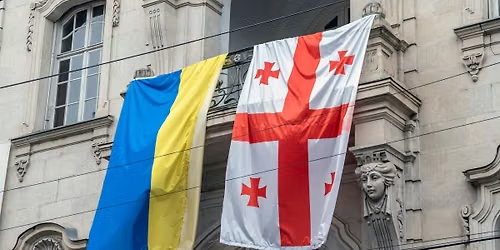
Foreign Fighters and Identity: The Georgian National Legion in Ukraine

About this Event
Why do foreign fighters join wars in other countries? Moving beyond characterizations of foreign fighters as either profit-driven mercenaries or transnational terrorists, this event develops a theory of foreign fighters motivated by vicarious identification and ontological security. In doing so, it explains why Georgians have fought on behalf of Ukraine at higher rates than any other nationality: they see Ukraine’s struggle as their own. The robustness of this vicarious identity is explained by two key factors: close subject-target alignment and reciprocity. Georgians’ ontological insecurities, rooted in their country’s geopolitical vulnerabilities and their government’s shift away from the long-standing pro-European foreign policy, inclined them toward resorting to vicarious identification as a source of ontological security. Ukraine was an ideal target, embodying what many Georgians deeply desired: the courage to fight Russia and pursue a European future. Reciprocity from Ukrainian society and political leaders, who accepted and validated Georgians’ feelings and sacrifices, further strengthened their vicarious identity. Highlighting how shared traumas and aspirations can create enduring transnational bonds, the event demonstrates the importance of moving away from unitary-actor perspectives to account for how foreign fighters and vicarious identities transcend states’ physical and metaphysical borders and shape international security.
Speaker
Eteri Tsintsadze-Maas, Assistant Professor of Political Science, Hampton University
Moderator
Natia Chankvetadze, Postdoctoral Fellow, Davis Center
Where is it happening?
Event Location & Nearby Stays:
USD 0.00