Wildlife Wednesday – Coyotes (Canis latrans)

Advertisement
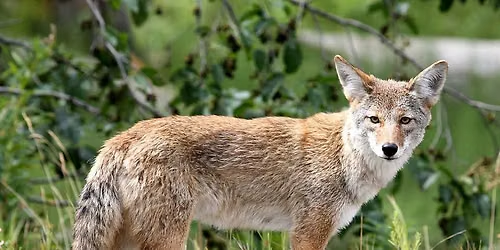
One of the interesting things about late December at Jesse Jones Park and Nature Center, it is a good time to see animals that are not often seen during the rest of the year. One of these is the Coyote (Canis latrans).
Related to dogs, wolves, dingoes, and foxes, Coyotes are essentially nocturnal but can occasionally be seen during daylight hours.
Coyotes use auditory, visual, olfactory and tactile signals to communicate. They are the most vocal of all North American wild mammals, using three distinct calls (squeak, distress call and howl call) which consist of a quick series of yelps, followed by a falsetto howl. They have acute hearing and sense of smell. They use stumps, posts, bushes or rocks as "scent posts" on which they urinate and defecate, possibly to mark territory.
Coyotes are versatile in their eating habits. They are carnivorous; 90 percent of their diet is mammalian. They eat primarily small mammals, such as swamp rabbits, ground squirrels, and mice. They also occasionally eat birds, snakes, large insects and other large invertebrates. They prefer fresh meat, but they consume large amounts of carrion.
Hunting, which takes place around the den, is done individually, in pairs, or in family units depending on prey availability. Coyotes are capable of running at speeds up to 65 km/hr and they can jump distances of up to 4 meters.
Part of what makes coyotes so successful at living in so many different places is the fact that they will eat almost anything, including human trash and household pets in suburban areas.
Breeding occurs from January to March. Both male and female coyotes bring food to their young after they are weaned and protect their offspring. The young sometimes stay with the pack into adulthood and learn how to hunt during a learning period.
Dens are used year after year. There are several entrances to a single den. Coyotes leave their dens to defecate and urinate.
Coyotes are extremely adaptable and use a wide range of habitats including forests, grasslands, deserts, and swamps. They are typically excluded from areas with wolves. Coyotes, because of their tolerance for human activities, also occur in suburban, agricultural, and urban settings.
To learn more about this fascinating, rarely seen, resident of Jesse Jones Park, join us for Wildlife Wednesday at 12 p.m. on Dec. 16 in the Nature Center. This program is free of charge and open to mammal enthusiasts of all ages.
Advertisement
Where is it happening?
20634 Kenswick Dr, Humble, TX, United States, Texas 77338
Event Location & Nearby Stays:
Know what’s Happening Next — before everyone else does.
Host or PublisherJesse H Jones Park & Nature Center