The Right to Truth: Protecting Indian Residential School Records

About this Event
On this National Day for Truth & Reconciliation, Yellowhead Institute is reclaiming the right to truth. After more than a decade of Truth and Reconciliation, Survivors, communities and advocates face new threats to justice for Survivors. In less than one year, the largest archive of Survivor testimony on residential schools is set to be destroyed by order of the Supreme Court of Canada. In the context of rising residential school denialism, this Yellowhead Fire, in collaboration with the Indian Residential School Records Project, is an important conversation at a critical juncture.
Featuring Connie Walker, Kimberly Murray, Marie Wilson, Stephen Kakfwi, hosted in conversation by Hayden King, this event asks: what is at stake if we lose Survivor records?
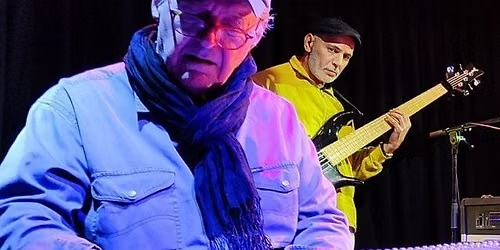
Featured artwork by Hal Cameron
SPEAKER BIOS
Connie Walker is a Pulitzer-Prize winning investigative journalist and host of the acclaimed podcasts Stolen and Missing & Murdered. Her work has exposed the crisis of violence in Indigenous communities and the devastating impacts of intergenerational trauma stemming from Indian Residential Schools.
A member of the Okanese First Nation, Walker has spent over two decades shedding light on often overlooked stories within Indigenous communities. Walker’s podcast Stolen: Surviving St. Michael’s, is one of the most comprehensive investigations into a single Canadian residential school. The series won a Pulitzer Prize and a Peabody Award, becoming the first podcast to win both awards in the same year. The podcast also won an Edward R. Murrow Award, an Alfred I. duPont-Columbia Award, a National Magazine Award (Ellie) from the American Society of Magazine Editors, and an honourable mention from the Dart Awards for Excellence in Coverage of Trauma.
Kimberly Murray is Queen’s University’s National Scholar in Indigenous Legal Studies in the Faculty of Law. She is the former Executive Director of the Truth and Reconciliation Commission of Canada and was the federally appointed Independent Special Interlocutor for Missing Children and Unmarked Graves and Burial Sites Associated with Indian Residential Schools. Kimberly is a member of Kanehsatà:ke Mohawk Nation, holds an LLM and LLB from Osgoode Hall Law School, and has been bestowed several Honorary LL.Ds.
Stephen Kakfwi is a Dene leader, politician, former premier of the Northwest Territories 2000–2003 (born 1950 near Fort Good Hope, NT). Kakfwi attended residential schools in Inuvik, Yellowknife and Fort Smith. He achieved national prominence because of his forceful appearance before the Mackenzie Valley Pipeline Inquiry. In the mid-1970s he argued passionately that the proposed construction of a pipeline across the traditional homeland of the Dene people before the settlement of their land claims would destroy their way of life as well as damage the natural environment of the region. In 2023 Kakfwi published Stoneface: A Defiant Dene, stories of a life on the land to leadership of a Nation.
Marie Wilson spent over three decades building an illustrious career in journalism before becoming one of three commissioners of the Truth and Reconciliation Commission of Canada (TRC). At the TRC, she worked for six and a half years to reveal the history and impacts of more than a century of forced residential schooling for Indigenous children. Wilson captures her TRC experiences in the national best-seller, North of Nowhere: Song of a Truth and Reconciliation Commissioner, now also released in French.
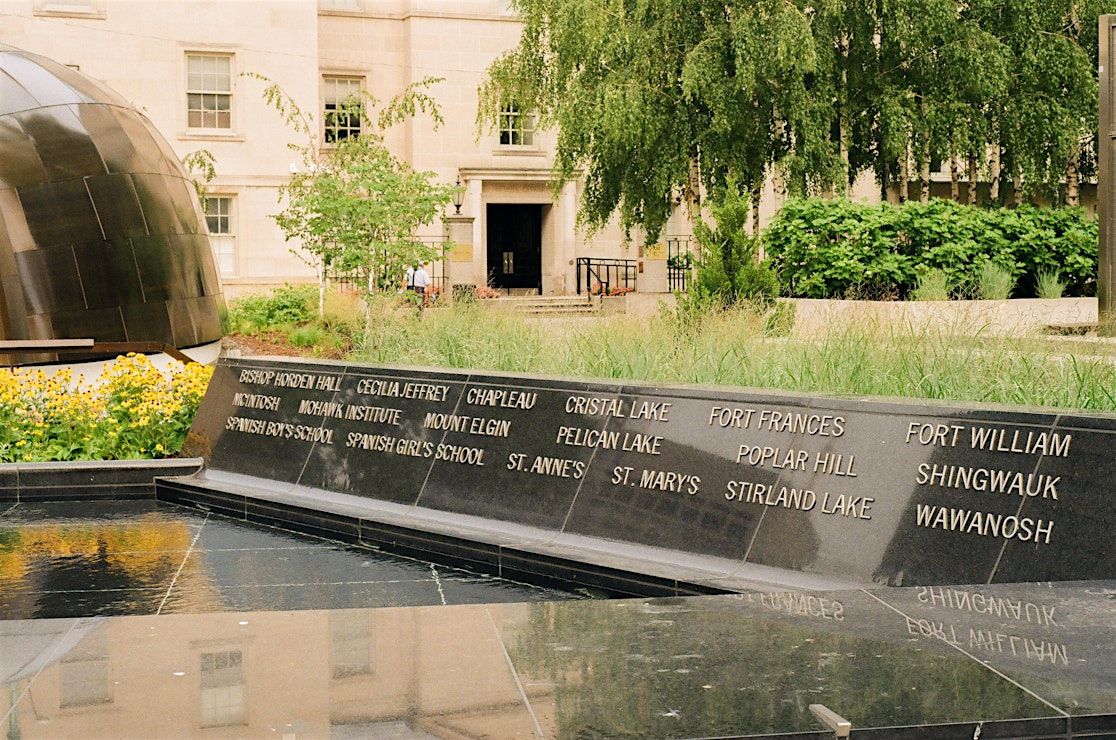
Where is it happening?
Event Location & Nearby Stays:
CAD 0.00