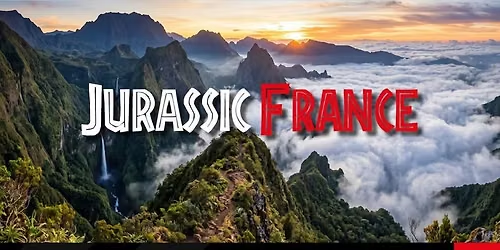
Jurassic France | Trekking Across Reunion Island, French Overseas Territory

Advertisement
At first glance, Réunion looks like the classic tropical island escape: palm trees, warm ocean air, Creole villages, and quiet beaches backed by turquoise water.
But do not be misled by the coastline.
Located deep in the Indian Ocean between Madagascar and Mauritius, Réunion was born millions of years ago through violent volcanic eruptions rising from the ocean floor, creating one of the most geographically diverse islands on the planet.
Beyond the beaches, the terrain suddenly rises into volcanic cirques, rainforest valleys, lava plains, waterfalls, and mountain ridgelines disappearing into the clouds. At times, the island feels as though France accidentally attached a volcanic jungle in the middle of the Indian Ocean.
Two volcanic systems dominate Réunion’s landscape: Piton des Neiges, the extinct massif that formed the island itself, and Piton de la Fournaise, one of the most active volcanoes in the world. Around them lie the enormous cirques of Mafate, Cilaos, and Salazie, vast collapsed calderas carved over time into landscapes so dramatic they often feel less like Earth and more like an overfunded fantasy film set.
Much of the island now falls within Réunion National Park, covering roughly 40 percent of the territory under UNESCO protection. What makes Réunion exceptional is not only the scenery, but the sheer density of variation compressed into such a small area. Trails begin in subtropical forest and end above the clouds. One day involves waterfalls and jungle humidity; the next, black volcanic plains that look almost Martian.
And then comes the cultural contradiction.
Réunion is technically France. Which means you can finish a demanding volcanic hike and still end the evening with excellent wine, proper cheese, and surprisingly perfect pastries. Somewhere between lava fields and mountain villages, the island quietly blends African, Malagasy and European influences into something entirely its own. French is official, Creole is everywhere, and daily life feels remarkably distant from continental Europe despite the baguettes stubbornly refusing to disappear.
Yet beneath the bakeries, beach towns, and French highways lies a terrain shaped by lava, erosion, altitude, and constant geological transformations. Steep, volcanic, and absurdly beautiful. Precisely why we are going.
Let’s go!
Day 1 // Arrival
Arrival in Réunion and overnight.
Day 2 // Cirque of Salazie
Transfer to island’s eastern side.
Sugarcane fields, Tamil temples, and lush tropical vegetation reveal a completely different version of France.
Along the way, we’ll stop at a vanilla plantation, pass through Creole villages shaped by African and Indian influences.
The route gradually climbs into the Cirque de Salazie, the greenest and most water filled of the island’s volcanic calderas. Waterfalls spill directly from vertical cliffs into dense jungle below.
Arrival in Hell-Bourg, widely considered one of the most beautiful villages in France, despite being located deep inside a collapsed volcanic amphitheater in the Indian Ocean.
Dinner and overnight in Salazie.
Day 3 // The Wild South and Lava Tunnels
Today the lush eastern coastline gradually gives way to black lava fields, jagged cliffs, and raw volcanic terrain shaped by recent eruptions from Piton de la Fournaise. In the Grand Brûlé region, lava flows have repeatedly reached the ocean, physically expanding the island itself over time.
Start with exploration of lava tunnels formed during previous eruptions offers the closest thing to entering another planet without involving NASA paperwork. Beneath the hardened basalt surface lies an underground network of mineral corridors, frozen lava formations, and volcanic conduits still carrying the atmosphere of something geologically unfinished.
Continue south toward Saint-Philippe through one of the island’s most dramatic coastal regions.
Day 4 // Piton de la Fournaise
Early departure toward Piton de la Fournaise, one of the most active volcanoes on Earth and the geological engine behind much of Réunion itself.
The road climbs through forests, pastures, and eventually into the absurdly surreal lunar landscape of the Pas de Bellcombe before reaching the trailhead. From here, the hike crosses lava formations, mineral plains, and volcanic rock toward the crater rim itself. The landscape becomes increasingly barren, silent, and otherworldly.
In the afternoon, descend toward Cilaos via the famous Road of 400 Turns, a route carved dramatically into the mountainside and considered one of the great drives of the Indian Ocean, before we re back in the mountains again.
Trek: 13 km / 531 m elevation gain / approx. 5 hours
Day 5 // Cilaos and Bras Rouge Falls
Today we start exploring the rugged terrain surrounding Cilaos, one of Réunion’s most isolated and visually dramatic mountain cirques.
The hike toward Bras Rouge Falls leads through dense vegetation, mineral rock formations, and river valleys carved over millions of years by erosion and volcanic activity. Refreshing swim in natural pools en route surrounded by volcanic cliffs and tropical vegetation.
elevation gain
Back in Cilaos, the atmosphere slows noticeably. Thermal springs, mountain gardens, Creole houses, and vineyards create a strange but deeply appealing combination of alpine village and tropical outpost.
Trek: 4 km / 390 m / approx. 2.5 hours
Day 6 // Ascent to Piton des Neiges
Late morning departure toward Piton des Neiges, the extinct volcano that, together with its twin Piton, formed Réunion itself and remains the highest point in the Indian Ocean.
The trail climbs steadily through highland forests, tamarind trees, and increasingly rugged alpine terrain. As elevation increases, views open across the surrounding cirques and volcanic relief of the island.
Arrival at the mountain refuge near 2,500 meters. Tonight’s plan is intentionally simple: early dinner, mountain air, and anticipation for the sunrise ascent.
Trek: 8 km / 1,100 m / approx. 5 hrs
Day 7 // Sunrise on the Roof of the Indian Ocean
Departure during the night for the summit push the summit of Piton des Neiges.
At 3,070 meters above sea level, the peak offers one of the most extraordinary panoramas anywhere in the region. At sunrise, the cirques, volcanic ridgelines, and cloud systems of Réunion slowly emerge beneath shifting morning light, revealing the full scale of the island’s geography.
Descent back to Cilaos, continue westward toward the coast. Black volcanic rocks relief gradually to beaches and sea shores. Little party never killed nobody celebration in the evening.
Ascent: 4 km / 600 m / approx. 2 hrs
Descent: 11 km / 1,700 m / approx. 6 hours
Day 8 // Maïdo and the Cirque of Mafate
Today we drive from sea level to over 2,000 meters in a remarkably short distance, once again demonstrating how geographically unreasonable Réunion really is.
At the Maïdo viewpoint, the island opens dramatically onto the Cirque of Mafate, an isolated volcanic caldera inaccessible by road and reachable only by foot or helicopter. Villages remain scattered deep within the mountains, connected primarily by hiking trails crossing ridgelines and valleys below towering cliffs.
In the afternoon, optional catamaran cruise along the west coast with possible sightings of dolphins, turtles, and seasonal humpback whales.
Day 9 // Optional Helicopter Flight and Departure
Morning at leisure or optional activities such as helicopter flight above the island’s inaccessible terrains of cirques, waterfalls and volcanic craters.
From the air, Réunion’s geography becomes fully understandable: a volcanic island built vertically, carved apart by erosion, and somehow held together by roads, villages, and French administration.
Sadly, its time for airport transfer and departure. Au revoir, until we reunite again x
Level of difficulty: moderate to hard (day 5&6)
Activities: trekking, swimming, sightseeing, culture immersion. Optional catamaran and helicopter flights,
Accommodation: lodges, guest houses – double sharing. One night in mountain refuge. Meals excluded except breakfasts and picnic lunch during treks.
Duration: 9 Days.
Cost: AED 7,490 excl. flights until JUNE 30th.
Flights: Emirates via MRU + Air Mauritius approx. 5800 AED.
Specifically Excluded:
Any expenses related to visas, meals, optional activities.
Visas:
Western passports visa free, otherwise French Overseas visa rules apply.
Visa waiver support available for anyone joining early.
It is participant sole responsibility to assure admission to country of destination.
On se voit à La Réunion x
Trekkup Crew
Whatsapp 050 4848238
Find all trekkups at linktr.ee/trekkup
But do not be misled by the coastline.
Located deep in the Indian Ocean between Madagascar and Mauritius, Réunion was born millions of years ago through violent volcanic eruptions rising from the ocean floor, creating one of the most geographically diverse islands on the planet.
Beyond the beaches, the terrain suddenly rises into volcanic cirques, rainforest valleys, lava plains, waterfalls, and mountain ridgelines disappearing into the clouds. At times, the island feels as though France accidentally attached a volcanic jungle in the middle of the Indian Ocean.
Two volcanic systems dominate Réunion’s landscape: Piton des Neiges, the extinct massif that formed the island itself, and Piton de la Fournaise, one of the most active volcanoes in the world. Around them lie the enormous cirques of Mafate, Cilaos, and Salazie, vast collapsed calderas carved over time into landscapes so dramatic they often feel less like Earth and more like an overfunded fantasy film set.
Much of the island now falls within Réunion National Park, covering roughly 40 percent of the territory under UNESCO protection. What makes Réunion exceptional is not only the scenery, but the sheer density of variation compressed into such a small area. Trails begin in subtropical forest and end above the clouds. One day involves waterfalls and jungle humidity; the next, black volcanic plains that look almost Martian.
And then comes the cultural contradiction.
Réunion is technically France. Which means you can finish a demanding volcanic hike and still end the evening with excellent wine, proper cheese, and surprisingly perfect pastries. Somewhere between lava fields and mountain villages, the island quietly blends African, Malagasy and European influences into something entirely its own. French is official, Creole is everywhere, and daily life feels remarkably distant from continental Europe despite the baguettes stubbornly refusing to disappear.
Yet beneath the bakeries, beach towns, and French highways lies a terrain shaped by lava, erosion, altitude, and constant geological transformations. Steep, volcanic, and absurdly beautiful. Precisely why we are going.
Let’s go!
Day 1 // Arrival
Arrival in Réunion and overnight.
Day 2 // Cirque of Salazie
Transfer to island’s eastern side.
Sugarcane fields, Tamil temples, and lush tropical vegetation reveal a completely different version of France.
Along the way, we’ll stop at a vanilla plantation, pass through Creole villages shaped by African and Indian influences.
The route gradually climbs into the Cirque de Salazie, the greenest and most water filled of the island’s volcanic calderas. Waterfalls spill directly from vertical cliffs into dense jungle below.
Arrival in Hell-Bourg, widely considered one of the most beautiful villages in France, despite being located deep inside a collapsed volcanic amphitheater in the Indian Ocean.
Dinner and overnight in Salazie.
Day 3 // The Wild South and Lava Tunnels
Today the lush eastern coastline gradually gives way to black lava fields, jagged cliffs, and raw volcanic terrain shaped by recent eruptions from Piton de la Fournaise. In the Grand Brûlé region, lava flows have repeatedly reached the ocean, physically expanding the island itself over time.
Start with exploration of lava tunnels formed during previous eruptions offers the closest thing to entering another planet without involving NASA paperwork. Beneath the hardened basalt surface lies an underground network of mineral corridors, frozen lava formations, and volcanic conduits still carrying the atmosphere of something geologically unfinished.
Continue south toward Saint-Philippe through one of the island’s most dramatic coastal regions.
Day 4 // Piton de la Fournaise
Early departure toward Piton de la Fournaise, one of the most active volcanoes on Earth and the geological engine behind much of Réunion itself.
The road climbs through forests, pastures, and eventually into the absurdly surreal lunar landscape of the Pas de Bellcombe before reaching the trailhead. From here, the hike crosses lava formations, mineral plains, and volcanic rock toward the crater rim itself. The landscape becomes increasingly barren, silent, and otherworldly.
In the afternoon, descend toward Cilaos via the famous Road of 400 Turns, a route carved dramatically into the mountainside and considered one of the great drives of the Indian Ocean, before we re back in the mountains again.
Trek: 13 km / 531 m elevation gain / approx. 5 hours
Day 5 // Cilaos and Bras Rouge Falls
Today we start exploring the rugged terrain surrounding Cilaos, one of Réunion’s most isolated and visually dramatic mountain cirques.
The hike toward Bras Rouge Falls leads through dense vegetation, mineral rock formations, and river valleys carved over millions of years by erosion and volcanic activity. Refreshing swim in natural pools en route surrounded by volcanic cliffs and tropical vegetation.
elevation gain
Back in Cilaos, the atmosphere slows noticeably. Thermal springs, mountain gardens, Creole houses, and vineyards create a strange but deeply appealing combination of alpine village and tropical outpost.
Trek: 4 km / 390 m / approx. 2.5 hours
Day 6 // Ascent to Piton des Neiges
Late morning departure toward Piton des Neiges, the extinct volcano that, together with its twin Piton, formed Réunion itself and remains the highest point in the Indian Ocean.
The trail climbs steadily through highland forests, tamarind trees, and increasingly rugged alpine terrain. As elevation increases, views open across the surrounding cirques and volcanic relief of the island.
Arrival at the mountain refuge near 2,500 meters. Tonight’s plan is intentionally simple: early dinner, mountain air, and anticipation for the sunrise ascent.
Trek: 8 km / 1,100 m / approx. 5 hrs
Day 7 // Sunrise on the Roof of the Indian Ocean
Departure during the night for the summit push the summit of Piton des Neiges.
At 3,070 meters above sea level, the peak offers one of the most extraordinary panoramas anywhere in the region. At sunrise, the cirques, volcanic ridgelines, and cloud systems of Réunion slowly emerge beneath shifting morning light, revealing the full scale of the island’s geography.
Descent back to Cilaos, continue westward toward the coast. Black volcanic rocks relief gradually to beaches and sea shores. Little party never killed nobody celebration in the evening.
Ascent: 4 km / 600 m / approx. 2 hrs
Descent: 11 km / 1,700 m / approx. 6 hours
Day 8 // Maïdo and the Cirque of Mafate
Today we drive from sea level to over 2,000 meters in a remarkably short distance, once again demonstrating how geographically unreasonable Réunion really is.
At the Maïdo viewpoint, the island opens dramatically onto the Cirque of Mafate, an isolated volcanic caldera inaccessible by road and reachable only by foot or helicopter. Villages remain scattered deep within the mountains, connected primarily by hiking trails crossing ridgelines and valleys below towering cliffs.
In the afternoon, optional catamaran cruise along the west coast with possible sightings of dolphins, turtles, and seasonal humpback whales.
Day 9 // Optional Helicopter Flight and Departure
Morning at leisure or optional activities such as helicopter flight above the island’s inaccessible terrains of cirques, waterfalls and volcanic craters.
From the air, Réunion’s geography becomes fully understandable: a volcanic island built vertically, carved apart by erosion, and somehow held together by roads, villages, and French administration.
Sadly, its time for airport transfer and departure. Au revoir, until we reunite again x
Level of difficulty: moderate to hard (day 5&6)
Activities: trekking, swimming, sightseeing, culture immersion. Optional catamaran and helicopter flights,
Accommodation: lodges, guest houses – double sharing. One night in mountain refuge. Meals excluded except breakfasts and picnic lunch during treks.
Duration: 9 Days.
Cost: AED 7,490 excl. flights until JUNE 30th.
Flights: Emirates via MRU + Air Mauritius approx. 5800 AED.
Specifically Excluded:
Any expenses related to visas, meals, optional activities.
Visas:
Western passports visa free, otherwise French Overseas visa rules apply.
Visa waiver support available for anyone joining early.
It is participant sole responsibility to assure admission to country of destination.
On se voit à La Réunion x
Trekkup Crew
Whatsapp 050 4848238
Find all trekkups at linktr.ee/trekkup
Advertisement
Where is it happening?
Dubai Airport, Terminal 3, ستاربكس, مطار دبي الدولي دبي, الإمارات العربية المتحدة, Garhoud, United Arab Emirates
Event Location & Nearby Stays:
Know what’s Happening Next — before everyone else does.
Host or PublisherTrekkup Dubai