Faculty of Environmental and Life Sciences' Inaugural Lecture series
Schedule
Wed Apr 22 2026 at 04:00 pm to 06:00 pm
UTC+01:00Location
Centenary Building (100) | Southampton, EN

About this Event
Join us for an exciting event in room 4013 in the Centenary Building at the University of Southampton, where we will be hosting a series of engaging lectures from newly appointed Professors at the Faculty of Environmental and Life Sciences.
During the event, our Professors will present a lecture to highlight their research, real-world impact and future research directions.
At our next event on Wednesday 22nd April 2026, Professor Mark Chapman from the School of Biological Sciences and Professor Tom Gernon from the School of Ocean and Earth Science will be presenting their research.
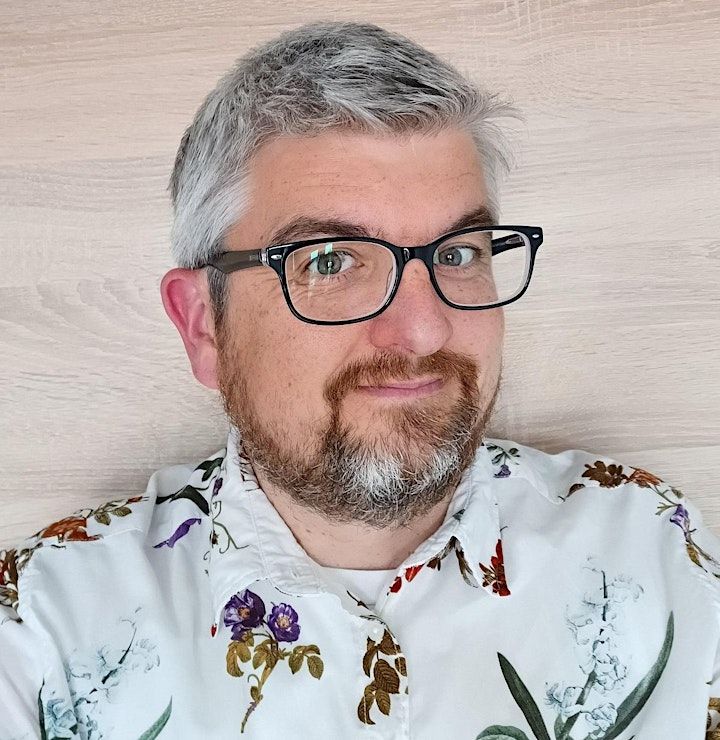
Professor Mark Chapman is a Professor at the University of Southampton and has been here for 12 years. Prior to this he did his PhD in St Andrews, and postdocs in Athens, Georgia, USA and Oxford. In his lab, one of the main themes of his research is domestication and crop evolution. He uses his background in evolutionary biology to inform the study of crop origins and diversification, often using genomics and other ‘omic technologies, however he makes sure he never forgets about what these plants look like, where they live and how they are affected by humans and the environment. Mark has a particular research focus on novel and underutilised crops (NUCs) – crops which are internationally less known but bring adaptive and nutritional benefits. With the climate changing, and crops feeling the stress, we need to explore these NUCs as mechanisms of diversifying our agriculture and diets.
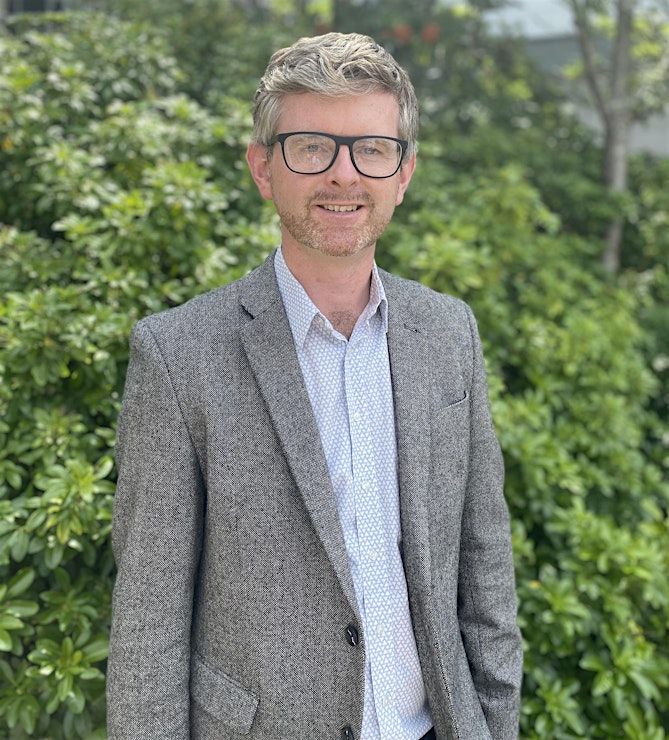
Professor Tom Gernon obtained his BSc (Hons) in Geology from University College Dublin (First-Class Honours) and completed his PhD in Earth Sciences at the University of Bristol, funded by De Beers and the Diamond Trading Company. His doctoral research took him to diamond mines across Botswana, Lesotho, and South Africa.
He subsequently held a postdoctoral position at the University of Bristol (2007–2008), conducting fieldwork across the tundra of Arctic Canada. In recognition of this work, he received the President’s Award of the Geological Society of London. After serving as Lecturer in Geology at Trinity College Dublin (2008–2009), he joined the University of Southampton as Lecturer (Assistant Professor) in Earth Science. He was promoted to Associate Professor in 2016 and to Professor in 2023.
Since 2025, he has been a Visiting Professor at the GFZ Helmholtz Centre for Geosciences. He was named a Turing Fellow in 2018 and again in 2021. His pioneering research has attracted an $8 million grant from a US-based philanthropic foundation.
Tom has authored or co-authored more than 90 peer-reviewed papers in leading international journals, including Nature and Science, and has delivered over 75 invited lectures at conferences, workshops, seminars, and public events worldwide. He led the discovery of mantle waves, recognised as one of the world’s top ten Breakthroughs of the Year in 2024 by Science magazine. Science described this work as “a compelling addendum to the theory of plate tectonics.” His scientific discoveries have been featured in The New York Times, The Guardian, and the BBC.
Agenda
🕑: 03:30 PM - 04:00 PM
Registration and Refreshments
🕑: 04:00 PM - 04:10 PM
Welcome to the Faculty of Environmental and Life Sciences' Inaugural Lectures
Host: Professor Steve Darby
Info: Professor Steve Darby, Associate Dean for Research in the Faculty of Environmental and Life Sciences, opens the event.
🕑: 04:10 PM - 05:10 PM
Bean There, Done That: From School Classrooms to Global Food Security
Host: Professor Mark Chapman
Info: We are accustomed to a range of pulses, fruits and vegetables being available to us; however, we rely on surprisingly few: almost half of human calories come from just three crops (wheat, rice, and maize). In this talk I will discuss the impact of this over-reliance in a changing world and how agricultural diversification can improve this as well as provide dietary benefits. My focus is legumes, due to their ability to fix atmospheric Nitrogen (reducing the need to fertilisers) and their nutritional benefits, especially as a meat substitute. I will discuss two aspects of my research. First, how we can use genome sequencing to understand crop origins and the basis of important traits such as drought tolerance and yield. Second, how my work with schools has developed into a platform for knowledge exchange. I will end by discussing what we might be eating in the future, and how we will identify and evolve these novel crops.
🕑: 05:10 PM - 06:10 PM
Mantle Waves: The Great Disrupter of Diamonds and Continents
Host: Professor Tom Gernon
Info: When continents tear apart, hot mantle wells upward to fill the gap. This buoyant mantle current brushes against the relatively cold base of the continent, cools, and sinks—generating a slow swirling circulation reminiscent of a lava lamp. This process sets in motion a remarkable chain of events with far-reaching consequences for the Earth system. In this lecture, I’ll describe the discovery of a previously unrecognised phenomenon: large-scale sweeping disturbances, triggered by this circulation, that tumble in slow-motion beneath continents for hundreds of millions of years. The journal Science named these features “mantle waves”. Mantle waves trigger extraordinary migrating pulses of diamond-rich volcanism, systematically re-sculpt continental landscapes, and sweep away tens of kilometres of the billion-year-old roots of continents. This lecture tells the story of how this discovery unfolded over two decades, starting in the Kalahari Desert of southern Africa.
🕑: 06:15 PM - 07:15 PM
Post event reception and canapes
Where is it happening?
Centenary Building (100), University Road, Southampton, United KingdomEvent Location & Nearby Stays:
GBP 0.00