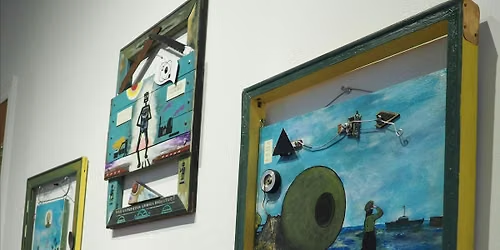
Eunice Luk at Susan Hobbs Gallery
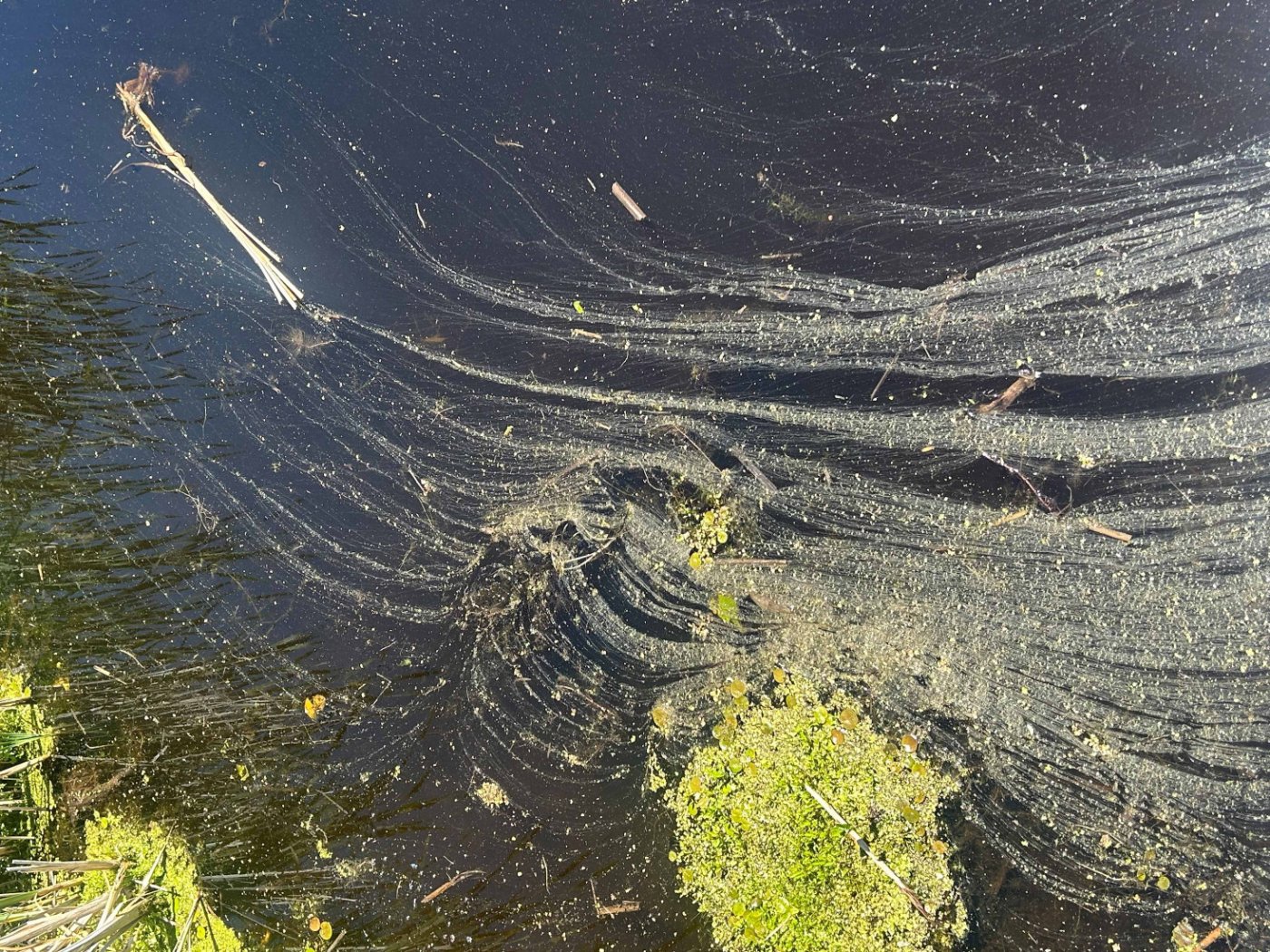
As Haraway notes in When Species Meet, technologies such as “Crittercams” are not neutral; they actively shape what can be seen, known, and imagined about animals. The microorganisms in Luk’s work are involuntary collaborators, yet their movements, gatherings, and everyday “life doings become the meaning-making generators of the work itself.”1
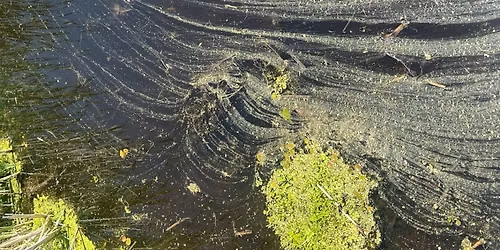
While attempting to locate and study the elusive freshwater mussel - a critically imperilled species in Ontario and a vital contributor to the health of local aquatic ecosystems - Eunice Luk was astonished to discover, within her water samples, the intricate movements of an entire working culture of microscopic beings: feeding, gathering, colliding, and drifting. As she kept these samples on the windowsill of her studio, she witnessed the gradual reconfiguration of their new environment. Some organisms dwindled while others emerged. Algae thickened into dense clusters, softening the rigid edges of the jar.
Through this sustained act of observation, Luk cultivated an intimate knowledge of this micro-river and, in turn, a deeper spiritual connection to the lives the river contained. She proposes that such closeness - an attention rooted in care and sustained encounter - can prompt a reconsideration of our own participation in, and responsibility to, the ecologies that surround us.
[1] Haraway, Donna Jeanne. When Species Meet. 262. Minneapolis: University of Minnesota Press, 2008.
Where is it happening?
CAD 0.00