Could your yard support dragonflies? A biodiversity workshop

About this Event
Tucked away in the southeast corner of Lakeside Community Garden is Dragonfly Lair, a vernal pond we hand dug in 2025. This year, Tree Swallows nested in a box overlooking the Lair. Dragonflies found the Lair. Every day now, birds stop by to bathe. Blue-spotted Salamanders shelter nearby.
This was once disturbed ground. Heavily tilled, compacted, sprayed with chemicals. In this half-day series, we read that disturbance and learn how to work with Water, plants, and Soil to support dragonflies, birds, and insects.
9:00–10:30am
Reading disturbance: who moves in, why, and how to respond
with Joyce Hostyn, Little Forests Kingston and 1000 Islands Master Gardeners
Before Dragonfly Lair, this was disturbed ground. In the 10 years since being left fallow, pasture grasses moved in. Asters, Goldenrods, Ragweed. More recently, Common Buckthorn, Wild Parsnip, Canada Thistle, and Dog-strangling Vine arrived. We've planted hundreds of plants in response. During this walkshop, we'll read the disturbance that called them here, discuss how and when to remove unwanted neighbours, and walk through the community taking shape in their place. What does it take to shift a heavily disturbed site toward an ecologically rich plant community that invites dragonflies, bees, butterflies, and birds to call this place home? Handout included.
10:30–noon
Building a dragonfly lair: pocket wetland as habitat
with Josh Cowan, Little Forests Kingston
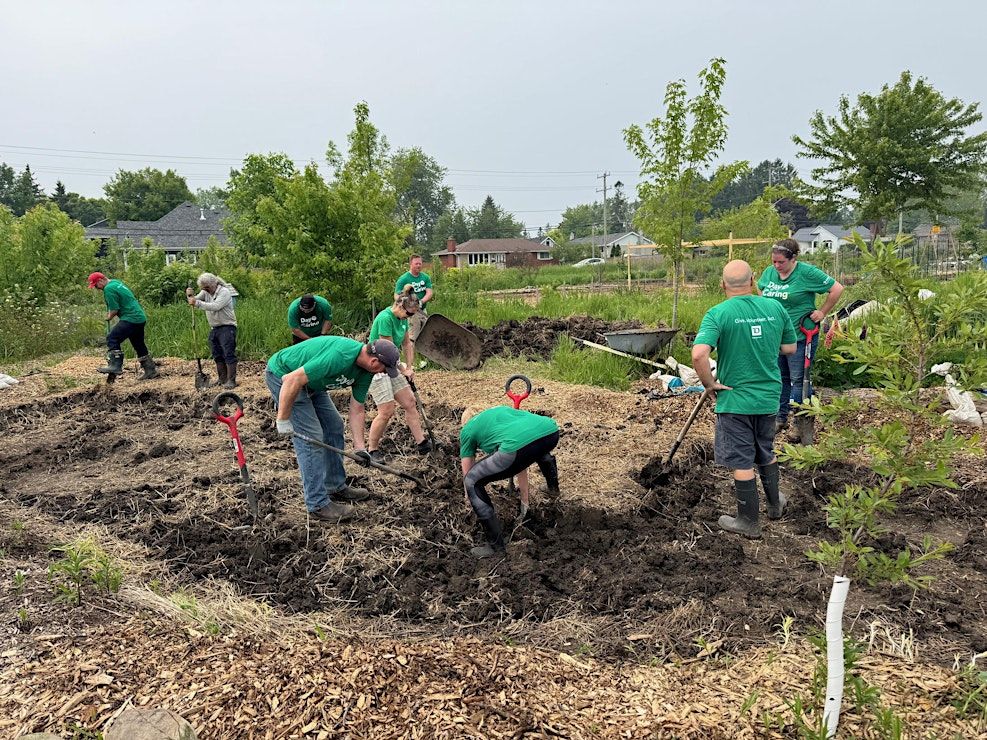
Dragonfly Lair was hand dug by people who wanted to invite Water back to this land. Tree Swallows nest in boxes above. Blue-spotted Salamanders shelter nearby. This year, dragonflies found the Lair. Dragonfly Lair extends an invitation to Wood Frogs, Green Darners, the full community of kin who follow water. Why dig a natural pond? Especially one that dries up in summer. Josh Cowan, trained in watershed restoration with Dr. Rajendra Singh, the Waterman of India, makes the case for vernal ponds as some of the most biodiverse and undervalued habitat in the urban landscape. Seasonal by nature, they support neighbours permanent ponds can't. Across Kingston, imagine a network of pocket wetlands as a chain of stepping stones, connecting fragmented habitat and hydrating the land between them. Josh walks through how Dragonfly Lair was hand-dug, what it takes to capture and store water in an urban setting, and what it means to invite Water back as kin. Handout included.
Part of Neighbouring, funded by the Invasive Species Action Fund (Invasive Species Centre) in partnership with 1000 Islands Master Gardeners.
Where is it happening?
Event Location & Nearby Stays:
CAD 30.00