APA Arizona - Southern Section & GPS Barrio Libre/Viejo Historical Tour
Schedule
Thu Apr 02 2026 at 01:00 pm to 03:00 pm
UTC-07:00Location
165 W Alameda St | Tucson, AZ

About this Event
APA Arizona Southern Section and the Graduate Planning Society Presents:
Barrio Libre/Viejo Historical Walking Tour
Thursday, April 2nd from 1 to 3 pm
Registration for this event is free. However, we do ask that if you are able to, please consider donating to the event. All profits go directly to the Graduate Planning Society (CAPLA) to cover expenses related to registration, travel, and other expenses for the 2026 National Planning Conference.
This session is eligible for 2 CM credits. Please be sure to log your credits in the APA Portal.
Estimated Schedule
- 1pm - Tour begins at Presidio Plaza (15 min)
- 1:30 - Tour of La Placita (15 min)
- 1:45 - Walk and Talk to El Tiradito
- 2pm - Tour of El Tiradito
- 2:15 - Walk and talk to to Sosa-Carillo-Fremont house
- 2:30 - Group Tour of Sosa-Carillo-Fremont House
- 3pm - Tour concludes
The Barrio Libre/Viejo Historical Tour will commence at Tucson City Hall Plaza and end by the Tucson Convention Center. The walking tour will cover topics of historic preservation and urban renewal, focusing on planning decisions, community activism, and institutional inequity that have shaped Tucson’s downtown into what it is today.
Barrio Libre/Viejo was an ethnic enclave dating back to the Gadsen Purchase of 1853. As Tucson’s population boom following WWII, so did the barrio’s; becoming a safe place for Mexican, Asian and Black-Americans. The area was characterized by its ethnic businesses, adobe structures, and narrow roads. However, a series of decisions by city officials, planners, and business groups led to its deterioration, and ultimately its destruction.
In the late 1960s, the city of Tucson received federal funding from the Urban Renewal Act of 1954 to demolish 29 city blocks downtown, and at the center was Barrio Libre/Viejo. 80 acres were demolished to make way for the economic development of Tucson and encourage tourism with the construction of the Tucson Community Center, which today we know as the Convention Center. Over 300 families were displaced; many not receiving adequate compensation for their homes. Urban renewal disproportionally caused both physical and cultural loss for the Mexican American population of Tucson. The process of disinvestment followed by urban renewal in Downtown Tucson also represents institutional inequity. Today, all that physically remains from Barrio Libre/Viejo is a historic home, a gazebo, and a legacy business. The Tucson Museum of Art, City Hall and the Tucson Convention Center now stand in the heart of Barrio Libre/Viejo.
Attendees will visit three sites associated with the barrio, two of which are on the National Register of Historic Places:
Sosa-Carillo-Fremont House (1858, 1880) NRHP. 1971
Originally preserved due to its connection with Arizona territorial governor John Fremont, the Latino community led the initiative to rename the historic adobe home to accurately represent its long lineage in the Carillio family.
La Plaza de la Mesilla (1955, replica 1880)
Once a place where festivals, after church gatherings and birthday celebrations, a lonely gazebo now stands between a coffee shop and an apartment building. Originally, within the urban renewal boundary, it was saved by Alva Torres, a community member who formed a coalition to advocate for its relocation. Attendees will explore how La Placita has retained its historical and cultural significance through past community efforts to reactivate the space.
El Tiradito (1870s, c.1895, 1940) NRHP. 1969
El Tiradito, or the castaway, is a small wishing shrine adorned with candles and pictures of loved ones that have passed. Attendees will have the opportunity to learn about the urban legend of El Tiradito, and how the altar has been a place of solace for the community through World Wars and political movements.
In the discussion to follow, attendees will learn that historic preservation, and development is not neutral, and will have the opportunity to discuss the decisions made by public and private actors led to the decimation of the Mexican American barrio.
For more information on the Graduate Planning Society, please visit: https://capla.arizona.edu/student-resources/student-organizations/GPS
Please follow APA Arizona Southern Section on LinkedIn here: https://www.linkedin.com/in/apa-az-southern-arizona-section-board-5991146b/
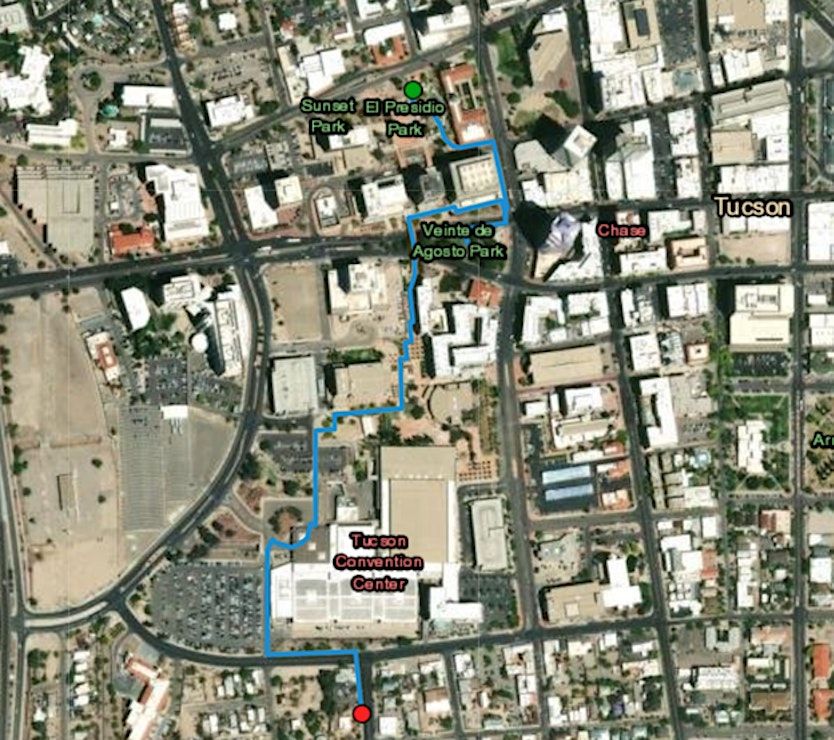
Where is it happening?
165 W Alameda St, 165 West Alameda Street, Tucson, United StatesEvent Location & Nearby Stays:
USD 0.00