Think Like a Nerve: Upper Cervical Ecology

Advertisement
Friends & Colleagues -- I'm so excited launch this brand-new advanced series of 3 classes, starting on Nov 7th -- 'Think like a Nerve'.
This is geared for skilled manual therapists (LMT, PT, DO, DC's) seeking clearer strategies for assessing and treating peripheral nerves. Each class is 2 hours on nerve architecture, inflammatory ecology, and hands-on technique. Each is online/in-person, and can be taken on its own or all together as a discounted bundle.
🔗 For more info on the series & to sign up for nov 7th’s ‘upper cervical ecology’ : https://bit.ly/4yAF9Xx
A headache that cascades upward from a cranky neck, the burning ache along a shoulder blade, the knee that still twinges after its tissues should have healed: these cases fill our treatment rooms. We tend to focus on posture, motor control and repetitive stress, but the health of the nerves in these tissues deserves a central place in our reasoning. We regularly find inflammation far more robust than the state of the tissues would predict, and tenderness or guarding that surprises us. Where inflammation persists without clear cause, or pain seems mistuned, we need to understand how to navigate the local nerve ecology.
That takes much more than the classic wiring diagram of spinal levels and target tissues. We need to understand what keeps a nerve healthy, what irritates it, and how to help it return to a calmer, better-resourced state. That clarity makes every method we use safer, and sometimes it decides whether our work helps at all.
Each two-hour class focuses on one region: its major nerves, how they move and what irritates them, and the common conditions where neuritis or neuropathy may be involved. Then we practice neurodynamic positioning, careful palpation of the nerve sheath along its length, and graded hands-on treatment strategies.
🧠 Nov 7 - Upper Cervical Ecology. The nerves, dura and vertebral dynamics of the suboccipital region, and their part in headache and neck pain.
🦋 Nov 21 - Nerves of the Shoulder Blade. The nerves supplying the scapula, clavicle and glenohumeral joint, and their role in pain, scapular dyskinesia and rotator cuff dysfunction.
🦵 Dec 5 - Nerve Ecology of the Knee. Navigating the saphenous, common fibular and tibial nerves, and the cutaneous nerves of the lateral and posterior knee.
If this sounds exciting, please help me make this new offering a success! I'd appreciated you tagging/sharing with anyone you think would be interested, and feel free to leave a question/comment here!
🔗 For more info on all classes, and to sign up for Nov 7th’s ‘upper cervical ecology’: https://bit.ly/4yAF9Xx
🕙 All classes run 10:00 am to 12:00 pm Pacific
🎓 2 CE hours per class
💻 Live on Zoom / in person: confirm format
🎥 Every registrant receives a permanent recording, handouts, and a quiz
💲 $50 per class, or $125 for all three
Advertisement
Where is it happening?
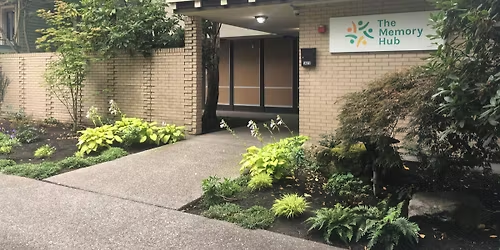
4649 Sunnyside Ave N, Seattle, WA 98103-6900, United States
Event Location & Nearby Stays:
Know what’s Happening Next — before everyone else does.
Host or PublisherNerve & Soma