The Neurophenomenology of Surrender. Dr. Josh Brahinsky
Schedule
Wed, 29 Apr, 2026 at 05:00 am
UTC+05:30Location
University of Cambridge: Ground Floor Lecture Theatre, Dept. of Psychology, Downing Site | New Delhi, DL

Advertisement
Tuesday 28 April 2026, 16:30–18:00What happens in the brain when people choose to let go?
Neuroscientists and social scientists have mapped how meditation sharpens attention and cultivates compassion, but the voluntary surrender of agency has remained largely uncharted territory.
Speaking in tongues, practiced by an estimated 500 million people worldwide, offers a rare empirical window: practitioners deliberately relinquish linguistic control and describe the experience as renewing the mind and motivating social engagement.
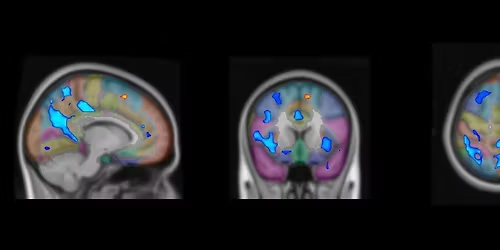
Drawing on neuroscience, anthropology, and his new book Tongues of Fire: How Charismatic Prayer Changes Evangelical Brains and Inspires Spirit-Filled Activism, Dr. Josh Brahinsky (Stanford/McGill) presents findings that combine phenomenology with fMRI and EEG studies across lab and church settings to suggest a distinct neural signature of agency release: brain regions associated with action planning and social engagement deactivated, deliberate top-down control loosened, and the brain shifted into a more integrated mode of activity.
The more fully practitioners let go, the higher their creativity scores and the richer their brain activity. The more people practiced, the stronger these effects became — and rather than feeling less in control, people reported feeling more empowered and more connected to others.
This raises a puzzle both anthropological and neuroscientific: how do culturally embedded practices create paradoxical states where letting go becomes a way of gaining agency? And towards what end?
Advertisement
Where is it happening?
University of Cambridge: Ground Floor Lecture Theatre, Dept. of Psychology, Downing Site, Department of Psychology University of Delhi, Zeenath Men's Wear Block G, University Campus, Delhi 110007, India, New DelhiEvent Location & Nearby Stays:

Know what’s Happening Next — before everyone else does.