The Iberian Powerhouse: Journey Through the Secret Reds of Spain & Portugal

Advertisement
1. Tempranillo: The "Early" Conqueror ��
The name comes from the Spanish word temprano, meaning "early," because this grape ripens weeks before most other Spanish red varieties.
The History & Journey
• Ancient Roots: It is believed to have been brought to the Iberian Peninsula by the Phoenicians over 3,000 years ago.
• The Identity Crisis: Tempranillo is the "Man of a Thousand Names." In Rioja, it’s Tempranillo; in Ribera del Duero, it's Tinto Fino; in Portugal, it’s Tinta Roriz (in the north) or Aragonez (in the south).
• Global Traveler: While it owns 80% of Rioja, it has successfully traveled to Argentina, Australia, and even the USA, though it never quite tastes the same as it does in Spanish soil.
In the Glass
• Flavor Profile: Think lush red cherries, dried figs, and cedar. When aged in oak (which it loves), it picks up notes of tobacco, vanilla, and leather.
• The Vibe: It has a medium-to-full body with "dusty" tannins. It’s the ultimate food wine—perfect with grilled meats or aged Manchego cheese.
Famous Labels & Purchase Sources
• Rioja: Look for Marqués de Riscal or La Rioja Alta.
• Ribera del Duero: Look for Vega Sicilia (the legend) or Emilio Moro.
• Reliable Sources: Websites like Wine.com, Bodeboca, or local specialty importers like Decantalo.
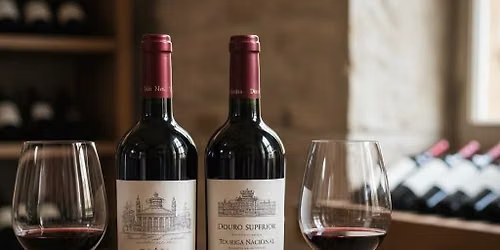
2. Touriga Nacional: The "King" of Portugal �
If Tempranillo is the conqueror, Touriga Nacional is the King. It is widely considered Portugal's finest noble grape.
The History & Journey
• Dão Origins: It started in the Dão region but found its fame in the rugged, schist-soiled hills of the Douro Valley.
• The Near-Extinction: Because the vine produces very few grapes (low yield), many farmers stopped growing it in the mid-20th century. It took a massive effort by quality-focused winemakers to bring it back to the throne.
• From Port to Table: For centuries, it was only seen as a "blending grape" for Port wine. Today, it’s the superstar of high-end dry red wines.
In the Glass
• Flavor Profile: Intense and "brooding." It is famous for its floral aroma of violets mixed with dark fruits like plum and blueberry.
• The Vibe: High tannins and high acidity. It’s a powerful wine that feels like velvet but has the strength to age for 20+ years.
Famous Labels & Purchase Sources
• Douro Reds: Look for Quinta do Crasto, Niepoort, or Post Scriptum.
• The Dão: Look for Quinta dos Roques.
• Reliable Sources: Portugal Vineyards (online) or Garrafeira Nacional are the gold standards for sourcing these gems directly from Portugal.
The name comes from the Spanish word temprano, meaning "early," because this grape ripens weeks before most other Spanish red varieties.
The History & Journey
• Ancient Roots: It is believed to have been brought to the Iberian Peninsula by the Phoenicians over 3,000 years ago.
• The Identity Crisis: Tempranillo is the "Man of a Thousand Names." In Rioja, it’s Tempranillo; in Ribera del Duero, it's Tinto Fino; in Portugal, it’s Tinta Roriz (in the north) or Aragonez (in the south).
• Global Traveler: While it owns 80% of Rioja, it has successfully traveled to Argentina, Australia, and even the USA, though it never quite tastes the same as it does in Spanish soil.
In the Glass
• Flavor Profile: Think lush red cherries, dried figs, and cedar. When aged in oak (which it loves), it picks up notes of tobacco, vanilla, and leather.
• The Vibe: It has a medium-to-full body with "dusty" tannins. It’s the ultimate food wine—perfect with grilled meats or aged Manchego cheese.
Famous Labels & Purchase Sources
• Rioja: Look for Marqués de Riscal or La Rioja Alta.
• Ribera del Duero: Look for Vega Sicilia (the legend) or Emilio Moro.
• Reliable Sources: Websites like Wine.com, Bodeboca, or local specialty importers like Decantalo.
2. Touriga Nacional: The "King" of Portugal �
If Tempranillo is the conqueror, Touriga Nacional is the King. It is widely considered Portugal's finest noble grape.
The History & Journey
• Dão Origins: It started in the Dão region but found its fame in the rugged, schist-soiled hills of the Douro Valley.
• The Near-Extinction: Because the vine produces very few grapes (low yield), many farmers stopped growing it in the mid-20th century. It took a massive effort by quality-focused winemakers to bring it back to the throne.
• From Port to Table: For centuries, it was only seen as a "blending grape" for Port wine. Today, it’s the superstar of high-end dry red wines.
In the Glass
• Flavor Profile: Intense and "brooding." It is famous for its floral aroma of violets mixed with dark fruits like plum and blueberry.
• The Vibe: High tannins and high acidity. It’s a powerful wine that feels like velvet but has the strength to age for 20+ years.
Famous Labels & Purchase Sources
• Douro Reds: Look for Quinta do Crasto, Niepoort, or Post Scriptum.
• The Dão: Look for Quinta dos Roques.
• Reliable Sources: Portugal Vineyards (online) or Garrafeira Nacional are the gold standards for sourcing these gems directly from Portugal.
Advertisement
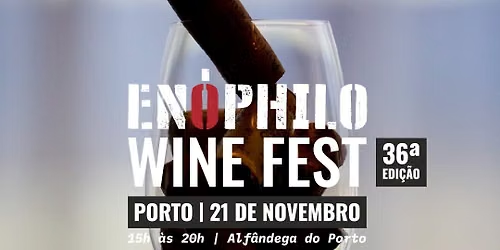
Where is it happening?
Porto, Portugal
Event Location & Nearby Stays:
Know what’s Happening Next — before everyone else does.
Host or PublisherVino Route






![T\u014d Y\u014d [Understage]](https://cdn-ip.allevents.in/s/rs:fill:500:250/g:sm/sh:100/aHR0cHM6Ly9jZG4tYXouYWxsZXZlbnRzLmluL2V2ZW50czEwL2Jhbm5lcnMvM2MyNjkwYjg5ZDlkY2VjNTM1ZjEwNGUxOTdhMTFlODBlMTViODJkYzBjOTcyZmM1MWUwZjcxMzdhYTQ0YjJjMS1yaW1nLXcxMjAwLWg4MDAtZGMwODE4MDgtZ21pcj92PTE3ODc1NzEwODY.avif)