THE AMANUENSIS

About this Event
THE AMANUENSIS is an energetic in-person event for friends and family.
A historical tell-all, live on stage
Get ready for a hilarious, thought-provoking look at the history of the roots of Disney and where he got his stories from. This on-stage tell-all brings history to life with energy and humor.
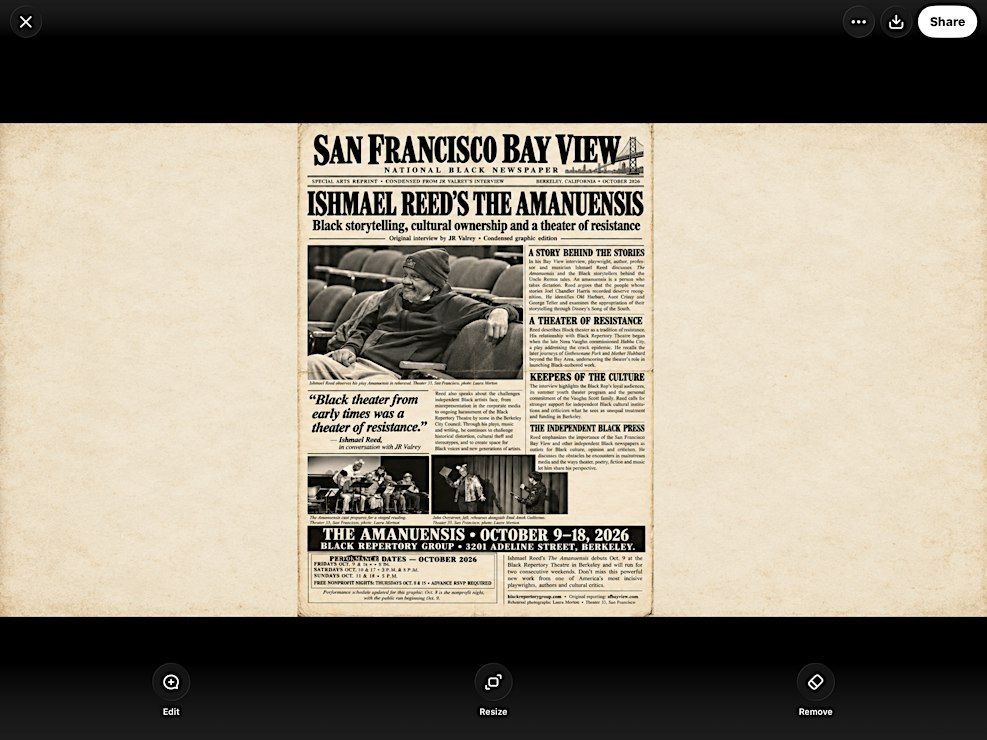
Behind the Curtain: Ishmael Reed’s The Amanuensis Exposes America’s Fantasy Machine
By Wanda Sabir
The October engagement closes Sunday, October 18, at Berkeley's Black Repertory Group. The play returns November 13–22 as part of the 64th Mainstage Season.
In the year marking the 250th anniversary of American independence, playwright Ishmael Reed pulls down another wall. What we discover behind it is not pretty, despite the beautiful music, dancing flowers, animated animals and smiling faces we have been taught to love.
In The Amanuensis, now playing at the Black Repertory Group in Berkeley, Reed asks us to examine not just the theft of Black labor, but the theft of Black genius. We are accustomed to hearing how enslaved Africans built America with their bodies. Reed reminds us that it was also their intellect, their imaginations, their stories and their cultural brilliance that powered the machinery of American capitalism.
Hollywood is one of America's great fantasy machines. And Black intellect has been part of its circuitry from the beginning.
An amanuensis is a person who takes dictation, a note-taker, not necessarily an author. Joel Chandler Harris collected the stories of African people enslaved on a Georgia plantation, published them as the Uncle Remus tales, and became famous. The storytellers, including Aunt Crissy, Old Harbert and George Terrell, remained largely invisible while the white man who recorded their intellectual property became a celebrated literary figure.
Enter Walt Disney.
Disney adapted Harris's tales into the 1946 film Song of the South, a technically imaginative combination of live action and animation. The film generated substantial revenue and later inspired theme park attractions. The original African storytellers received neither the recognition nor the financial rewards associated with this cultural enterprise.
In Reed's play, however, the storytellers return to collect.
And what a reckoning it is!
The work is excellent! Bobby Clements's direction clearly articulates Reed's vision, and the performances are strong. My one reservation is the opening narrative, which is a bit long. Too much tell and not enough show. However, when I began doing my own research into the wee hours of the night, I understood why all that information was there. The history is essential to understanding what Reed is asking us to consider.
Reed's theater is not for the passive spectator. It is funny, sometimes absurd, historically provocative and intellectually demanding. You might leave wondering, "What did I just see?" Then, as you travel home, the questions continue.
The seductive power of the lie
I found Song of the South on the Internet Archive. Beneath the film were comments from viewers remembering how much they loved it. The nostalgia was palpable.
I watched James Baskett, the extraordinarily talented Black actor who portrayed Uncle Remus, moving through a world of singing birds, flowers and beautiful animation. His warmth fills the screen. He sings "Zip-a-Dee-Doo-Dah," and for a moment the audience is invited to believe that everything is wonderful.
But I kept thinking: How do you make something as brutal as slavery beautiful?
The film is set after emancipation, yet it preserves an idyllic vision of plantation life. The formerly enslaved Black man becomes the emotional caretaker of a white child whose family is experiencing difficulties. His stories comfort the child, protect him and help restore the white family's happiness.
I thought about Shahrazad in One Thousand and One Nights, whose storytelling becomes a means of survival. Uncle Remus also uses stories to prevent a catastrophe. But whose survival does his wisdom serve?
In Disney's universe, the Black storyteller's intelligence becomes another service rendered to white people.
We have encountered this fantasy before in D.W. Griffith's The Birth of a Nation and Gone with the Wind. These films differ aesthetically, but each helped normalize a mythology in which white supremacy could appear noble, romantic or benign.
This is the seduction of cinema. Once we enter the theater, the world outside disappears. We accept the director's construction of reality. Like the Wizard of Oz, the person behind the curtain controls what we see.
And we willingly participate.
I remember the children wearing mouse ears on television, the Disney programs, the fairy tales that became part of our childhoods. We passed these stories to our children, who passed them to theirs.
How much of what we believed about ourselves and one another was manufactured inside a studio?
We think we are living in the real world. Perhaps we are living inside a studio set.
The mask comes off
In The Amanuensis, Reed refuses to let the plantation fantasy remain undisturbed.
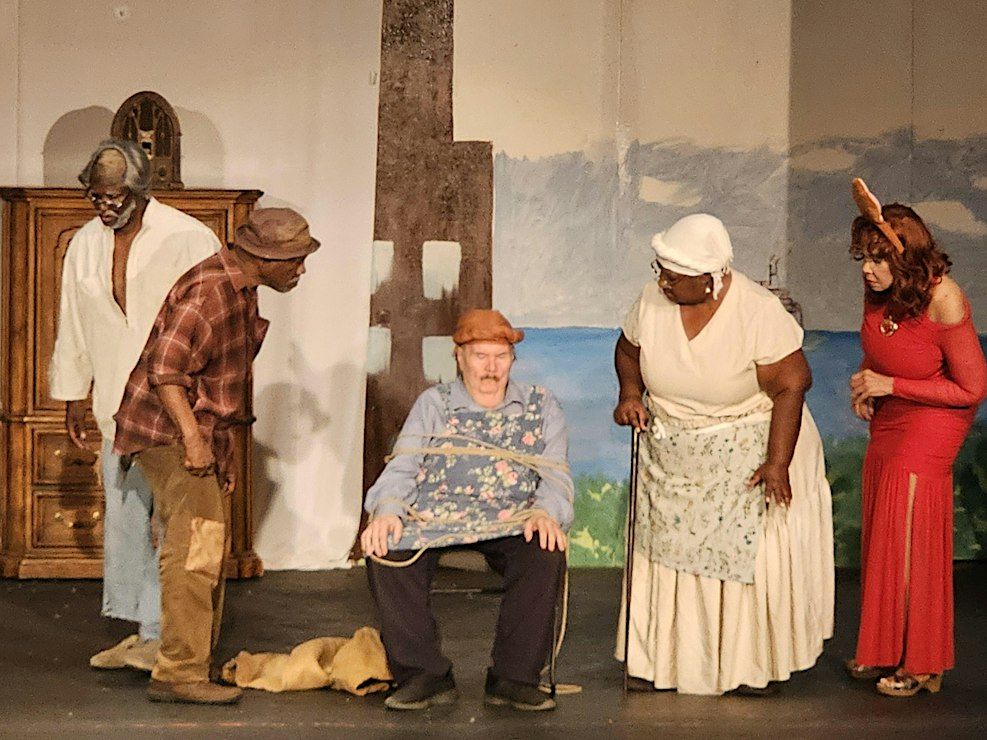
One of the most powerful moments comes when Aunt Crissy, portrayed by LaTarsha McCoy, confronts Miss Sally, played by Sherry Davis, who believes the affection between them was genuine. The woman seems genuinely wounded to discover that the person she regarded as devoted to her did not share her feelings.
Aunt Crissy dismantles the illusion.
She speaks of sexual exploitation, of caring for white children while being denied the freedom to nurture her own, and of the things she could never say aloud. Her enslavers did not know her. They knew only the person she was compelled to appear to be.
I thought immediately of Paul Laurence Dunbar's poem, "We Wear the Mask."
The mask was not evidence of contentment. It was a survival strategy.
Another unforgettable moment comes when Raymond Nat Turner, portraying Uncle Terrell, recounts the physical violence he endured. He gestures toward his back and leg, identifying where he was deliberately injured.
There is no need for theatricalized suffering, no trauma pornography. The words and gestures are enough.
Reed trusts the audience to imagine what happened.
This restraint gives the testimony extraordinary weight. The people onstage are not simply victims of exploitation. They are thinkers, observers, artists and human beings who understood their circumstances even when they could not safely articulate that understanding.
When the tricksters take the stage
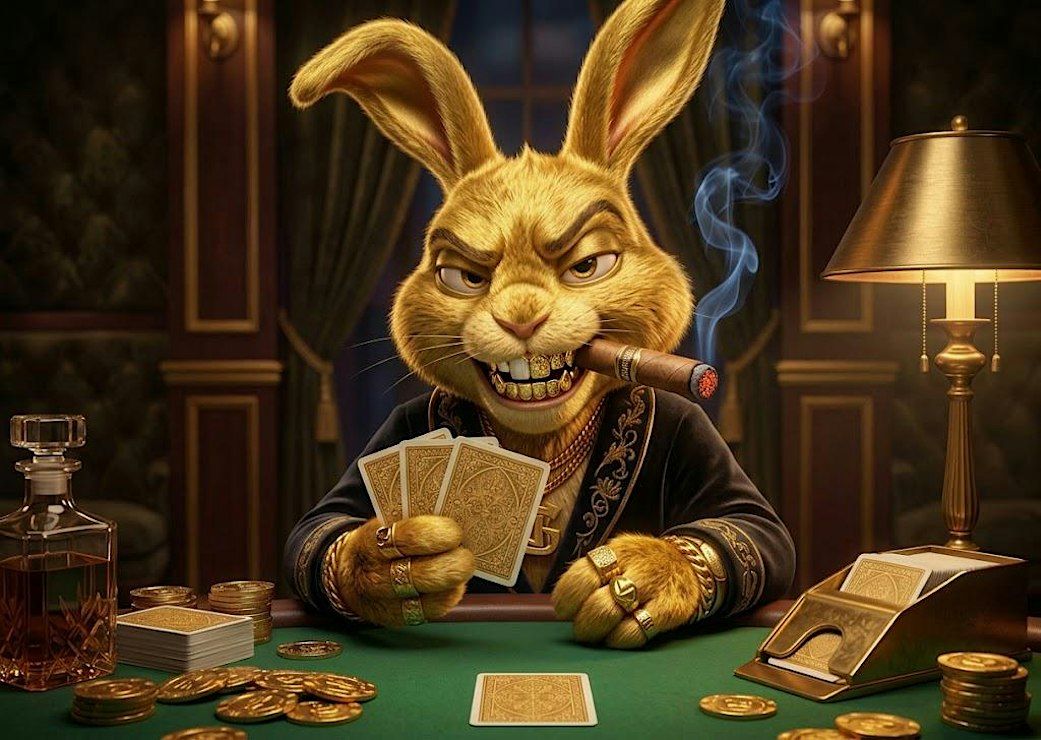
Then there are Br'er Rabbit and Sis Fox.
Their presence pushes the play beyond historical reenactment into the realm of folklore and philosophical comedy. These fictional characters enter the world of their creators, bringing their own personalities and unpredictable behavior.
The lovely Nina Causey, as Sis Fox, is not surprised by Br'er Rabbit's antics. She understands something the others initially overlook: Br'er Rabbit is a trickster. This is his nature. Why should anyone expect him to behave differently?
I loved this scene.
There is something wonderfully philosophical about Sis Fox's acceptance of the Rabbit's character. Understanding someone's nature does not mean surrendering to their behavior. It means knowing whom you are dealing with.
Reed gives us another lesson in power: Knowing the rules of the game matters, but so does knowing the character of the person across the table.
Nina Causey's beautiful rendition of "Zip-a-Dee-Doo-Dah" also reminds us that the art itself is not the enemy. The music, the humor and the stories possess their own brilliance. The problem is what happens when that brilliance is appropriated, repackaged and used to conceal the lives of its creators.
California is not innocent
Reed's creative work has long been connected to California. It is fitting that The Amanuensis is being performed in Berkeley, in the state that gave us Hollywood.
In her wonderful 1918 essay, Slavery in California, Black journalist and historian Delilah L. Beasley documents a history many Californians still do not know.
California became a state on September 9, 1850. Yet during the 1849 Constitutional Convention, delegates attempted to prohibit free Black people from entering and settling in California. The exclusion provision was removed from the final constitution, but the effort did not end there. After California became a state, legislators continued trying to pass laws excluding Black people.
Imagine that. Even as California prepared to enter the Union as a free state, some of those writing its laws wanted to keep Black people from living here.
And Black people were already here!
People of African descent were part of California's history long before statehood. They helped establish early California communities, including Los Angeles, San Jose and San Francisco. Some of these early Californians had both African and Indigenous ancestry. And we should not forget that some Black Californians are Indigenous to this land as well.
California's Black history did not begin with the Gold Rush, the Great Migration or Hollywood.
So what kind of freedom was California offering in 1850, and to whom?
It is worth considering that the state which eventually became home to the world's most influential film industry had once considered writing Black exclusion into its founding constitution.
What does this tell us about the stories Hollywood would later manufacture and sell to the world?
Reed makes the fourth wall crumble, exposing the machinery behind the illusion and allowing us to see who actually powered it.
The casual arrogance of power
One of the most chilling aspects of the play is the casual arrogance of those who benefited from the theft.
John Bramhall portrays the Ghost of Joel Chandler Harris, the writer who published the Uncle Remus stories. Harris sits tied to a chair, confronted by the very people whose intellectual brilliance made his literary reputation possible.
He offers explanations, qualifications and excuses. What about the kind enslavers? What about those who cared for the people they enslaved? Wasn't slavery responsible for bringing African people Christianity and civilization?
The justifications are familiar. They are also absurd.
Disney's theatrical counterpart is especially revealing. His extended explanation of how the enterprise benefited from these stories sounds almost like a confession without remorse.
Yes, it happened. Yes, money was made.
So what?
That is the question hanging over the production.
What happens when the truth is known but the wealth remains untouched? What happens when the people whose brilliance created the wealth have no meaningful avenue for restitution?
The original storytellers are long dead. Copyright law offers no straightforward remedy for the appropriation of their oral traditions. Yet the economic and cultural benefits of their creative labor continued across generations.
And here we are, celebrating 250 years of American independence while still struggling with the question of who has truly enjoyed freedom.
Who pays for the fantasy?
I also kept thinking about James Baskett.
He died in 1948 at just 44 years old, two years after the release of Song of the South. He received an Honorary Academy Award for portraying Uncle Remus, yet racial segregation prevented him from attending his own film's Atlanta premiere.
What must it have cost Black actors to bring their gifts to an industry that so frequently required them to portray their own people as contented servants?
We cannot know the full private cost of Baskett's performance. But the contradiction remains. His artistic genius helped bring a deeply distorted world to life, while the real world denied him the dignity granted to his white colleagues.
Reed is asking us to recognize the intellectual, psychological and cultural labor behind the performance, not simply the visible work.
This is why The Amanuensis matters.
The Black people whose stories were taken were not simply bodies performing labor. They were creators of narrative structure, humor, philosophical wisdom, psychological insight and art. The trickster stories carried knowledge about survival, oppression and the creative intelligence required to navigate unequal power.
That brilliance was not manufactured by Hollywood.
It was appropriated by Hollywood.
And with Reed, the original storytellers finally get to speak.
Theater cannot undo history, but it can interrupt the stories through which historical injustice is perpetuated. It can expose a lie so thoroughly that audiences cannot comfortably return to believing it.
It was Black genius that helped power the ship. Call it Jesus—yes, the slave ship Jesus of Lübeck. Call it capitalism. Call it wrong!
Ishmael Reed has given us another opportunity to look behind the curtain. His play makes us laugh while challenging us to rethink everything we thought we knew.
There are only three performances left in the October engagement, which closes Sunday, October 18. Fortunately, The Amanuensis returns November 13, 14, 16, 20, 21 and 22 as part of Black Repertory Group's 64th Mainstage Season.
See The Amanuensis. Take someone with you. And afterward, talk about what you saw.
Because once a wall falls, it is difficult to pretend you cannot see what was behind it.
On November 14, three MacArthur Fellows—Juan Felipe Herrera, Ishmael Reed and Charles Johnson—gather for a free afternoon conversation, Reading and Writing in the Age of AI. What a fitting prelude to Reed's play, which asks us to consider who creates, who owns and who profits from another person's intellectual work.
The Amanuensis is the evening work. It is perfectly situated for reprisal, revival, resurrection.
The check is not in the mail.
Production notes-kicking off our 64th MAINSTAGE PRODUCTION
The Amanuensis, written by Ishmael Reed (7 showtimes)
Black Repertory Group3201 Adeline Street, Berkeley, California
November return performances: November 13, 14, 16, 20, 21 and 22, 2026, as part of the Black Repertory Group's 64th Mainstage Season.
Creative and technical team
- Director: Bobby Clements
- Stage Manager: LaTarsha McCoy
- Sound, Lighting and Technology: Baron and Austin
- Archival Footage: Ishmael Reed, Jahn Overstreet, Sean Vaughn Scott, Bobby Clements and LaTarsha McCoy
Cast
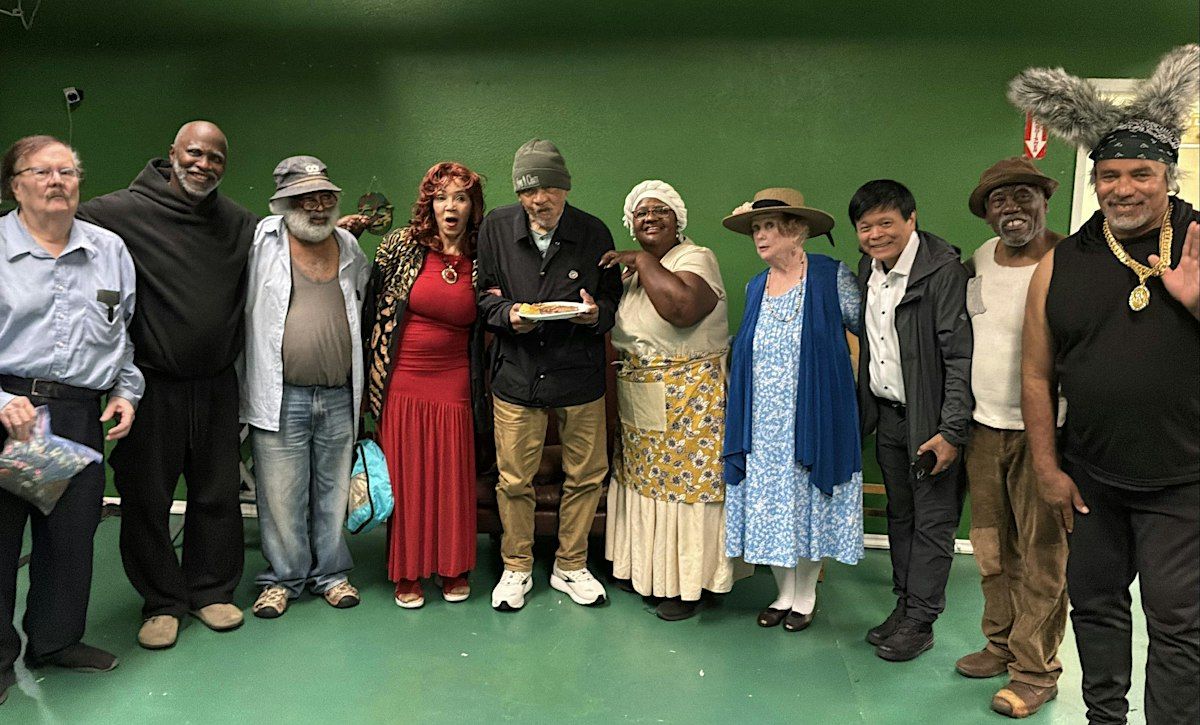
- John Bramhall — Ghost of Joel Chandler Harris
- Nina Causey — Sis Fox
- LaTarsha McCoy — Aunt Crissy
- Jahn Overstreet — Br'er Rabbit
- Raymond Nat Turner — Uncle Terrell
- Josea Morgan — Old Harbert
- Sherry Davis — Miss Sally
- Emil Guillermo — Narrator
For performance information: Black Repertory Group or (510) 652-2120.
Where is it happening?
Event Location & Nearby Stays:
USD 23.18