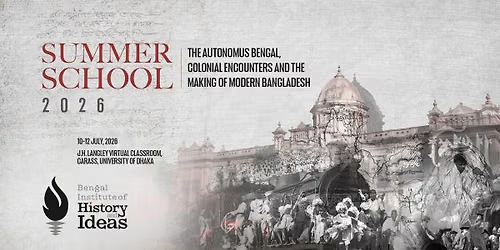
Summer School on "The Autonomus Bengal, Colonial Encounters and the Making of Modern Bangladesh"

Advertisement
📚 𝑻𝒉𝒆 𝑨𝒖𝒕𝒐𝒏𝒐𝒎𝒐𝒖𝒔 𝑩𝒆𝒏𝒈𝒂𝒍, 𝑪𝒐𝒍𝒐𝒏𝒊𝒂𝒍 𝑬𝒏𝒄𝒐𝒖𝒏𝒕𝒆𝒓𝒔 𝒂𝒏𝒅 𝒕𝒉𝒆 𝑴𝒂𝒌𝒊𝒏𝒈 𝒐𝒇 𝑴𝒐𝒅𝒆𝒓𝒏 𝑩𝒂𝒏𝒈𝒍𝒂𝒅𝒆𝒔𝒉
Join our three-day Summer School exploring the major historical transformations of Bengal and Bangladesh from 𝟏𝟕𝟎𝟕 𝐭𝐨 𝟏𝟗𝟒𝟕. The programme examines the rise of autonomous Bengal, the impact of colonial rule, and the historical processes that shaped modern Bangladesh.
The Summer School is designed to introduce participants to major themes in Bengal’s history, including late-Mughal transition, autonomus bengal, Nawabi authority, colonial rule, land and society, language and cultural identity, archives, historical methods, cinema, memory, and public history.
Through lectures, archival exercises, group discussions, presentations, and a panel discussion, participants will engage with key historical debates, analyse primary sources, and learn different approaches to historical interpretation. Designed to foster critical thinking and historical inquiry, the Summer School connects Bengal’s past with broader debates in South Asian and global history.
---
🧭 𝐒𝐞𝐬𝐬𝐢𝐨𝐧𝐬
🔹 𝐒𝐞𝐬𝐬𝐢𝐨𝐧 𝟏: The Emergence of Autonomous Bengal in the Age of Mughal Decline
🔹 𝐒𝐞𝐬𝐬𝐢𝐨𝐧 𝟐: From Eastern Bengal to Mecca: Jumu‘ah Prayer and the Taiyyuni-Fara‘idi Controversy
🔹 𝐒𝐞𝐬𝐬𝐢𝐨𝐧 𝟑: Language, Literature and Cultural Identity in Bengal
🔹 𝐒𝐞𝐬𝐬𝐢𝐨𝐧 𝟒: Bengal Muslim Thought in the Global Twentieth Century, 1905–1947
🔹 𝐒𝐞𝐬𝐬𝐢𝐨𝐧 𝟓: Historiography, Archives and Historical Methods
🔹 𝐒𝐞𝐬𝐬𝐢𝐨𝐧 𝟔: Historiography after Cinema
🔹 𝐒𝐞𝐬𝐬𝐢𝐨𝐧 𝟕: Group Presentation and Analysis
🔹 𝐒𝐞𝐬𝐬𝐢𝐨𝐧 𝟖: Panel Discussion
🔹 𝐒𝐞𝐬𝐬𝐢𝐨𝐧 𝟗: Closing Ceremony
🎯 𝐄𝐱𝐩𝐞𝐜𝐭𝐞𝐝 𝐋𝐞𝐚𝐫𝐧𝐢𝐧𝐠 𝐎𝐮𝐭𝐜𝐨𝐦𝐞𝐬
By the end of the Summer School, participants will be able to:
✅ demonstrate a critical understanding of the major historical transformations of Bengal and Bangladesh from 1707 to 1947;
✅ explain the transition from late-Mughal and autonomous Bengal to British colonial rule within its political, social, economic, and cultural contexts;
✅ engage with major historiographical debates concerning Bengal’s past, including colonial knowledge, nationalism, subaltern perspectives, and vernacular memory;
✅ critically interpret primary and secondary historical sources through archival, textual, visual, and interdisciplinary methods;
✅ develop analytical, research, presentation, and discussion skills relevant to history, humanities, and the social sciences.
🧑🏫 𝐏𝐞𝐝𝐚𝐠𝐨𝐠𝐢𝐜𝐚𝐥 𝐌𝐞𝐭𝐡𝐨𝐝𝐨𝐥𝐨𝐠𝐲
The workshop will combine lectures, seminars, archival exercises, group discussions, primary source analysis, and collaborative interpretation exercises. Pre-circulated readings will encourage critical engagement with Bengal’s history and historiography.
📌𝐏𝐫𝐨𝐠𝐫𝐚𝐦𝐦𝐞 𝐈𝐧𝐟𝐨𝐫𝐦𝐚𝐭𝐢𝐨𝐧
📍 𝐕𝐞𝐧𝐮𝐞:
G.H. Langley Virtual Classroom, CARASS, University of Dhaka
📅 𝐃𝐚𝐭𝐞:
10, 11 & 12 July 2026
⏰ 𝐓𝐢𝐦𝐞:
10:00 AM – 5:00 PM each day
⏳ 𝐃𝐮𝐫𝐚𝐭𝐢𝐨𝐧:
Three days
💳 𝐑𝐞𝐠𝐢𝐬𝐭𝐫𝐚𝐭𝐢𝐨𝐧 𝐅𝐞𝐞:
BDT 3,000
The registration fee includes:
🍽️ Lunch during the programme days
☕ Two snack breaks each day
🎒 Programme bag
📖 Reading materials
📘 Programme brochure
🎥 Access to recorded classes after the sessions
📜 Certificate of Participation
---
🏠 𝐀𝐜𝐜𝐨𝐦𝐦𝐨𝐝𝐚𝐭𝐢𝐨𝐧 𝐚𝐧𝐝 𝐌𝐞𝐚𝐥𝐬
The Summer School is a 𝐧𝐨𝐧-𝐫𝐞𝐬𝐢𝐝𝐞𝐧𝐭𝐢𝐚𝐥 𝐩𝐫𝐨𝐠𝐫𝐚𝐦𝐦𝐞. Accommodation will not be provided by the organiser.
Participants will receive lunch and two snack breaks each day as part of the registration package.
🚇𝐋𝐨𝐜𝐚𝐭𝐢𝐨𝐧 𝐀𝐜𝐜𝐞𝐬𝐬
The CARASS building is located inside the TSC Compound, University of Dhaka, beside the Dhaka University TSC Metro Rail Station. From the metro station, the venue can be reached within a one- to two-minute walk.
👨🏫 𝐈𝐧𝐬𝐭𝐫𝐮𝐜𝐭𝐨𝐫𝐬
The sessions will be conducted by experienced historians, researchers, and academics with expertise in Bengal’s political, social, cultural, intellectual, and historiographical traditions.
👥 𝐄𝐥𝐢𝐠𝐢𝐛𝐢𝐥𝐢𝐭𝐲
The programme is open to students, researchers, young academics, and interested learners from history, humanities, social sciences, and related disciplines.
Applicants interested in Bengal history, Bangladesh history, South Asian history, colonial studies, intellectual history, archival research, historiography, cultural history, and historical methods are encouraged to apply.
📝 𝐀𝐩𝐩𝐥𝐢𝐜𝐚𝐭𝐢𝐨𝐧 𝐏𝐫𝐨𝐜𝐞𝐬𝐬
Interested applicants are required to complete the official application form with the necessary personal, academic, and contact information.
🔗 𝐀𝐩𝐩𝐥𝐲 𝐡𝐞𝐫𝐞:
https://forms.gle/Si22hLGXymLtiu4Y9
Registration will be confirmed only after successful payment verification. Confirmed participants will receive further instructions through email regarding the programme schedule, reading materials, and access to recorded classes.
⏳ 𝐀𝐩𝐩𝐥𝐢𝐜𝐚𝐭𝐢𝐨𝐧 𝐃𝐞𝐚𝐝𝐥𝐢𝐧𝐞
Applications will remain open until 𝟔 𝐉𝐮𝐥𝐲 𝟐𝟎𝟐𝟔. However, early registration is encouraged, as seats are limited.
📚 Join us for three days of critical historical inquiry, discussion, and learning on Bengal’s past and the making of modern Bangladesh.
Join our three-day Summer School exploring the major historical transformations of Bengal and Bangladesh from 𝟏𝟕𝟎𝟕 𝐭𝐨 𝟏𝟗𝟒𝟕. The programme examines the rise of autonomous Bengal, the impact of colonial rule, and the historical processes that shaped modern Bangladesh.
The Summer School is designed to introduce participants to major themes in Bengal’s history, including late-Mughal transition, autonomus bengal, Nawabi authority, colonial rule, land and society, language and cultural identity, archives, historical methods, cinema, memory, and public history.
Through lectures, archival exercises, group discussions, presentations, and a panel discussion, participants will engage with key historical debates, analyse primary sources, and learn different approaches to historical interpretation. Designed to foster critical thinking and historical inquiry, the Summer School connects Bengal’s past with broader debates in South Asian and global history.
---
🧭 𝐒𝐞𝐬𝐬𝐢𝐨𝐧𝐬
🔹 𝐒𝐞𝐬𝐬𝐢𝐨𝐧 𝟏: The Emergence of Autonomous Bengal in the Age of Mughal Decline
🔹 𝐒𝐞𝐬𝐬𝐢𝐨𝐧 𝟐: From Eastern Bengal to Mecca: Jumu‘ah Prayer and the Taiyyuni-Fara‘idi Controversy
🔹 𝐒𝐞𝐬𝐬𝐢𝐨𝐧 𝟑: Language, Literature and Cultural Identity in Bengal
🔹 𝐒𝐞𝐬𝐬𝐢𝐨𝐧 𝟒: Bengal Muslim Thought in the Global Twentieth Century, 1905–1947
🔹 𝐒𝐞𝐬𝐬𝐢𝐨𝐧 𝟓: Historiography, Archives and Historical Methods
🔹 𝐒𝐞𝐬𝐬𝐢𝐨𝐧 𝟔: Historiography after Cinema
🔹 𝐒𝐞𝐬𝐬𝐢𝐨𝐧 𝟕: Group Presentation and Analysis
🔹 𝐒𝐞𝐬𝐬𝐢𝐨𝐧 𝟖: Panel Discussion
🔹 𝐒𝐞𝐬𝐬𝐢𝐨𝐧 𝟗: Closing Ceremony
🎯 𝐄𝐱𝐩𝐞𝐜𝐭𝐞𝐝 𝐋𝐞𝐚𝐫𝐧𝐢𝐧𝐠 𝐎𝐮𝐭𝐜𝐨𝐦𝐞𝐬
By the end of the Summer School, participants will be able to:
✅ demonstrate a critical understanding of the major historical transformations of Bengal and Bangladesh from 1707 to 1947;
✅ explain the transition from late-Mughal and autonomous Bengal to British colonial rule within its political, social, economic, and cultural contexts;
✅ engage with major historiographical debates concerning Bengal’s past, including colonial knowledge, nationalism, subaltern perspectives, and vernacular memory;
✅ critically interpret primary and secondary historical sources through archival, textual, visual, and interdisciplinary methods;
✅ develop analytical, research, presentation, and discussion skills relevant to history, humanities, and the social sciences.
🧑🏫 𝐏𝐞𝐝𝐚𝐠𝐨𝐠𝐢𝐜𝐚𝐥 𝐌𝐞𝐭𝐡𝐨𝐝𝐨𝐥𝐨𝐠𝐲
The workshop will combine lectures, seminars, archival exercises, group discussions, primary source analysis, and collaborative interpretation exercises. Pre-circulated readings will encourage critical engagement with Bengal’s history and historiography.
📌𝐏𝐫𝐨𝐠𝐫𝐚𝐦𝐦𝐞 𝐈𝐧𝐟𝐨𝐫𝐦𝐚𝐭𝐢𝐨𝐧
📍 𝐕𝐞𝐧𝐮𝐞:
G.H. Langley Virtual Classroom, CARASS, University of Dhaka
📅 𝐃𝐚𝐭𝐞:
10, 11 & 12 July 2026
⏰ 𝐓𝐢𝐦𝐞:
10:00 AM – 5:00 PM each day
⏳ 𝐃𝐮𝐫𝐚𝐭𝐢𝐨𝐧:
Three days
💳 𝐑𝐞𝐠𝐢𝐬𝐭𝐫𝐚𝐭𝐢𝐨𝐧 𝐅𝐞𝐞:
BDT 3,000
The registration fee includes:
🍽️ Lunch during the programme days
☕ Two snack breaks each day
🎒 Programme bag
📖 Reading materials
📘 Programme brochure
🎥 Access to recorded classes after the sessions
📜 Certificate of Participation
---
🏠 𝐀𝐜𝐜𝐨𝐦𝐦𝐨𝐝𝐚𝐭𝐢𝐨𝐧 𝐚𝐧𝐝 𝐌𝐞𝐚𝐥𝐬
The Summer School is a 𝐧𝐨𝐧-𝐫𝐞𝐬𝐢𝐝𝐞𝐧𝐭𝐢𝐚𝐥 𝐩𝐫𝐨𝐠𝐫𝐚𝐦𝐦𝐞. Accommodation will not be provided by the organiser.
Participants will receive lunch and two snack breaks each day as part of the registration package.
🚇𝐋𝐨𝐜𝐚𝐭𝐢𝐨𝐧 𝐀𝐜𝐜𝐞𝐬𝐬
The CARASS building is located inside the TSC Compound, University of Dhaka, beside the Dhaka University TSC Metro Rail Station. From the metro station, the venue can be reached within a one- to two-minute walk.
👨🏫 𝐈𝐧𝐬𝐭𝐫𝐮𝐜𝐭𝐨𝐫𝐬
The sessions will be conducted by experienced historians, researchers, and academics with expertise in Bengal’s political, social, cultural, intellectual, and historiographical traditions.
👥 𝐄𝐥𝐢𝐠𝐢𝐛𝐢𝐥𝐢𝐭𝐲
The programme is open to students, researchers, young academics, and interested learners from history, humanities, social sciences, and related disciplines.
Applicants interested in Bengal history, Bangladesh history, South Asian history, colonial studies, intellectual history, archival research, historiography, cultural history, and historical methods are encouraged to apply.
📝 𝐀𝐩𝐩𝐥𝐢𝐜𝐚𝐭𝐢𝐨𝐧 𝐏𝐫𝐨𝐜𝐞𝐬𝐬
Interested applicants are required to complete the official application form with the necessary personal, academic, and contact information.
🔗 𝐀𝐩𝐩𝐥𝐲 𝐡𝐞𝐫𝐞:
https://forms.gle/Si22hLGXymLtiu4Y9
Registration will be confirmed only after successful payment verification. Confirmed participants will receive further instructions through email regarding the programme schedule, reading materials, and access to recorded classes.
⏳ 𝐀𝐩𝐩𝐥𝐢𝐜𝐚𝐭𝐢𝐨𝐧 𝐃𝐞𝐚𝐝𝐥𝐢𝐧𝐞
Applications will remain open until 𝟔 𝐉𝐮𝐥𝐲 𝟐𝟎𝟐𝟔. However, early registration is encouraged, as seats are limited.
📚 Join us for three days of critical historical inquiry, discussion, and learning on Bengal’s past and the making of modern Bangladesh.
Advertisement
Where is it happening?
Centre for Advanced Research in Arts and Social Sciences -Carass, Dhaka, Bangladesh
Event Location & Nearby Stays:
Know what’s Happening Next — before everyone else does.
Host or PublisherBengal Institute of History & Ideas