PMWC 2027 Silicon Valley

About this Event
Join Us at PMWC 2027 Silicon Valley!
Get ready to dive into the future of personalized medicine with PMWC 2027 Silicon Valley. This in-person event brings together the brightest minds and innovators right in the heart of Silicon Valley.
PMWC 2027 - January 27–29, Santa Clara Convention Center
Co‑hosted with Stanford, Yale & UCSF • 3,000 attendees • 15 tracks • 90 exhibitors
Program: www.PMWCintl.com/Program/
Tickets: www.PMWCintl.com/tickets/
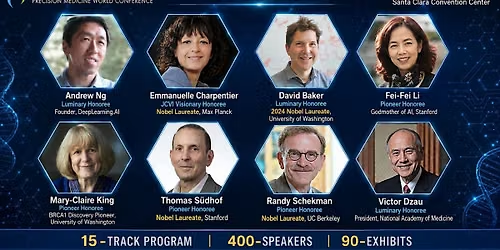
Rockstar speakers/honorees: www.PMWCintl.com/speakers/
Emmanuelle Charpentier, Max Planck
Nobel Laureate and co-discoverer of CRISPR-Cas9 genome editing
, University of Washington
Fei-Fei Li, Stanford
ImageNet pioneer and “Godmother of AI”
Thomas Südhof, Stanford
Nobel Laureate
Andrew Ng, DeepLearning.AI & Stanford
Google Brain founder and global AI education pioneer
Mary-Claire King, UW
BRCA1 Pioneer
Daniel Drucker, University of Toronto
GLP-1 - 2025 Breakthrough Prize
Randy Schekman, UC Berkeley
Nobel Laureate
Eric Lander, Broad Institute
Human Genome Project leader
David Feinberg, Oracle Health
Oracle Health chairman and former Google Health leader
Aviv Regev, Genentech
Human Cell Atlas founding co-chair
Daphne Koller, insitro
Machine learning pioneer, Coursera co-founder
Wendy Chung, Boston Children’s / Harvard
Rare disease genomics and newborn genomic screening leader
Li-Huei Tsai, MIT
Alzheimer’s, brain aging, and 40Hz gamma stimulation pioneer
Track 1: Next Generation Therapeutics
Leaders in this track include Randy Schekman (Nobel Laureate, vesicle trafficking and cellular delivery), Katy Rezvani (MD Anderson, NK cell therapy), David Miklos (Stanford, CAR-T), Frederick Locke (Moffitt, cell therapy), Marcela Maus (Mass General Brigham/Harvard, cell therapy), Antoni Ribas (UCLA, solid tumor immunotherapy), Jay Bradner (Amgen, programmable medicines), Adrian Krainer (Cold Spring Harbor Laboratory, RNA splicing therapeutics), and Emmanuelle Charpentier (Nobel Laureate, CRISPR-Cas9).
The track will cover off-the-shelf cell therapies, NK, iPSC and allogeneic platforms, AI in cell therapy, scalable manufacturing, in vivo delivery, why cell therapies fail in solid tumors and what is working, immunotherapy and targeted therapy resistance, genome editing beyond the first wave, RNA editing, splice modulation, vector engineering, and turning N-of-1 medicines into scalable therapeutic platforms.
Track 2: AI and Computational Medicine
Leaders joining this track include Andrew Ng (Stanford/DeepLearning.AI, AI education and deployment), Daphne Koller (Insitro, AI drug discovery), Ziad Obermeyer (UC Berkeley, clinical AI and fairness), John Halamka (Mayo Clinic Platform, clinical AI deployment), and David Baker (Nobel Laureate, computational protein design).
The agenda covers multimodal AI diagnostics, computational pathology, AI-enabled companion diagnostics, precision oncology operating systems, foundation models for omics and translational research, AI agents in clinical workflows, decision support in production, clinical trials and real-world evidence, AI safety and governance, AI in drug discovery, computational biology, and digital biology.
Track 3: Precision Diagnostics
Featured leaders include Rebecca Fitzgerald (Cytosponge, early esophageal cancer detection), Mary-Claire King (BRCA1 and inherited cancer risk), Nickolas Papadopoulos (Johns Hopkins, liquid biopsy), Sarah-Jane Dawson (Peter MacCallum, ctDNA monitoring), Joe DeRisi (UCSF, infectious disease genomics), Alexandre Loupy (Inserm / Paris Transplant Group, transplant risk prediction), and Max Diehn (Stanford, ctDNA and MRD detection).
The program will cover early cancer detection, screening to interception, liquid biopsy, MRD in early-stage and advanced disease, monitoring response and resistance, therapy selection from blood, MRD as a regulatory endpoint, fragmentomics, AI across multimodal signals, and blood-based diagnostics beyond cancer, including transplant monitoring, infection, and maternal-fetal health.
Track 4: Integrated Precision Medicine
Leaders in this track include Wendy Chung (rare disease genetics), Eric Lander (genomics leader), Lee Hood (Human Phenome Initiative), Hal Paz (Khosla Ventures, implementation), Victor Dzau (health system leadership and translation), Daniel Drucker (GLP-1 biology), Andrea Maier (healthspan and aging), Nir Barzilai (geroscience and longevity trials), Michael Snyder (longitudinal phenotyping and wearables), and Alexander (Zan) Fleming (aging translation and regulation).
The agenda includes genomic diagnosis, rare disease, population genomic screening, newborn sequencing, structural variants, long reads, moving from genomic diagnosis to the human phenome, precision medicine operating models, clinical decision support, evidence generation, reimbursement, biomarker adoption, GLP-1 and beyond, aging biology, digital biomarkers, wearables, longitudinal phenotyping, prevention, and healthspan.
Track 5: Translational Omics, Spatial Biology, Precision Immunology and Brain Health
Leaders joining this track include Sarah Teichmann (Wellcome Sanger, single-cell and spatial biology), Aviv Regev (Genentech, Human Cell Atlas), Garry Nolan (Stanford, spatial proteomics), Alex Shalek (MIT/Broad, AI and single-cell systems), Miriam Merad (Mount Sinai, precision immunology), Jeffrey Bluestone (UCSF, Tregs and immune tolerance), Li-Huei Tsai (MIT, brain health and neurodegeneration), Thomas Südhof (Nobel Laureate, synaptic biology), David Holtzman (WashU, Alzheimer's biology), and Henrik Zetterberg (UCL/Gothenburg, neurology biomarkers).
Key areas include spatial biology in practice, tissue architecture, spatial proteomics, spatial pathology, AI for spatial and single-cell biology, scaling spatial biology into clinical translation, immune reset in autoimmune disease, CAR-T and in vivo CAR approaches for autoimmunity, Tregs and immune tolerance, immune biomarkers and patient stratification, microbial roots of autoimmunity, Alzheimer's blood tests, precision diagnostics across neurology, Parkinson's, ALS and FTD, AI-powered neuroimaging, brain rhythms, and why precision neurology is not yet scaling.
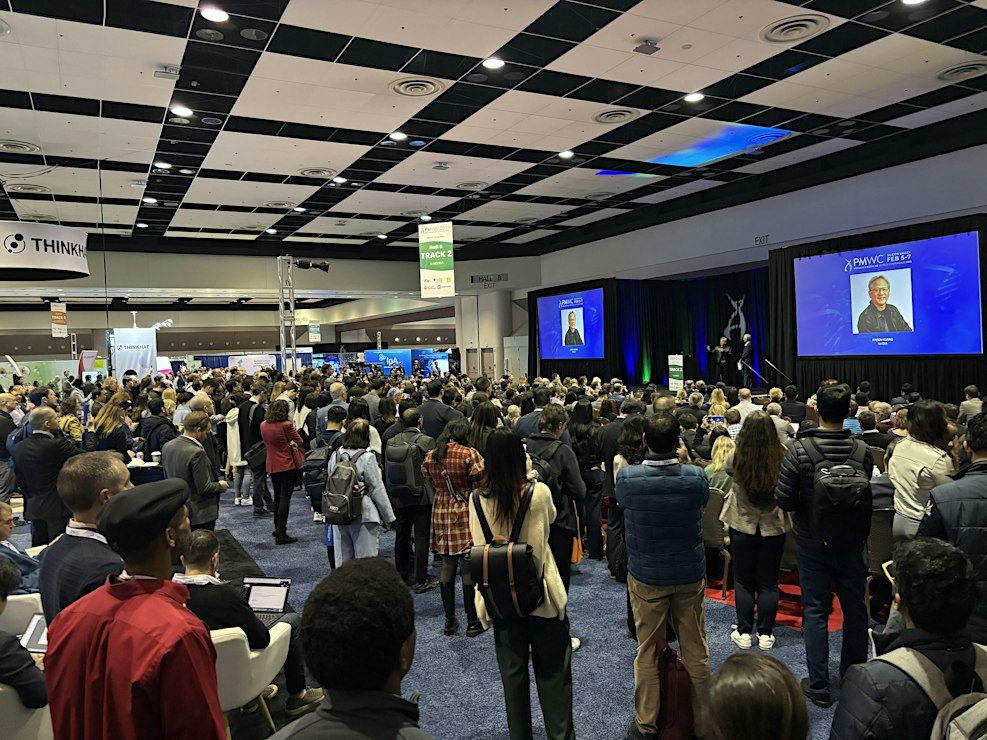
Where is it happening?
Event Location & Nearby Stays:
USD 2500.00