Marie Astier: Symbiosis - Shaping Nature
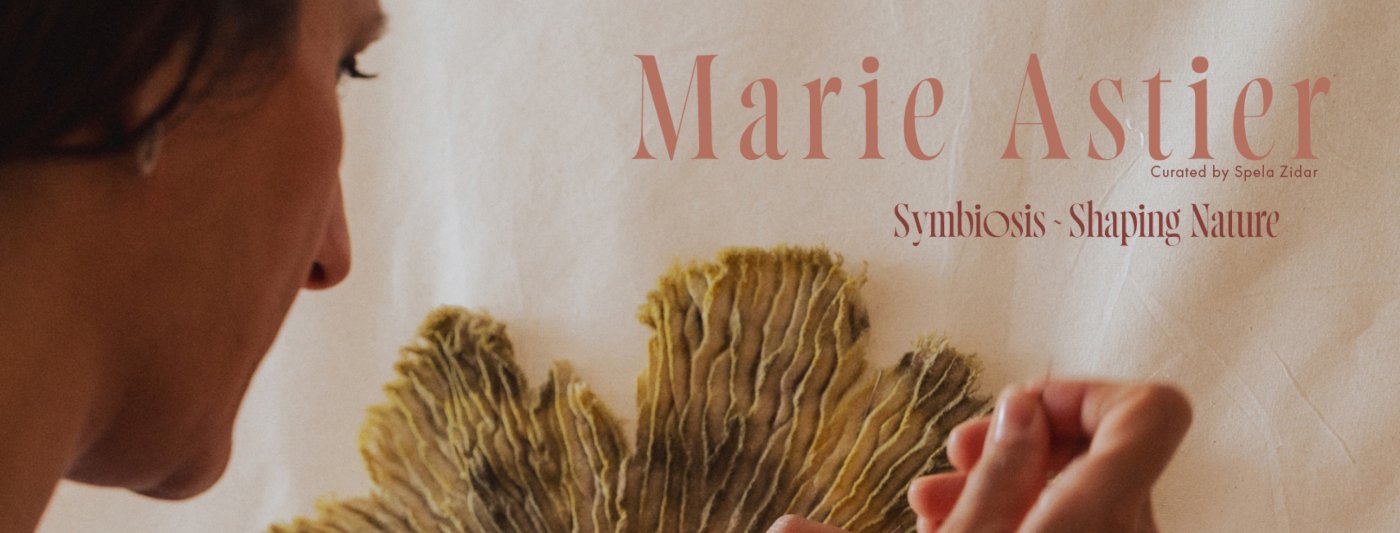
MARIE ASTIER
Symbiosis - Shaping Nature
curated by Spela Zidar
Opening, Thursday November 19th from 5 to 8PM
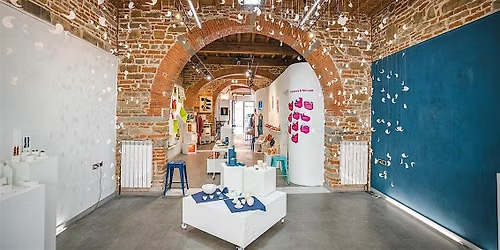
LdM Gallery, via de'Pucci 4, firenze
Opening hours: Mon-Thu 10AM-2PM, Wed 4-7 PM Fri 3-7PM
https://ldminstitute.com/marie-astier/
Marie Astier’s distinctive fiber art sculptures reveal the beauty of natural forms such as tree bark, fungi, lichens, and marine corals. Drawing on her background in textile engineering, Astier combines technical expertise with a refined knowledge of botanical dyeing, pleating, and felting to create organic sculptures that inhabit and interact within her own distinctive artistic environments.
Nature is the primary source of Astier’s inspiration. Through careful observation, she explores its vibrant colors, intricate details, and mesmerizing patterns, which she subsequently reinterprets and translates into her artworks. Her creative process combines meticulous planning with an attentive dialogue with the materials themselves, allowing their intrinsic qualities and limitations to inform the realization of her artistic vision.
Listening is an essential part of Astier’s practice. She approaches nature with respect and sensitivity, qualities that are reflected in her artistic process. Committed to sustainability, she prioritizes natural materials and reuses undyed deadstock fabrics, including wool, silk, cotton, hemp, and linen. For dyeing, she employs natural dye plants, either purchased or prepared by hand. Her sculptures are therefore organic not only in form but also in composition.
Through her work, Astier seeks to raise awareness of the natural world and the impact of human exploitation on the environment. By establishing a dialogue between artistic creation and ecological responsibility, she invites us to reconsider our relationship with nature and to envision a more balanced and mutually beneficial coexistence.
Interview Questions
- SPELA ZIDAR: Encountering your work, viewers seem to be transported into a magical natural landscape of fungi, lichens, and tree bark — a playful forest so vivid that one can almost smell the earth. Only upon closer inspection do they discover that these forms are made of textiles. Why did you choose textile as the primary medium for your artistic practice?
MARIE ASTIER: I have always been fascinated by fabrics and the possibilities of transforming them. I started by making my own clothes and embellishing them with embroidery.
I initially wanted to study art, but I chose a more scientific path through textile engineering, driven by my curiosity about the material itself.
Throughout my career, I explored textiles from a technical perspective, but my artistic sensitivity was always there. Over time, I felt the need to go beyond the technical aspects and use my knowledge and experience to express something more personal through textiles.
- SZ: Nature is clearly a central source of inspiration in your work. Could you tell us about your relationship with the natural world and how, and why, this connection finds its way into your artistic creations?
MA: I feel deeply connected to nature. I love being immersed in the woods, surrounded by trees, listening to the sound of flowing water and the wind through the leaves. I enjoy observing the smallest details, such as mushrooms, bark, lichens and the incredible variety of textures found in nature.
I'm fascinated by both the microscopic world and the larger, more immersive experience of nature, with its sounds, smells and movements. I'm particularly drawn to the plant world, although I also find inspiration in the animal world.
Over time, all these observations and sensations have gradually settled within me, creating a collection of images, textures and feelings that naturally find their way into my textile sculptures.
- SZ: Your background in textile engineering has given you an in-depth technical understanding of materials and processes. How has this knowledge shaped your distinctive approach to textile art? Does your technical expertise help you push the boundaries of what is possible, or can it sometimes become a limitation to your creativity?
MA: My background in textile engineering is, in many ways, the foundation of my artistic practice. It gives me a deep understanding of materials and allows me to experiment with different techniques and processes. My experiences in both the textile industry and the artisanal world have also enriched this knowledge, opening many possibilities for exploration.
I often start with a combination of techniques and an idea of a shape or texture that I want to investigate or recreate. But as the process unfolds, I increasingly follow my intuition and sensations.
I don't see technical knowledge as a limitation to creativity. On the contrary, it opens to more possibilities. Techniques may be the starting point, but ultimately, intuition and creativity take over and shape the final artwork.
- SZ: Your works feature a rich variety of textures, colors, and organic forms. How do you select your materials, dyes, and forms? What guides these choices, and how much room do intuition and experimentation have in your creative process?
MA: I like to work with a variety of natural fibers, playing with different fabric weights, thicknesses, transparencies and textures. I enjoy exploring how each material responds to pleating and dyeing, as the same dye can produce very different results depending on the fiber content.
I work exclusively with natural dyes from plants. I know the range of colors that each plant can produce, and I combine them to create different shades. However, there is always an element of unpredictability in the way fibers react to dyes and colors interact with each other. This is something I particularly like.
Experimentation is usually my starting point, but once the fabrics are dyed and pleated, I let my intuition and sensations guide me in shaping the final piece.
- SZ: Alongside your artistic practice, you continue to work in the textile industry, a sector with a significant environmental impact throughout its production processes and through the waste it generates. How does your experience within the industry influence your awareness of these issues, and do they play a role in your artistic practice?
MA: Working in the textile industry has made me very aware of its environmental impact, particularly the overproduction of clothing, the declining quality of many products and the resulting waste of materials and resources.
People often ask me why I don't use my techniques to create clothing or accessories. But I don't want to contribute to producing more garments in a world already overwhelmed by them. I prefer to create unique artworks, pieces that people will want to keep and connect with emotionally, rather than objects that may eventually be discarded.
Sustainability also influences my choice of materials. I work mainly with natural fibers and, whenever possible, source deadstock fabrics from textile companies.
In a way, my artistic practice is a refuge from the constant pressure to produce and consume. It allows me to slow down, create something unique and give more value to materials and the creative process. Through my work, I also hope to invite others to reconnect with nature, to observe it more closely and appreciate its beauty and importance.
- SZ: Sustainability appears to be an important concern in your work. How do you translate this commitment into your artistic practice? Can art help us reconsider our relationship with materials, consumption, and the natural environment?
MA: Sustainability is part of my artistic practice, not only through my choice of natural and natural dyes and slow, handmade processes, but also through the message I hope to convey.
I believe art can encourage people to pause for a moment, observe and reflect on our relationship with nature and the environmental impact of our choices. Through my work, I try to bring attention to the beauty, complexity and fragility of the natural world.
7. SZ: Looking back at the development of your artistic practice, how has your style evolved over the years? Are there new directions, materials, or ideas you would like to explore in the future? What questions are currently driving your artistic research?
I feel that I'm still at the beginning of my artistic journey, with so much left to learn, explore and express.
MA: When I first started, I was mainly trying to reproduce the textures and forms I observed in nature through textiles. Over time, I have felt a growing need to let the materials guide me, improvising shapes and rhythms rather than simply reproducing what I see. I'm now more interested in evoking natural forms, combining different inspirations and leaving space for the viewer's imagination and interpretation.
I definitely want to continue exploring textiles, but I'm also curious about other mediums, both for their technical possibilities and the new forms of expression they might offer. Paper, for example, is a material I would love to experiment with.
Where is it happening?
Event Location & Nearby Stays: