Alternative fuels in the global merchant fleet: Charting the path to 2050

About this Event
The global merchant fleet’s fuel transition is accelerating to meet the IMO’s 2050 net-zero target. Over 1,940 alternative-fuel-capable vessels are on order, with LNG and methanol dominating, and emerging orders for ammonia, hydrogen, biofuels, and nuclear. By 2030, more than a fifth of fleet tonnage will be multi-fuel-ready, yet the fuel supply to power them lags dangerously behind.
Projections show that by 2050, shipping will consume 200–280 million tonnes of oil equivalent in alternative fuels annually. Producing these fuels sustainably demands colossal renewable energy: the 100–150 million tonnes of green hydrogen needed as feedstock alone would require 5,000–8,250 terawatt-hours of electricity, equivalent to 17–28% of today’s global power output. Green ammonia and methanol each need 10–13 megawatt-hours per tonne. However, committed e-fuel production for 2030 meets just 13% of expected demand, while sustainable biofuel supply is capped at near 40 million tonnes against a potential requirement of 140 million tonnes.
Bridging this gap requires an estimated $9 trillion; less than $320 billion is committed. LNG serves as the near-term bridge, methanol and ammonia are medium-term zero-carbon contenders, and nuclear remains a wildcard. The critical bottleneck is not ship technology, but building global renewable energy and electrolyser capacity at an unprecedented speed and scale in history.
About the Speaker
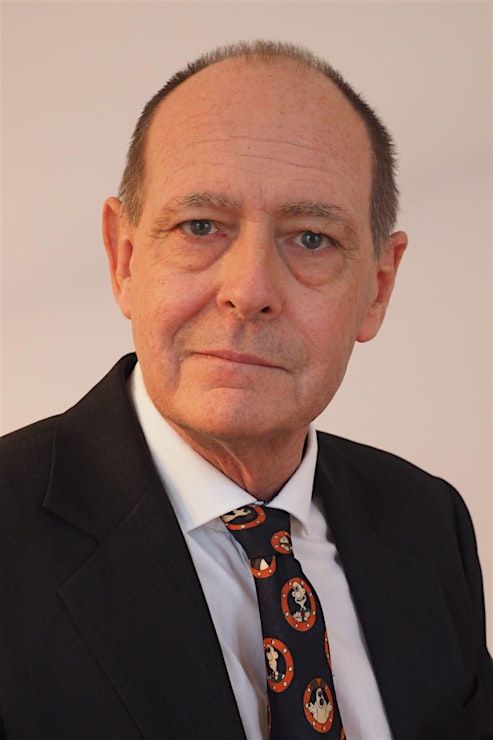
Bill Watts CEng, CMarEng, FIMarEST is a Chartered Engineer and Fellow of IMarEST with over four decades of experience in LNG shipping and maritime energy. He began his career as a Shell Apprentice Engineer Officer, sailing on Methane Progress, and rose to Chief Engineer Officer with BP, specialising in LNG tankers. Coming ashore in 2006, he held LNG superintendency roles in Abu Dhabi and Singapore before joining Bernhard Schulte Group in Germany, transferring to the Singapore office in 2026, where he is currently LNG Technical Authority at the Maritime Energy Centre.
Bill Watts has overseen vessel operations, dry dockings, new builds, and turbine and engine overhauls, and served as the owner’s representative for the world’s first two FSRU conversions. His career also includes three years at Brunei Shell Petroleum, where he worked on well services and digitisation projects. Today, he leads business development initiatives in LNG and alternative fuels, supporting decarbonisation and innovation in maritime energy.
A Chartered Marine Engineer and Fellow of IMarEST, Bill Watts served on the Joint Branch RINA & IMarEST (Singapore) Council in 2017–2018 and continues to contribute to industry knowledge-sharing and sustainable shipping pathways.
Technical Talk @ One Marina Boulevard
Organised by:
Society of Naval Architects and Marine Engineers Singapore (SNAMES)
Shipbuilding and Marine Engineering Employees’ Union (SMEEU)
In partnership with:
The Joint Branch of the RINA and IMarEST (Singapore)
Singapore Nautical Institute (SNI)
Association of Singapore Marine & Offshore Energy Industries (ASMI)
Singapore Shipping Association (SSA)
Agenda
🕑: 06:15 PM - 07:00 PM
Registration, refreshment and networking
🕑: 07:00 PM - 07:15 PM
Introduction of SNAMES, SMEEU, event contents, and about the speaker
🕑: 07:15 PM - 08:00 PM
Presentation and talk
🕑: 08:00 PM - 08:15 PM
Q&A
🕑: 08:15 PM - 08:20 PM
Delivery of a token of appreciation (plaque), group photos, and feedback
🕑: 08:20 PM - 09:00 PM
End of the Program and Networking
Where is it happening?
Event Location & Nearby Stays:
SGD 0.00