YYC Islamic Reads Book Club - Meetup

About this Event
Purpose
Welcome to the Calgary Reads Islamic Book Club. The intention behind this book club is to create a welcoming space for Muslims who want to engage deeply with ideas, faith, and the world around them through reading and thoughtful discussion.
We will read classic and modern works of Islamic literature, including theology, spirituality, history, and ethics, alongside selected texts from global literature, philosophy, and social thought. By reading broadly and engaging critically, the aim is to strengthen our Islamic grounding while also participating confidently in wider human conversations.
I am planning our second in‑person gathering on July 4th at 12:00 PM. The location for the meetup will be Central Library (Exact location of the meetup will be communicated to the attendees through email). If needed, we can collectively decide on a venue that works best for everyone for future meetups.
If you have been looking for an opportunity to reconnect with books, ideas, and community, this is an invitation to do so. Let your inner bookworm come alive and be part of our very own Calgary Islamic Reads Book Club.
Book for July
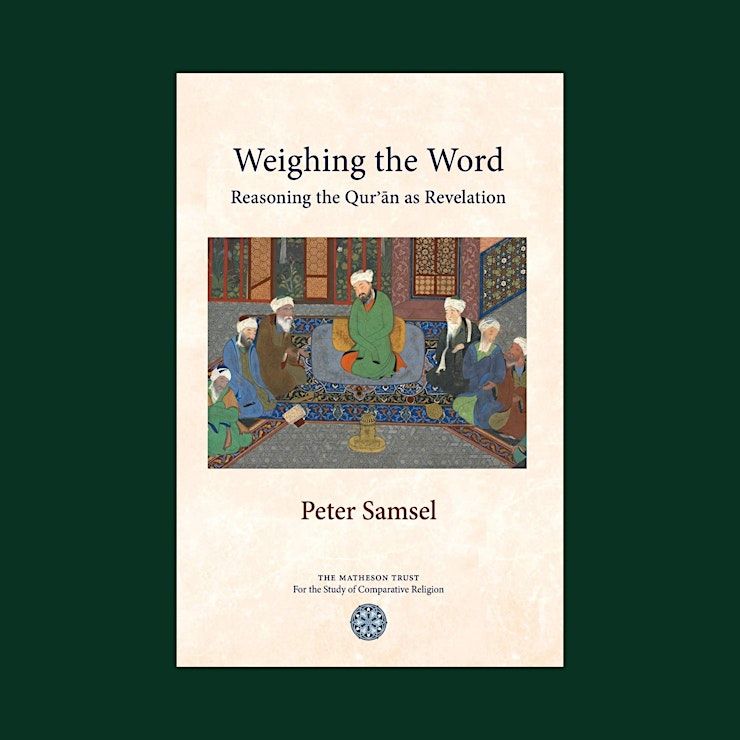
For the month of July, we will be reading Weighing the Word by Peter Samsel. This book offers a comprehensive exploration of whether the Qur'an is divine revelation, examining textual, historical, philosophical, and linguistic evidence.
What is the format of the meetups?
We will meet every two weeks to discuss the assigned portion of the current book. Each participant will share their thoughts on what they have read over the past two weeks, creating an open and engaging discussion for everyone.
Hopefully, our conversations will typically explore the following themes:
- The author’s writing style and its impact on contemporary society.
- What participants found interesting and how the content relates to their own lives.
- A critical assessment of the author’s ideas and arguments.
- Favorite passages that participants would like to read aloud and share with the group.
I believe, this format encourages thoughtful discussion, diverse perspectives, and a deeper understanding of the book.
How often would the book club members meet?
The book club meetups will be every two weeks. Typically, we will dedicate one month to each book and schedule discussions every two weeks to maintain steady progress. If a book is longer or members require additional time, we hope to be flexible and can extend the reading schedule based on mutual agreement.
Book List
I have curated a selection of books for us to choose from, and we can also expand the list by incorporating suggestions from members. We will then hold a vote to decide which book to read. See list below:
- The Art of Cultivating Noble Character by Muhammad bin Yahya al-Ninowy (~200 pages) — A spiritual guide on developing noble character traits and moral excellence based on Islamic teachings and prophetic traditions.
- The Preaching of Islam by Thomas W. Arnold (508 pages) — A comprehensive historical study of the spread of Islam through peaceful means, missionary activities, and the appeal of Islamic teachings across civilizations.
- Ethico-Religious Concepts in the Qur'an by Toshihiko Izutsu (284 pages) — A semantic analysis of ethical and religious concepts in the Qur'an, examining key moral terms and their interconnected meanings in Islamic scripture.
- Crusade and Jihad by William R. Polk (656 pages) — A thousand-year war through Arab and Western eyes, exploring the historical conflicts and interactions between Christian Europe and the Islamic world.
- Return of the God Hypothesis by Stephen C. Meyer (576 pages) — A scientific case for God examining cosmology, physics, and biology to argue that modern science points to a transcendent creator.
- Major Themes of the Qur'an by Fazlur Rahman (180 pages) — A thematic interpretation of the Qur'an exploring its major concepts including God, man, nature, prophethood, and eschatology.
- Weighing the Word by Peter Samsel (126 pages) — A comprehensive survey examining whether the Qur'an is divine revelation, analyzing textual, historical, philosophical, and linguistic evidence.
- The Muqaddimah - An Introduction to History by Ibn Khaldun (1380 pages) — A pioneering 14th-century work on philosophy of history, sociology, and economics, considered the foundation of modern historiography and social sciences.
- Islam and Secularism by Syed Muhammad Naquib al-Attas (200 pages) — A critical analysis of secularism and its incompatibility with Islamic worldview, proposing an Islamic framework for knowledge and education.
- The Sirah of the Prophet (pbuh): A Contemporary and Original Analysis by Yasir Qadhi (510 pages) — An analysis of the Prophet's biography focusing on military expeditions, strategies, and the ethics of warfare in early Islamic history.
- Kalila and Dimna by Ibn al-Muqaffa (translated) (300 pages) — A collection of fables featuring two jackals offering moral and political wisdom, translated from Sanskrit via Persian into Arabic in the 8th century.
- Palestine: A Four Thousand Year History by Nur Masalha (480 pages) — A comprehensive history of Palestine from ancient times to the present, challenging narratives that erase Palestinian historical presence and identity.
- Jews and the Qur'an by Meir M. Bar-Asher (192 pages) — An examination of how Jews and Judaism are depicted in the Qur'an, tracing the origins of Jewish-Muslim relations and Qur'anic protections for minorities.
- Trial and Tribulation in the Qur'an by Hamza Yusuf (~160 pages) — An exploration of how the Qur'an addresses human suffering, trials, and tribulations, offering spiritual guidance for enduring life's challenges.
- Art of Cultivating Noble Character by Muhammad bin Yahya al-Ninowy (~200 pages) — A spiritual guide on developing noble character traits and moral excellence based on Islamic teachings and prophetic traditions.
- The Hundred Years' War on Palestine by Rashid Khalidi (336 pages) — A history of settler-colonial conquest and Palestinian resistance from 1917 to the present, told through six pivotal turning points.
- Muhammad: Prophet of Peace Amid the Clash of Empires by Juan Cole (336 pages) — A biography arguing that Muhammad founded Islam as a peace-seeking movement during the violent era of Roman-Persian wars.
- Treatise on Maqasid al-Shari'ah by Ibn Ashur by Muhammad al-Tahir Ibn Ashur (518 pages) — A groundbreaking work on Islamic legal theory proposing Maqasid (higher objectives) as methodology for renewing Islamic jurisprudence.
- The Jews of Islam by Bernard Lewis (245 pages) — A portrayal of the Judaeo-Islamic tradition, tracing its origins, flowering, and eventual transformation through the Ottoman period.
- Muhammad: His Life Based on the Earliest Sources by Martin Lings (361 pages) — An acclaimed biography of Prophet Muhammad based on 8th-9th century Arabic sources, praised for its readable narrative style.
- The Prophetic Invocations by Abdallah ibn Alawi al-Haddad (~150 pages) — A collection of daily litanies and supplications (wird) for spiritual growth, including the famous Ratib al-Haddad prayers.
- Al-Ghazali on Disciplining the Soul and on Breaking the Two Desires by Abu Hamid al-Ghazali (~300 pages) — Books XXII and XXIII of the Revival of Religious Sciences, addressing character refinement and controlling desires for food and lust.
- The Autobiography of Malcolm X by Malcolm X with Alex Haley (460 pages) — The story of Malcolm X's transformation from street hustler to influential Muslim leader, documenting the Black Muslim movement in America.
- The Islamic Jesus by Mustafa Akyol (288 pages) — An exploration of Jesus in Islamic tradition, his Qur'anic depiction, connections to Jewish Christianity, and lessons for Muslims today.
- The Islamic Moses by Mustafa Akyol (320 pages) — A theological and historical exploration of the Judeo-Islamic tradition through Moses, the most-mentioned figure in the Qur'an.
- Reopening Muslim Minds by Mustafa Akyol (336 pages) — A call for Islamic enlightenment, arguing for reason, freedom, and tolerance by reviving lost rationalist traditions in Islamic thought.
- Islam without Extremes by Mustafa Akyol (368 pages) — A Muslim case for liberty, tracing the roots of political Islam and advocating for secular governance compatible with Islamic values.
- Ibn Tufayl's Hayy Ibn Yaqzan: A Philosophical Tale by Ibn Tufayl (280 pages) — The Arabic philosophical fable Hayy Ibn Yaqzan is a classic of medieval Islamic philosophy. Ibn Tufayl (d. 1185), the Andalusian philosopher, tells of a child raised by a doe on an equatorial island who grows up to discover the truth about the world and his own place in it, unaided—but also unimpeded—by society, language, or tradition. Hayy's discoveries about God, nature, and man challenge the values of the culture in which the tale was written as well as those of every contemporary society.
Where is it happening?
CAD 0.00