WTH?! Why THAT House?: Understanding Appraiser Comp Selection

About this Event
Ever looked at an appraisal and wondered, “Why did the appraiser use THAT house?”
You’re not alone.
Comparable selection is one of the most misunderstood parts of the appraisal process. The closest sale isn’t always the best comparable. The house with the same floor plan may not be the strongest indicator of value. And sometimes the sale that looks “perfect” on paper isn’t really competing for the same buyer at all.
WTH?! Why THAT House? — How Appraisers Select Comps takes you inside the thought process behind comparable selection.
Rather than memorizing rules about distance, square footage, age, or subdivision boundaries, we’ll start with a much more important question:
If the subject property wasn’t available, what would the typical buyer purchase instead?
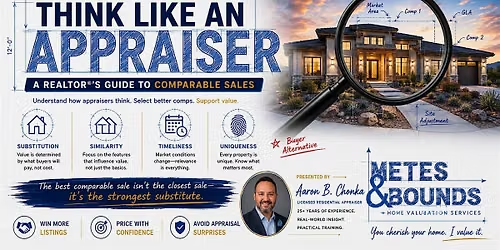
That question introduces the Principle of Substitution and the central idea behind this class: a comparable should represent a reasonable purchase alternative in the eyes of the market.
What We'll Explore
Through questions, discussion, and real-world examples, we'll examine:
- What actually makes a property comparable
- How buyer behavior influences market value
- The Principle of Substitution and the idea of a “purchase alternative”
- How appraisers identify a property's true competition
- Why the closest sale isn't necessarily the best comp
- How Demand, Utility, Scarcity, and Transferability (D.U.S.T.) influence value
- How the principles of competition and conformity affect comparable selection
- Why agents and appraisers sometimes see the same market differently
- How lender requirements can influence the appraisal process
- Ways real estate professionals can communicate more effectively with appraisers
This Isn't Just a Lecture
Come prepared to participate.
Some of the best learning happens when we put properties on the screen, ask “Would a buyer really consider these alternatives?”, and let the room debate the answer.
There won't always be one perfect comp—and that's precisely the point.
The goal isn't to teach you to become an appraiser. It's to give you a better framework for understanding how buyers make choices, how properties compete, and how appraisers use market evidence to develop credible opinions of value.
Whether you're a REALTOR®, lender, broker, or other real estate professional, you'll leave with a different way of looking at comparable sales—one you can use when pricing properties, preparing CMAs, advising clients, reviewing appraisals, and navigating valuation concerns.
Stop asking only, “What's the closest comp?”
Start asking:
“What would the buyer have purchased instead?”
Where is it happening?
Event Location & Nearby Stays:
USD 0.00