University of Chicago 3rd Annual Pancreas Symposium

About this Event
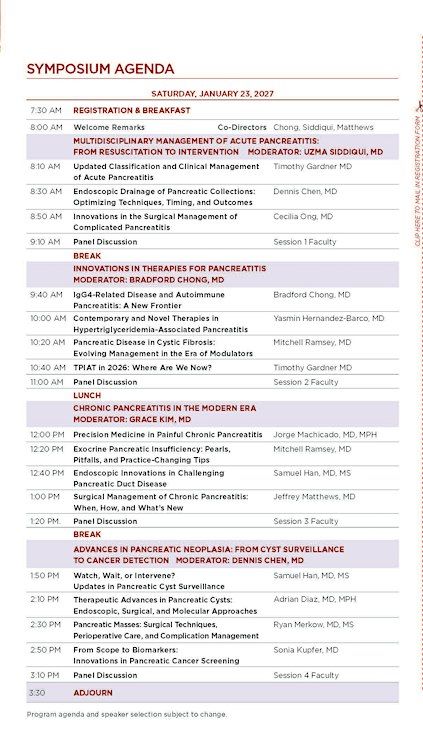
The University of Chicago 3rd Annual Pancreas Symposium is a multidisciplinary
CME program designed to address these gaps through practical, evidence-based
education spanning the full spectrum of pancreatic disease. Unlike disease-specific
educational programs, it integrates expertise in gastroenterology, surgery, oncology,
genetics, radiology, and advanced endoscopy to provide a comprehensive approach
to contemporary pancreatic care.
Through expert-led lectures and case-based discussions, participants will gain
practical strategies to improve the diagnosis and management of acute and chronic
pancreatitis, apply emerging approaches to pancreatic cyst risk stratification and
treatment, and identify patients appropriate for pancreatic cancer surveillance
and early detection. By translating emerging evidence into clinical practice, the
symposium aims to improve multidisciplinary care and patient outcomes.
Target Audience
This activity is designed for gastroenterologists, surgeons, oncologists, interventional endoscopists, anesthesiologists, gastroenterology trainees, internists, hospitalists, advanced
practice providers, primary care physicians, genetic counselors, radiologists, registered dietitians, and nurses dedicated to caring for patients with pancreatic diseases.
Learning Objectives
After this activity, participants will be able to:
- Apply evidence-based strategies for the diagnosis and management of acute pancreatitis, including resuscitation and management of complications.
- Compare contemporary endoscopic and surgical interventions for pancreatic fluid collections, pancreatic duct disorders, and other complex pancreatic conditions.
- Differentiate the diagnostic and therapeutic considerations for autoimmune pancreatitis, hypertriglyceridemia-associated pancreatitis, and pancreatic disease associated with cystic fibrosis.
- Integrate emerging medical, endoscopic, and surgical approaches into the management of chronic pancreatitis and its complications.
- Apply evidence-based risk stratification strategies for pancreatic cysts and determine appropriate surveillance and referral pathways.
- Identify patients appropriate for pancreatic cancer surveillance and incorporate current recommendations and emerging technologies for early detection into clinical practice.
Where is it happening?
Event Location & Nearby Stays:
USD 0.00 to USD 3736.60