Transylvanian Dance Jazz Concert

About this Event
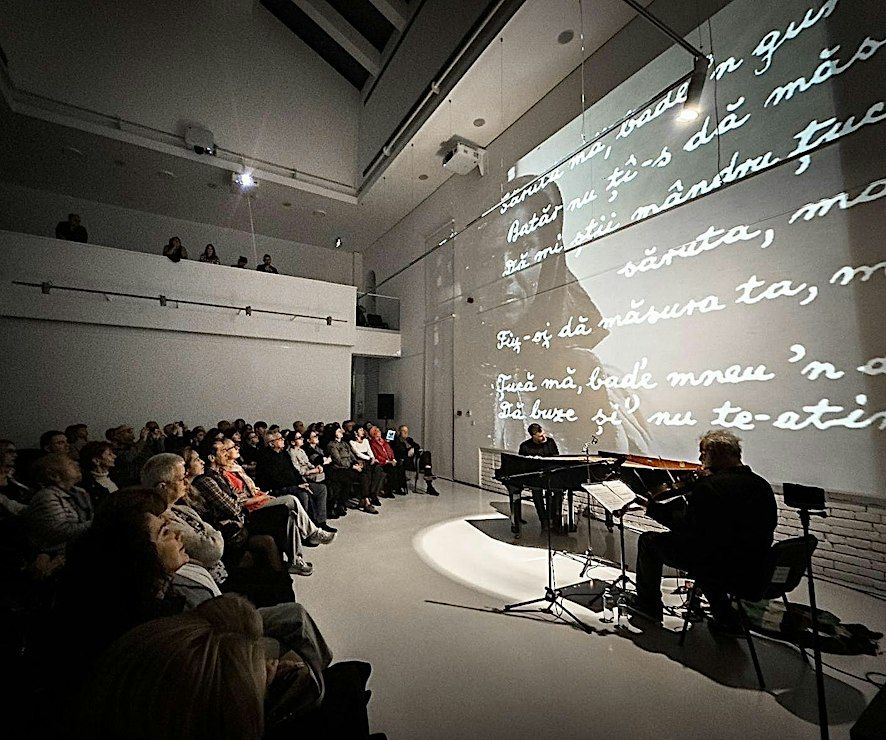
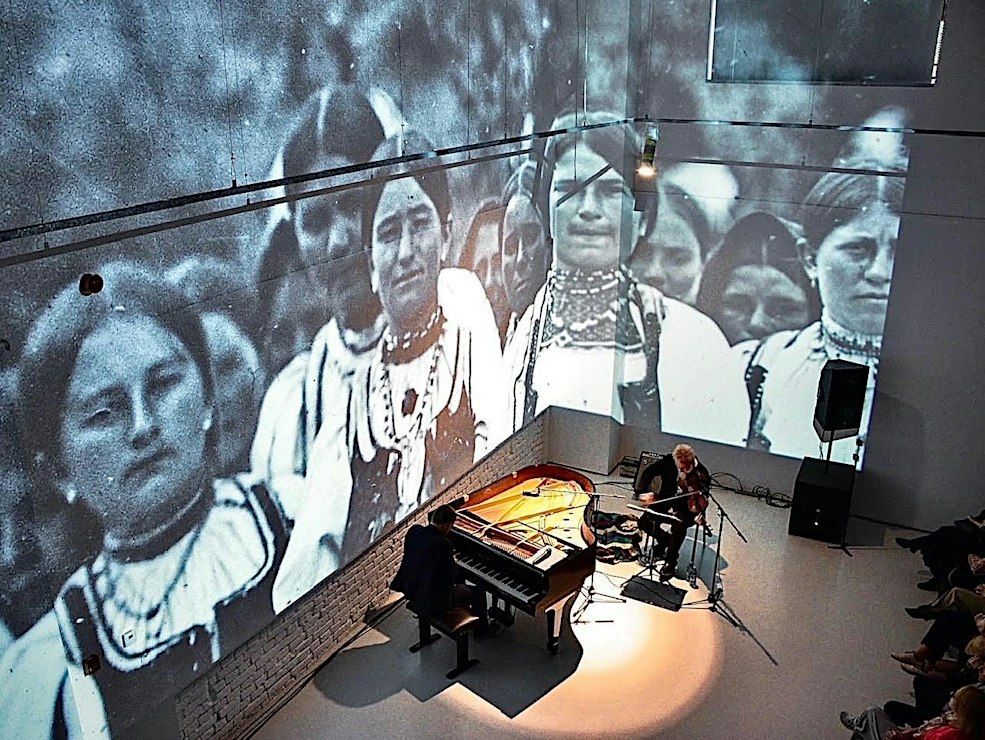
Drawing from their acclaimed new ECM Records release Transylvanian Dance and from NPR Album Of The Year Transylvanian Folk Songs featuring legendary woodwind player John Surman pianist Lucian Ban and violist Mat Maneri reimagine through improvisation the Béla Bartók Field Recordings of folk songs from Transylvania using live performance along with video projections featuring rare archival footage, audio from Bartók’s original wax cylinder recordings, handwritten manuscripts and photographs taken by Bartók himself in his field trips.
“It is such a joy for us to use varied folkloric approaches from around the world - all filtered through our love of improvisation and the jazz vernacular - to dig deeper into these folk songs and find the notes that bring out the heightened emotions of all folk music. All these are illustrating Bartok’s profound idea of a „connective tissue” that ties all folk musics around the globe, a connection based on what he calls the „brotherhood of peoples”. Music always represents more than just the song itself. Folk music, folk art is a container of a communal culture. And even a hundred years later, long after the peasants sang into an Edison phonograph we partake in this culture, in its beauty and mystery. Improvising in the moment also includes our personal history and experiences and through the audiences we play in front of, it includes our collective history too.”
- Lucian Ban & Mat Maneri, 2025
Transylvanian Dance @ ECM Records
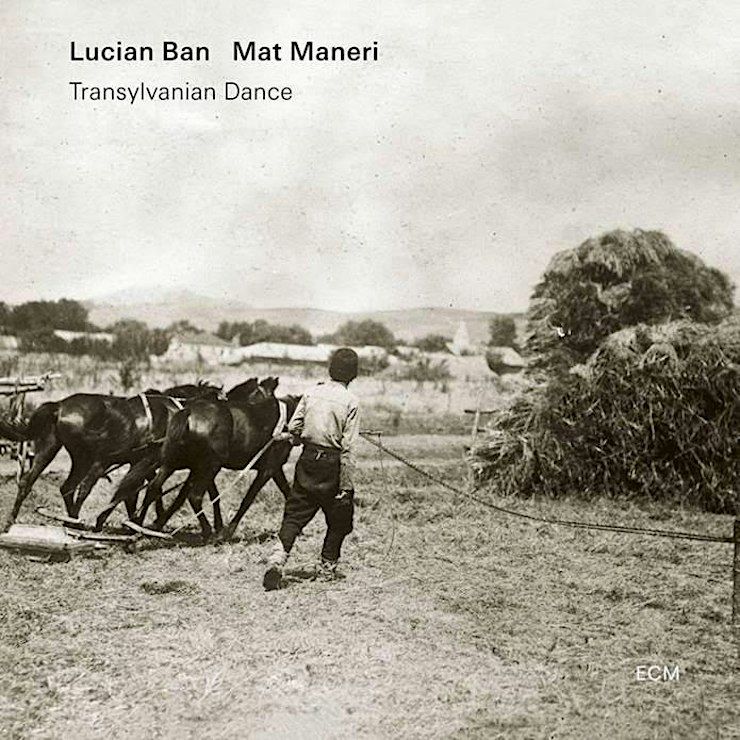
On their second ECM duo album Romanian pianist Lucian Ban and US violist Mat Maneri find fresh inspiration as they follow the trail of Béla Bartók, revisiting the folk music that spurred the imagination of the great Hungarian composer who, in the early 20th century, collected and transcribed numerous pieces from Transylvania. For the duo these songs have become “springboards and sources of melodic material” for arrangements “that capture the spirit of the original yet allow us to improvise and bring our own world to them. If you go deeper into the source material, new vistas open up. These folk songs teach us many things.” (Steve Lake, album liner notes). Developing the music from the Transylvanian folk transcriptions has become a priority in recent years, with both players finding new freedoms in the material. On the present album, Mat Maneri, taking heed of Bartók’s observations about the “connective tissue” linking the musics of the world, subtly draws influence from Arabian, West African and Korean music as well as from the richly divergent folk sources of Transylvania in his uniquely liquid viola playing. Recorded live in October 2022 in the context of the Retracing Bartók project in Timișoara, these performances also bear testimony to the finely attuned understanding that Lucian Ban and Mat Maneri have achieved in their long-running musical partnership.
About Lucian Ban & Mat Maneri
More than a decade since they started working together as a duo, Lucian Ban and Mat Maneri are renowned for their amalgamations of Transylvanian folk with improvisation, their mining of 20th Century European classical music with jazz, and for their pursuit of a modern chamber jazz ideal. The two musicians first worked together in 2009 in the Enesco Re-Imagined octet that was conceived as a celebration and a contemporary jazz re-imagination of the works of the great Romanian composer George Enescu. Featuring an A list of jazz musicians – Ralph Alessi, Tony Malaby, John Hebert, Gerald Cleaver, Mat Maneri, Albrecht Maurer and Indian tabla legend Badal Roy – the album was recorded live at the 2009 Enescu International Festival in Bucharest and won multiple BEST ALBUM of the YEAR Awards from Jazz Journalists Association and worldwide press coverage, followed by concerts in major venues and festivals. JAZZ TIMES said “Enesco Re-Imagined is visionary third-stream music . . . this recording places Ban and Hébert among the great 21st-century interpreters.” The Guardian hails the album’s “rare combination of uninhibited but coherent solo and collective improv, shrewd arrangement and dazzling thematic writing”.
In 2013 ECM Records releases Maneri & Ban duo album Transylvanian Concert that was widely acclaimed for “its original voice and unorthodox beauty “(The Guardian) and spanned worldwide touring. It was followed by a trio with European avant-garde icon Evan Parker (Sounding Tears, 2018), by Mr. Maneri’s own microtonal quartet Dust (2019, a ROLLINGSTONE Best of the Year) and ASH (Wall Street Journal feature) and in 2020 by their radical recasting of the Transylvanian folk songs from the Bela Bartok Field Recordings with legendary reed player John Surman. By year’s end Transylvanian Folk Songs ends up on NPR 2020 Jazz Critics Poll , on Balkan World Music Charts, New York City Jazz Record BEST OF 2020 and more. In 2023 Ban and Maneri released on Sunnyside Records Oedipe Redux their radical take on George Enescu’s Oedipe opera featuring a cast of international celebrated contemporary jazz & improvisers – Jen Shyu, Theo Bleckmann, Tom Rainey and renowned French bass clarinet player Louis Sclavis. In 2024 Sunnyside Records released Blutopia, a co-lead quintet by baritone saxophonist Alex Harding and Lucian Ban and featuring Mat Maneri, Brandon Lewis and tuba master Bob Stewart.
The duo first appearance on ECM was in 2013 when Lucian Ban and Mat Maneri joined up for a concert in an opera house in Târgu Mureș in the middle of Romania’s Transylvania region, and recorded Transylvanian Concert, an album featuring a program of self-penned ballads, blues, hymns and abstract improvisations, the whole informed by the twin traditions of jazz and European chamber music. The music was, as Jazz Times puts it, “as close as it gets to Goth jazz” and won critical acclaim on both sides of the Atlantic, including several Best Album of the Year awards, and spawning continuous touring ever since. Transylvanian Concert @ ECM Records
Their previous investigation of the Béla Bartók field recordings with legendary British reedman JOHN SURMAN produced the acclaimed Transylvanian Folk Songs album and was, as JAZZ TIMES put it “as much an act of tribute as it is a transformation”. The album quickly to Billboard charts, European Jazz Media Charts, Balkan World Music Charts, New York City Jazz Record BEST of 2020 and was named an NPR 2020 Jazz Critics Poll album. Rave reviews followed - the WIRE describes it as “Lush and romantic, with each note placed as carefully as a stone”, Deutchlandfunk Radio called the album “A magical event”, and the Financial Times talks how “Village dances with a fresh spin -jazz, folk and classical influences merge into a singular jazz voice”, and NPR describes the “mystery in that bare-bones music and in much else on the album”. Discussing with Berlin Jazz Festival their investigation of folk music of Romanian people Mat Maneri talks about the “spirituality of these peasants that speak through music and how he loves this the most” while Lucian Ban underlines how “observing the traditions of folk music can teach us so much about improvisation and ultimately about music and life”.
Lucian Ban (piano) Mat Maneri (viola)
Lucian Ban & Mat Maneri performance and presentation are part of Retracing Bartók – Reimagining the Béla Bartók Field Recordings project supported by .
LUCIAN BAN
Called “A name to watch" by The Guardian and ”one of the most gifted pianists to move to New York" (B. Gallanter, Downtown Music Gallery), Lucian Ban is a Romanian born, NYC based pianist & composer known for his amalgamations of Transylvanian folk with improvisation, for his mining of 20th Century European classical music with jazz, and for his pursue of a modern chamber jazz ideal. His music has been described as “emotionally ravishing" (Nate Chinen, New York Times/WBGO), a “triumph of emotional and musical communication" (All About Jazz), “Unorthodox but mesmeringly beautiful"(The Guardian) and as holding an “alluring timelessness and strong life-force" (Downbeat Magazine). Ban was raised in a small village in northwest Transylvania, in “the region where Bartok did his most extensive research and collecting of folk songs” and studied composition at the Bucharest Music Academy while simultaneously leading his own jazz groups, and notes that his approach to improvisation has been influenced by “the profound musical contributions of Romanian modern classical composers like Aurel Stroe, Anatol Vieru and of course Enesco”. Desire to get closer to the source of jazz brought him to the US, and since moving from Romania to New York in 1999 his ensembles have included many of New York’s finest players. The Enesco Re-Imagined third stream extravaganza octet celebrated the music of the great Romanian composer George Enesco and won multiple BEST ALBUM OF THE YEAR Awards. His second album with ELEVATION quartet “Songs from Afar” featuring Abraham Burton (ts), John Hebert (b) and Eric McPherson (dr) won a DOWNBEAT “5 star” review and BEST ALBUM OF THE YEAR in 2016. His duet with violist Mat Maneri “Transylvanian Concert” was released by ECM Records in 2013 and won critical acclaim on both sides of the Atlantic, including several Best Album of 2013 awards. The 2020 Transylvanian Folk Songs featuring Mat Maneri and legendary John Surman re-imagining the Bela Bartok Field Recordings is an NPR Album of the Year and wins critical acclaim and international coverage. 2022 sees the release of his first piano solo album, “Ways of Disappearing”, a mesmerizing collections of improvisations and originals that is reviewed glowingly in The Wall Street Journal, Downbeat and New York City Jazz Record . He has recorded 20 albums as a leader for labels such as Sunnyside, ECM, Jazzaway, etc. More info at www.lucianban.com
MAT MANERI
Over the course of a twenty-five year career, Mat Maneri has defined the voice of the viola and violin in jazz and improvised music. Born in Brooklyn in 1969, Maneri has established an international reputation as one of the most original and compelling artists of his generation, praised for his high degree of individualism, a distinctive marriage of jazz and microtonal music, and his work with 20th century icons of improvised music. All About Jazz considers ”Mat Maneri has changed the way the jazz world listens to the Violin & Viola” As young musician, Maneri was influenced by the sounds of his childhood home. His father, saxophonist and composer Joe Maneri, was on faculty at the New England Conservatory, and colleagues like Ran Blake and Gunther Schuller were frequent visitors. Important influences on Maneri’s work – in addition to all the major forces of jazz – include Baroque music (which he studied with Juilliard String Quartet co-founder Robert Koff), Elliott Carter, and the Second Viennese School of Schoenberg, Berg and Webern, which was also of central importance to his father, the late, great saxophonist, clarinettist, composer and educator Joe Maneri. Of his studies with Koff, Mat Maneri has said: “Studying Baroque music helped me to find my sound. [Koff] brought me into the world of contrapuntal playing and a way of using the bow that sounded more like a trumpet, like Miles, to my mind.” Jazz writer Jon Garelick has written of Maneri’s distinctive style: “Maneri’s virtuosity is everywhere apparent – in his beautiful control of tone, in the moment-to-moment details that unfold in his playing, in the compositional integrity of each of his pieces, in what visual artists might call the variety of his ‘mark-making’: spidery multi-note runs, rhythmically charged double-stops and plucking, subtle and dramatic dynamic shifts” Maneri posses an immediately recognizable sound and approach which marries the distinct worlds of jazz and microtonal music in a fluid, remarkably expressive fashion which The Wire dubbed “endlessly fascinating” In 1990, Mat co-founded the legendary Joe Maneri Quartet with his father, drummer Randy Peterson and bassists Ed Schuller and John Lockwood. The quartet’s recordings for ECM Records, Hatology and Leo Records were widely acknowledged by critics and fellow musicians as among the most important developments in 20th century improvised music. Maneri’s 1999 solo debut on ECM Records marked his emergence as a musician with a singular, uncompromised voice, reflecting a growing consensus of Maneri as a central figure in American creative music. Since then, the long list of musicians with whom he has worked includes icons such as Cecil Taylor, Paul Bley, Paul Motian and William Parker, as well as influential bandleaders such as Joe Morris, Vijay Iyer, Matthew Shipp, Marilyn Crispell, Joelle Leandre, Kris Davis, Tim Berne and Craig Taborn. More info at Mat Maneri @ ECM
Where is it happening?
Event Location & Nearby Stays:
USD 33.85
