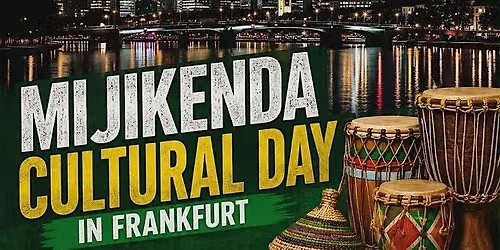
swahili mijikenda cultural day
Advertisement
3. THE NINE PEOPLES OF THE KAYA
'Mijikenda' means nine homesteads, and each of the nine peoples carries its own dialect, temperament,
and specialism within the shared cultural fabric. A brief portrait of each:
GIRIAMA — the largest and most widely known
• The largest of the nine sub-tribes, concentrated around Kilifi and Malindi.
• Famed for the Kaya Fungo forest and for the historic 1914 Giriama resistance against British
colonial taxation and land seizure, led by the prophetess Mekatilili wa Menza — one of Kenya's
earliest anti-colonial heroines.
• Renowned for vibrant traditional dance (notably Sengenya), drumming, and a strong oral-poetry
tradition.
• Widely regarded as retaining the richest surviving corpus of Mijikenda ritual and herbal
knowledge.
THE MIJIKENDA — A CULTURAL EXPOSÉ
Page 4 · Culture Team · Frankfurt am Main
DIGO — the southern gateway, shaped by Islam
• Settled furthest south, from the Kwale coast to the Tanzanian border, closest to Zanzibari and
Omani trading influence.
• The only Mijikenda group predominantly Muslim, blending Islamic practice with the older Kaya
cosmology in a distinctive coastal synthesis.
• Historically organised under the unusual centralised 'Kubo' chieftaincy rather than a purely
gerontocratic council — a mark of early state-like organisation on the southern coast.
• Custodians of the Vumba Kuu tradition and its Shirazi-linked ruling dynasty, one of the oldest
recorded polities on the Kenyan coast.
DURUMA — the largest territory, farmers of the hinterland
• Occupy the most extensive inland territory of any Mijikenda group, straddling the Mombasa–
Nairobi corridor.
• Of notably mixed origin — traditions link them to Digo, Kamba and Makua ancestry — reflecting
the coast's long history of absorption and exchange.
• Strongly identified with dryland farming (maize, cassava, cowpeas) and cattle-keeping, adapted to
a drier hinterland climate.
• Play a key economic role as the demographic bridge between the coastal Mijikenda and inland
Kenya.
CHONYI — keepers of ceremony and craft
• Located inland of Kilifi, historically recorded as leading a coalition (the 'Musungulos') allied with,
and later independent of, Mombasa.
• Known for finely developed basketry, weaving, and traditional healing practice.
• Maintain some of the most intact age-set naming sequences used by historians to reconstruct
Mijikenda chronology.
RABAI — the historic doorway to the coast
• Occupy the Rabai hills directly behind Mombasa — the first mission station of East Africa,
established by the German missionary Dr Johann Ludwig Krapf in 1846, stands here to this day.
• Home to the Rabai Cultural Landscape, comprising the Kaya Bomu, Kaya Fimboni, Kaya Mudzi
Muvya and Kaya Mudzi Mwiru forests, inscribed as a UNESCO World Heritage property.
• The subject of the 2021 KEFRI–IIED biocultural heritage study, which documented the Rabai
worldview of Mudzini (holistic wellbeing) and the values of Umwenga (solidarity), Kufaana
(reciprocity), Soyosoyo (equilibrium) and Kushirikiana (collectiveness) that continue to guide
land, forest and seed stewardship.
• Traditions describe Rabai origins from Rombo in the Chagga country near Kilimanjaro, later
absorbed culturally and linguistically into the Mijikenda fold — a reminder that Mijikenda identity
was always built through incorporation as much as migration.
• Hold a special and living connection to Germany through the restored Krapf mission house — a
genuine cultural bridge between Frankfurt and the Kenyan coast.
RIBE — the compact hill people
• One of the smaller Mijikenda groups, settled in the hills near Rabai and Kambe.
• Traditions place the Ribe among the peoples who established firm age-set sequences later
adopted by neighbouring Kauma.
• Recognised for close-knit village governance and strong retention of the Kaya taboo system.
KAUMA — guardians of the northern approach
• Historically linked to the Ribe, from whom they are said to have separated after settling southOccupy territory bordering Giriama land, historically positioned as a buffer community facing
Oromo and, later, Somali pastoralist movement from the north.
• Maintain distinctive age-set naming traditions used by researchers to help reconstruct the wider
Mijikenda migration chronology.
KAMBE — the quiet custodians
• A smaller inland group settled between Rabai and Ribe, with one of the best-preserved sequences
of named age-sets in the entire Mijikenda cluster.
• Known for close ritual cooperation with the Chonyi and Kauma in matters of rainmaking and
blessing.
JIBANA — the reflective sibling
• Among the smallest of the nine, settled near Rabai and Kambe.
• Traditions record a once-different age-set structure (alternating sets, distinct from the standard
Mijikenda sequence), pointing to an especially old and distinct internal history despite shared
Mijikenda identity today.
• Together with Ribe, forms part of the Rabai sub-county administrative area recognised in Kenya's
2019 census.
Though every one of the nine speaks its own dialect and nurtures its own local memory, all share the
Kaya cosmology, the authority of elder councils, the symbolism of the Vigango memorial posts, and an
unmistakable coastal Bantu identity that has endured migration, colonial disruption, and the pressures
of the twenty-first century alike.
'Mijikenda' means nine homesteads, and each of the nine peoples carries its own dialect, temperament,
and specialism within the shared cultural fabric. A brief portrait of each:
GIRIAMA — the largest and most widely known
• The largest of the nine sub-tribes, concentrated around Kilifi and Malindi.
• Famed for the Kaya Fungo forest and for the historic 1914 Giriama resistance against British
colonial taxation and land seizure, led by the prophetess Mekatilili wa Menza — one of Kenya's
earliest anti-colonial heroines.
• Renowned for vibrant traditional dance (notably Sengenya), drumming, and a strong oral-poetry
tradition.
• Widely regarded as retaining the richest surviving corpus of Mijikenda ritual and herbal
knowledge.
THE MIJIKENDA — A CULTURAL EXPOSÉ
Page 4 · Culture Team · Frankfurt am Main
DIGO — the southern gateway, shaped by Islam
• Settled furthest south, from the Kwale coast to the Tanzanian border, closest to Zanzibari and
Omani trading influence.
• The only Mijikenda group predominantly Muslim, blending Islamic practice with the older Kaya
cosmology in a distinctive coastal synthesis.
• Historically organised under the unusual centralised 'Kubo' chieftaincy rather than a purely
gerontocratic council — a mark of early state-like organisation on the southern coast.
• Custodians of the Vumba Kuu tradition and its Shirazi-linked ruling dynasty, one of the oldest
recorded polities on the Kenyan coast.
DURUMA — the largest territory, farmers of the hinterland
• Occupy the most extensive inland territory of any Mijikenda group, straddling the Mombasa–
Nairobi corridor.
• Of notably mixed origin — traditions link them to Digo, Kamba and Makua ancestry — reflecting
the coast's long history of absorption and exchange.
• Strongly identified with dryland farming (maize, cassava, cowpeas) and cattle-keeping, adapted to
a drier hinterland climate.
• Play a key economic role as the demographic bridge between the coastal Mijikenda and inland
Kenya.
CHONYI — keepers of ceremony and craft
• Located inland of Kilifi, historically recorded as leading a coalition (the 'Musungulos') allied with,
and later independent of, Mombasa.
• Known for finely developed basketry, weaving, and traditional healing practice.
• Maintain some of the most intact age-set naming sequences used by historians to reconstruct
Mijikenda chronology.
RABAI — the historic doorway to the coast
• Occupy the Rabai hills directly behind Mombasa — the first mission station of East Africa,
established by the German missionary Dr Johann Ludwig Krapf in 1846, stands here to this day.
• Home to the Rabai Cultural Landscape, comprising the Kaya Bomu, Kaya Fimboni, Kaya Mudzi
Muvya and Kaya Mudzi Mwiru forests, inscribed as a UNESCO World Heritage property.
• The subject of the 2021 KEFRI–IIED biocultural heritage study, which documented the Rabai
worldview of Mudzini (holistic wellbeing) and the values of Umwenga (solidarity), Kufaana
(reciprocity), Soyosoyo (equilibrium) and Kushirikiana (collectiveness) that continue to guide
land, forest and seed stewardship.
• Traditions describe Rabai origins from Rombo in the Chagga country near Kilimanjaro, later
absorbed culturally and linguistically into the Mijikenda fold — a reminder that Mijikenda identity
was always built through incorporation as much as migration.
• Hold a special and living connection to Germany through the restored Krapf mission house — a
genuine cultural bridge between Frankfurt and the Kenyan coast.
RIBE — the compact hill people
• One of the smaller Mijikenda groups, settled in the hills near Rabai and Kambe.
• Traditions place the Ribe among the peoples who established firm age-set sequences later
adopted by neighbouring Kauma.
• Recognised for close-knit village governance and strong retention of the Kaya taboo system.
KAUMA — guardians of the northern approach
• Historically linked to the Ribe, from whom they are said to have separated after settling southOccupy territory bordering Giriama land, historically positioned as a buffer community facing
Oromo and, later, Somali pastoralist movement from the north.
• Maintain distinctive age-set naming traditions used by researchers to help reconstruct the wider
Mijikenda migration chronology.
KAMBE — the quiet custodians
• A smaller inland group settled between Rabai and Ribe, with one of the best-preserved sequences
of named age-sets in the entire Mijikenda cluster.
• Known for close ritual cooperation with the Chonyi and Kauma in matters of rainmaking and
blessing.
JIBANA — the reflective sibling
• Among the smallest of the nine, settled near Rabai and Kambe.
• Traditions record a once-different age-set structure (alternating sets, distinct from the standard
Mijikenda sequence), pointing to an especially old and distinct internal history despite shared
Mijikenda identity today.
• Together with Ribe, forms part of the Rabai sub-county administrative area recognised in Kenya's
2019 census.
Though every one of the nine speaks its own dialect and nurtures its own local memory, all share the
Kaya cosmology, the authority of elder councils, the symbolism of the Vigango memorial posts, and an
unmistakable coastal Bantu identity that has endured migration, colonial disruption, and the pressures
of the twenty-first century alike.
Advertisement
Where is it happening?
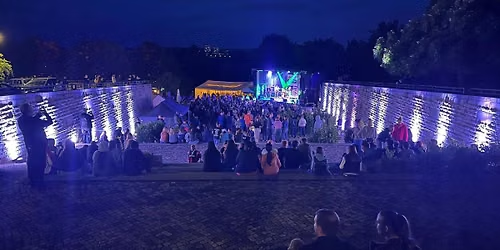
hahn str 75 niederrad Frankfurt am main, Hahnstraße 75, 60528 Frankfurt am Main, Deutschland, Frankfurt, Germany
Event Location & Nearby Stays:
Know what’s Happening Next — before everyone else does.
Host or PublisherIssa Bobby