Sashiko Mending Workshop - May
Schedule
Sun May 17 2026 at 10:00 am to 01:00 pm
UTC-07:00Location
Leaven Community Center | Portland, OR
About this Event
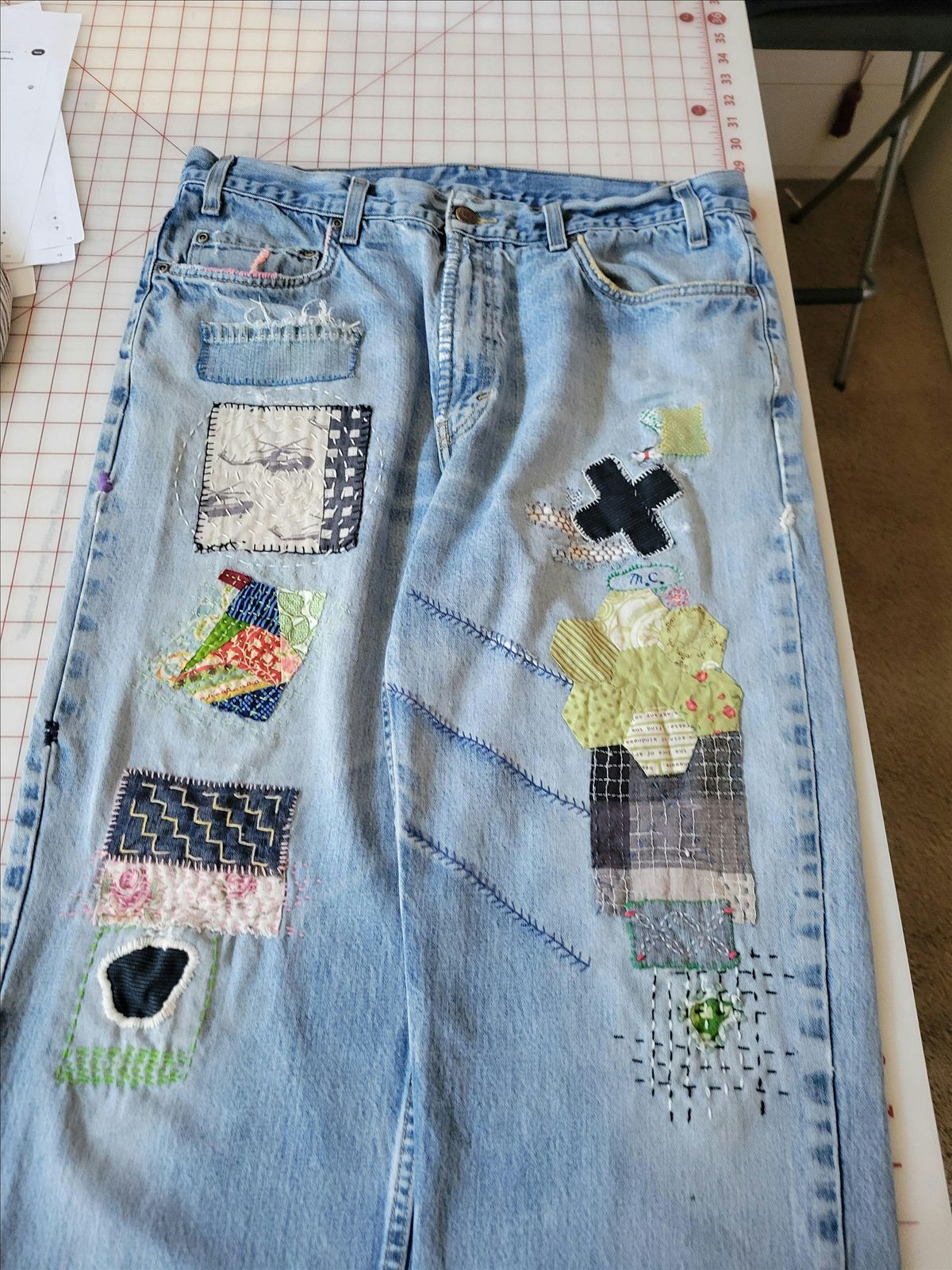
Learn to mend your clothing using the traditional Japanese visible mending art of sashiko embroidery! Sashiko is an embroidery technique that stabilizes and reinforces mends in fabric while adding beautiful embellishment. No embroidery experience required!
In this small hands-on workshop, our lovely instructor Angela will walk you through creating and adding a sashiko patch to an item of clothing or fabric with a tear or hole. She will talk about the history of Sashiko, what ways it is used today, and which mending situations are most suited to sashiko use. You will choose the sashiko pattern stencil you wish to trace and will go home with thread and a needle (and fabric if desired) to finish your project with and/or start others at home!
If you have any of these, please bring them with you to class:
- Item(s) to mend* -- You may bring a few mending items; you will likely only repair one but having a couple to choose from will be helpful. We recommend bringing items with a low thread-count weave (not knitted; not stretchy). Examples: jeans or other denim, cotton, linen, or twill fabric. We will also provide sashiko-printed fabric for practice if you do not have an item to mend.
- Sashiko Thread* – Sashiko thread is 100% twisted matte cotton, can’t be separated like embroidery thread and it comes in different thicknesses.
- Sashiko Needles* – Sashiko needles are sharp, strong and won’t bend, and have a large eye. Use longer ones for straight lines and shorter ones for curves and changing directions.
- Thimbles* – Used when you have many stitches on your needle at once or when stitching through multiple layers of fabric. There are different types depending upon what you’re sewing and your preference.
- Scissors*
- Reading Glasses, if you use them!
*Will also be provided by Repair PDX
The following techniques are covered in the workshop:
- Opening the skein & threading the needle
- Knots - quilters, spit knots, nicker knots, weavers knots.
- Stitches, spacing and loops
- Stitching order
- Methods for transferring the design including: tracing a stencil, using tracing paper, wash-away designs, drawing with graph paper, and using a lightbox.
A Little Sashiko History – During the Edo Period (1603 – 1867) in Japan, the ruling class, the Shoguns, implemented a strict social hierarchy. Cloth was hard to come by and certain fabrics, colors and embroideries used in kimonos were not allowed for the working classes. They were forced to mend their clothes with indigo-dyed ‘boro’ or fabric scraps using ‘stitches no bigger than a grain of rice’ to secure the patches, extending the life of a garment and adding warmth and durability.
The word Sashiko translates into ‘little stab’. From a simple running stitch, the working classes created beautiful intricate patterns in traditional Japanese designs that had meaning and symbolism.
Note on Sliding Scale Pricing:
Repair PDX seeks to both pay our instructors equitably and keep ticket prices accessible.
Not every event we run is independently solvent. We provide sliding scale, reduced tickets for volunteers, and other low cost opportunities because of our values. Thus, we rely on those with more financial support to pay the higher end of the sliding scale in order to offset the low-cost tickets. As such, you will see a variety of ticket prices for the same event and we encourage you to pay what you can.
Proceeds from tickets go directly to paying our wonderful instructors, providing materials for the class, and continuing to host events and workshops like this one!
Where is it happening?
Leaven Community Center, 5431 Northeast 20th Avenue, Portland, United StatesEvent Location & Nearby Stays:
USD 17.85 to USD 71.21