Pictures with Krampus & Holiday Bazaar

Advertisement
Looking for a unique way to celebrate the holiday season? Calling all Christmas enthusiasts, scrooges, holiday market-goers, shopping folklore buffs, alpine traditionalists, and odd elves alike to celebrate with Fletcher’s Ice Cream for a 'Pictures with Krampus' holiday event in association with Minnesota Krampus.
This year we are fundraising for Avenues for Youth. For 30 years, Avenues for Youth has supported youth ages 16 to 24 in Hennepin County finding a stable path out of homelessness. A portion of all ticket sales will be donated to Avenues for Youth.
Holiday Bazaar (2pm-6pm) on Saturday & Sunday, December 12th & 13th
Featured Items:
- Leather crafts
- Recycled sweater mittens, teacup candles
- Vintage Recycled Art
- CBD oil & essential oils
- Fair trade Holiday Items
Holiday vendors will be on site selling holiday crafts. Complete list of vendors will be released closer to the date.
Visit for more info: https://fletchersicecream.com/holidays
⬛ ⬛ ⬛ ⬛ ⬛ ⬛ ⬛ ⬛ ⬛
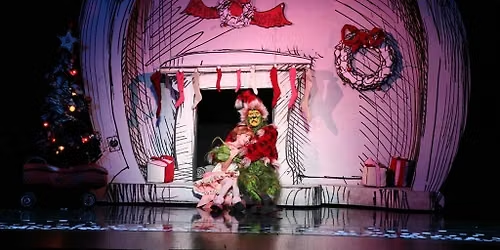
Photos with the Grinch - 12/12 - Saturday, 3pm-6pm
Photos with Krampus - 12/13 - Sunday, 3pm-6pm
Minnesota Krampus is a non-political, 501c3 educational non-profit with the mission to preserve and promote the tradition of St Nikolaus and his Krampus from the area around the city-state of Salzburg, Austria.
The Krampus on site will be wearing a costume with elements from craftsmen in Austria. Their masks are carved from wood (stone pine), by hand, by a master woodcarver. The masks are completed by adding detailing paint, real animal horns, long hair, and glass eyes. Their suits, in German “das Fell” meaning pelt, come from a long-haired alpine goat and are in their natural colors (reds, grays, speckled whites, and dark browns). To complete the look and sound, they also import their bells.
History of Krampus:
Krampus is a creature, larger than a man, covered in fur, has large exotic horns (sometimes as many as four or six), and hunts the mountain passes in the eastern alpine realm (in modern-day Austria). In the Salzburger history, Krampus was part of pre-Christian traditions that represented the harshness and wilderness of winter. It is believed that during the Christianization period of the area (around 700 A.D.), the popularity of this pre-Christian traditions was so strong that the Catholic church allowed the continued celebration of Krampus, but only if the people would convert to Christianity and if the creature was paired with Sankt Nikolaus. The tradition is believed to have been commonly celebrated all over Austria until the middle 17th Century, during the Reformation period under Salzburg Archbishop Colloredo, which outlawed any assumed celebration of the devil. The tradition saw a muted revival (celebrated in secret) during the industrialization period (as people moved from the countryside into the cities), but was again outlawed in the 20th century by the Nazis. In the 1960s, Krampus came back into popular culture and was again renewed in the 1990s through today.
Advertisement
Where is it happening?
Fletcher's Ice Cream, 316 E Hennepin Ave, Minneapolis, MN 55414-1028, United States
Event Location & Nearby Stays:
Know what’s Happening Next — before everyone else does.
Host or PublisherFletcher's Ice Cream