Night at the Museum of Anatomy: Focus on MedTech

About this Event
Join us on Thursday 8 October 2026, 18:00–20:00, for a free evening of interactive activities exploring the fascinating intersection of anatomy, healthcare technology and innovation.
Discover how new technologies are transforming healthcare and science with activities spanning AI, medical imaging, dentistry, forensics and more. Whether you're curious about the human body or the history of anatomy, interested in emerging technologies or simply looking for a different kind of museum experience, there will be plenty to explore.
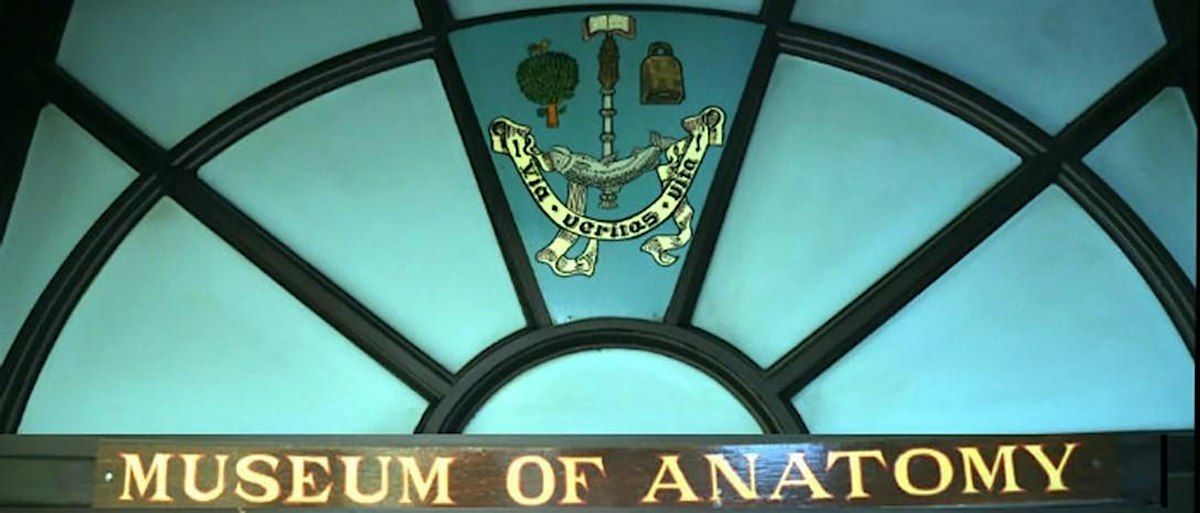
Hosted at the Hunterian Anatomy Museum, Thomson Building, University of Glasgow, this special event also celebrates anatomy in the lead-up to World Anatomy Day.
Free and open to the public — advance registration is required.
**Please note that photography is NOT permitted at this event. For those under 16 years old, an accompanying adult needs to be present due to the sensitivity of some of the preparations.
The event takes place in the Anatomy Museum in the Thomson Building, NOT in the main Hunterian Museum.
Prompt 18:00 start with a 15min "setting the scene" introduction by Dr Ourania Varsou in the Large Lecture Theatre, Anatomy Facility, Thomson Building, University of Glasgow, before we move through to the Hunterian Anatomy Museum. **
Activities and Contributors:
Technology-Enhanced Dentistry: Present and Future
Description: This activity allows visitors to step into the shoes of a dentist and experience, within a virtual reality and clinical simulation environment, what it feels like to perform dental procedures firsthand through immersive haptic technology and hands-on skills practice. It spans treatment across all age groups, from children to older adults, highlighting the associated challenges. By combining VR visualization with realistic tactile feedback and practical clinical simulation, participants gain a unique and engaging insight into how dental students develop their clinical skills in a safe, technology-enhanced setting. The stall will also showcase other technological advances in the field of dentistry.
Contributors: Kurt Naudi, Christine Park, Douglas Robertson, Jenny Galloway, James Elliot (Clark Dental Equipment Systems Limited), Will Mclean, James Donn, Vivien Monteith, Joao Miguel.
Mercurial Anatomy
Description: Mercury is often known as quicksilver, and its bright silvery appearances was useful to anatomists to highlight structures that might be difficult to see with the naked eye. William Hunter used it extensively in his collection, especially to show the lymphatic system, and these preparations are some of the most striking that you will see around the Anatomical Museum. Learn more about this technique and what it can teach us about anatomy.
Contributor: Cat Irving
Can You Calm Your Nervous System in 60 Seconds? A Live CBT Experiment
Description: What happens to your body when you feel stressed – and can you change it? In this interactive experiment, visitors will use simple heart-rate technology to see how the body responds to a short mental challenge, before trying a brief technique drawn from Cognitive Behavioural Therapy (CBT). We’ll explore the fascinating connections between our thoughts, emotions, behaviour and physical reactions, and discover how techniques such as paced breathing can influence the body’s stress response. Come and put your own nervous system to the test!
Contributor: Dr Dougie Marks
Medical Visualisation & Human Anatomy: Creating Impact in Healthcare
Description: Discover how interactive visualisation technologies and anatomy come together to transform healthcare education. The MSc Medical Visualisation & Human Anatomy, a unique collaboration between The Glasgow School of Art and the University of Glasgow, combines hands-on anatomy with cutting-edge digital technologies. Guided by expert anatomists and creative technologists, students develop innovative ways to communicate, teach and explore biomedical sciences. At this event, you will have the chance to experience graduate projects featuring immersive virtual reality (VR) simulations, augmented reality (AR) applications and engaging visual presentations that bring the human body to life.
Contributors: Dr Jenny Clancy, Dr Eilidh Ferguson, Dr Matthieu Poyade and MSc students
When things slow down and stop working
Description: Preparing Future Nurses to Meet the Needs of People - This stall will demonstrate some of the techniques used in the education of future nurses. Meet ‘Hungry Horace’ and see how nursing students apply their knowledge of life sciences to assess swallowing and to meet the care needs of those who cannot meet their nutritional needs independently. Try our immersive simulation experiences used to help nursing students understand the lived experience of people with sensory and physical impairments.
Contributors: Iona Halkett, Pinky Virhia, Kate Hill and Jane Joy.
Stories in Our DNA
Description: Stories in Our DNA invites visitors of all ages to explore the fascinating world of genetics through hands-on activities, interactive games and real-life stories from around the globe. Join staff and students from the University of Glasgow's Medical Genetics teaching team as you spin our Global Genetics Wheel, discover how DNA influences health and human diversity, build DNA models, make DNA bracelets, and learn how technologies such as CRISPR are changing medicine. Through stories, surveys and creative activities, you'll uncover how genetics connects us all while shaping the unique characteristics that make each of us different.
Contributors: Leah Martin, Saeeda Bhatti and students from the MSc Medical Genetics and Genomics Programme
Clachaig Man: The Face of a Neolithic Farmer
Description: Come and meet Clachaig Man, a Neolithic man who lived on Arran around 5,500 years ago. His face has been reconstructed from his skull using modern digital techniques. Compare it with a sculpted reconstruction made in the 1990s; same skull, same anatomy, thirty years of technology apart. At our stall, discover how the bones of the skull shape a person's features, and where anatomical evidence ends and artistic interpretation begins. Using modelling material, add the muscles to a replica skull yourself and watch a face take shape.
Contributors: Eilidh Ferguson, Danny Buksh, Andreea Nebunu
Over My Dead Body!
Description: You are presented with a choice of one of three separate forensic pathology scenarios. Do you think you might be able to help in identifying the Cause of Death? Which tests will you perform? What might the results tell you? What conclusions will you draw?
Contributors: Finlay Finlay, Syed Ahmed, Katy Bladen
Historic Anatomy/Pathology Collections - Content Warning:
Please take into consideration that the museum includes human and animal remains from the 18th and 19th centuries which may be distressing due to their historic context or the structures, conditions, or experiences that they demonstrate. Examples include remains showing reproductive anatomy and developmental pathologies. Staff will be present to answer any questions and to advise you on how to plan your pathway across the museum should there be anything you wish to avoid.
Where is it happening?
Event Location & Nearby Stays:
GBP 0.00

![Skream: Open To Close [Club 69 CLOSING WEEKEND]](https://cdn-ip.allevents.in/s/rs:fill:500:250/g:sm/sh:100/aHR0cHM6Ly9jZG4tYXouYWxsZXZlbnRzLmluL2V2ZW50czUvYmFubmVycy9hYmUyZDAwNDVhYjVkOWM2MmJiMmZhMzNmMmM3NjlkNTRhODlmODUyOWU4MWFmNWE1ZTQ5Y2I3MWI3NmE4NmZiLXJpbWctdzEwMjQtaDEwMjQtZGNmOGY4ZjgtZ21pci5qcGc_dj0xNzg4OTQ1ODQz.avif)