MOZART & DVORAK | Flowering Moon

About this Event
Saturday, May 1, 2027, 7:30 pm
Trinity-St. Paul's Centre, 427 Bloor St. West
MOZART & DVORAK | Flowering Moon
May flowers painted in music to honour Mother Earth, a beloved Mozart concerto and Dvorak’s glorious folk-inspired Sinfonia
SINFONIA TORONTO
NURHAN ARMAN Conductor
HEGHINE RAPYAN Pianist
Program
BARBARA ASSIGINAAK Waawaaskone-giizis (Flowering Moon) world premiere
MOZART Piano Concerto K 271 "Jeunehomme"
DVORAK String Quartet op. 96a orchestra version
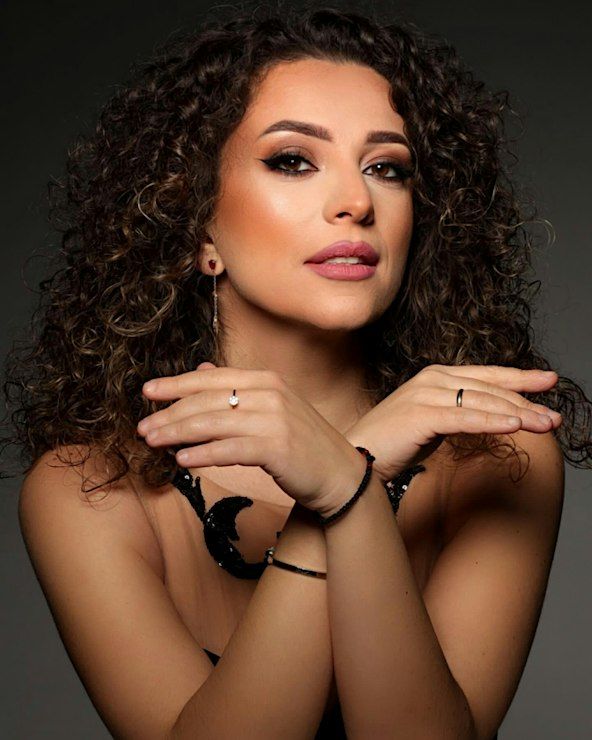
ABOUT THE PERFORMERS
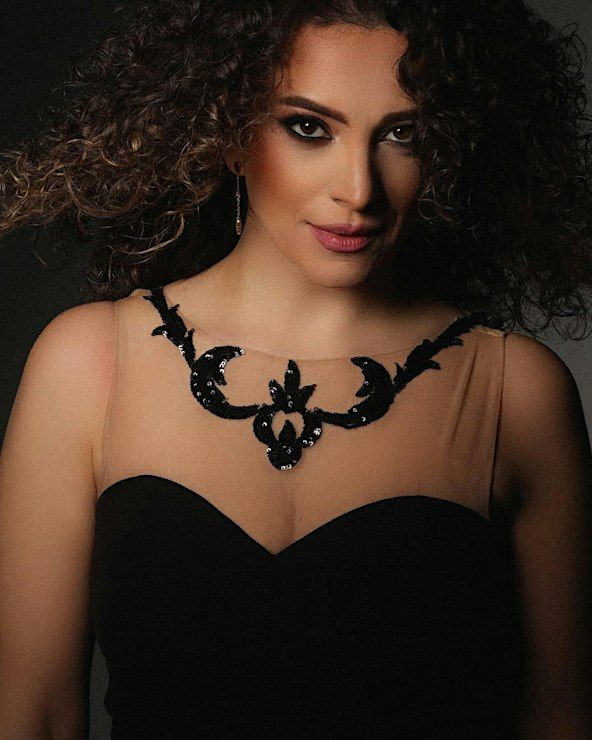
Pianist Heghine Rapyan' journey in classical music is shaped by extraordinary talent, unwavering dedication, and profound artistic insight. With a distinctive voice at the piano and exceptional interpretive depth, she has captivated audiences around the world with the intensity and honesty of her piano performance.
Heghine’s album, The Soul of Smyrna—featuring the complete piano sonatas of Stéphan Elmas—was released in April 2023 as a world premiere by Solo Musica/Naxos. The recording garnered widespread acclaim and marked a major milestone in her artistic career. Lauded by leading European and American classical music critics and broadcasters—including WDR and hr2 in Germany, and SRF in Switzerland—the album positioned her as a significant interpreter of lesser-known repertoire. BBC Music Magazine described it as “excellent” and “a sensational discovery,” praising the conviction and depth of her playing. American Record Guide reviewer Bruno Repp listed it among the Best CDs of 2023.
In 2025, Rapyan made her debut as a composer with the album ‘The Untouchable, presenting a bold and deeply personal artistic statement that expands her musical identity beyond interpretation into original creation.
Heghine’s musical path began early. At the age of sixteen, she embarked on her first international tour through Germany, Austria, and the Netherlands. That same year, she won the Kawai Artist Prize at the 2001 Armenian Legacy International Piano Competition in Yerevan—an early success that brought her international recognition.
Since then, her career has flourished through solo recitals at distinguished venues and appearances at major festivals. She has performed in prestigious halls such as the Megaron Hall in Athens, the Thessaloniki Concert Hall, and the Rudolf Oetker Halle in Bielefeld. Her reach extends across Asia with appearances at Beijing Concert Hall, Poly Shanghai City Theater, and Shenzhen Concert Hall, as well as in Europe at Teatro Politeama in Palermo. A close collaboration with the Austrian Cultural Forum has enabled her to share the works of Austrian composers with audiences throughout Europe.
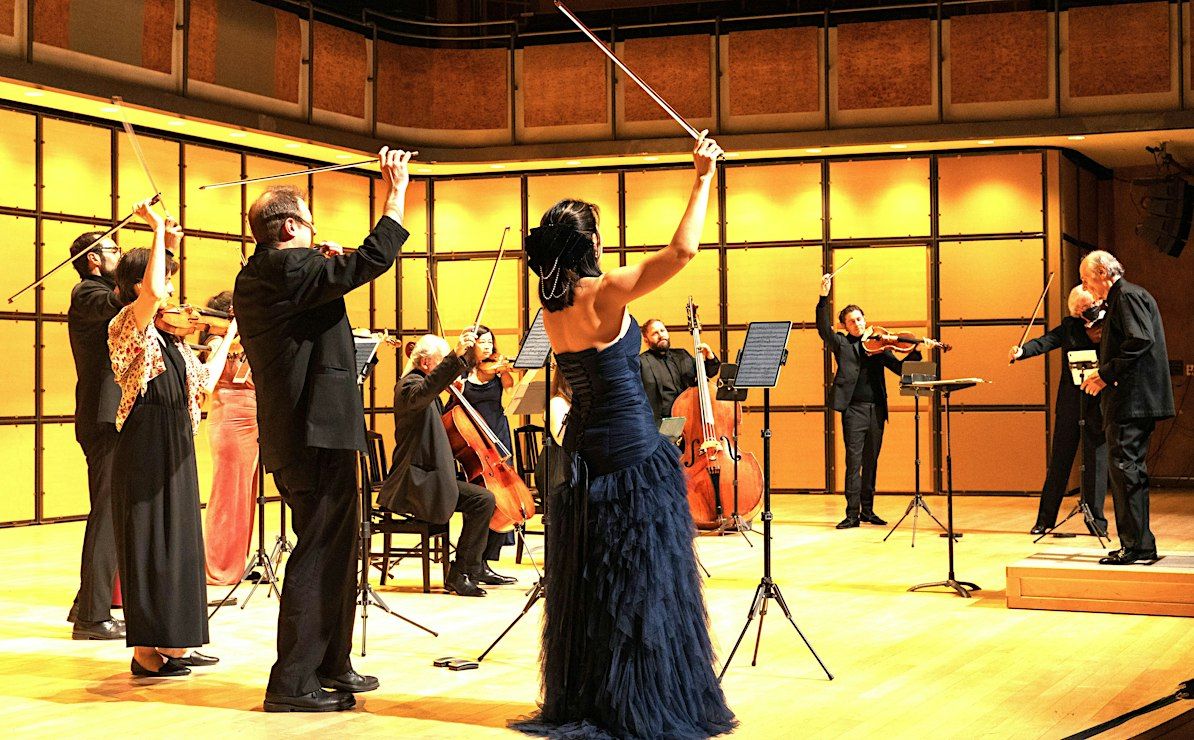
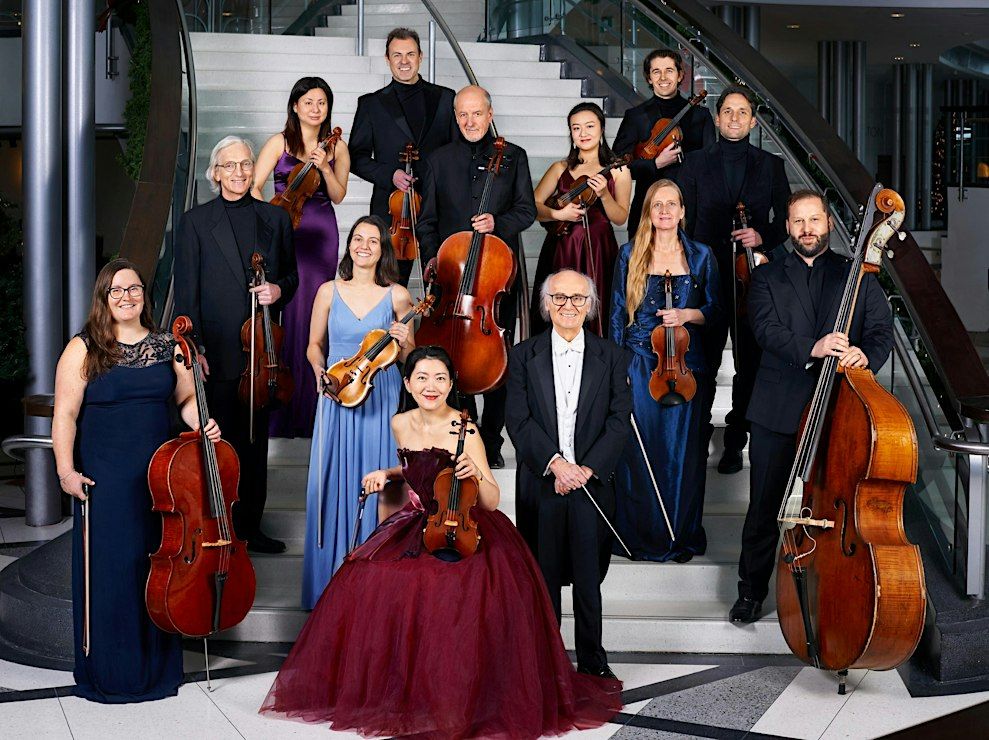
Sinfonia Toronto now in its 28th season, has toured twice in Europe, in the US, South America and China, receiving glowing reviews. It has released six CD’s, including a JUNO Award winner, and performs in many Ontario cities. Its extensive repertoire includes all the major string orchestra works of the 18th through 21st centuries, and it has premiered many new works. Under the baton of Nurhan Arman the orchestra’s performances present outstanding international guest artists and prominent Canadian musicians.
Maestro Nurhan Arman has conducted throughout Europe, Asia, South America, Canada and the US, returning regularly to many orchestras in Europe. Among the orchestras Maestro Arman has conducted are the Moscow Philharmonic, Deutsches Kammerorchester Frankfurt, Filarmonica Italiana, Orchestra Sinfonico di Roma, St. Petersburg State Hermitage Orchestra, Orchestre Regional d’Ile de France, Hungarian Symphony, Arpeggione Kammerorchester, Milano Classica and Belgrade Philharmonic.
ABOUT THE MUSIC
Waawaaskone-giizis (Flowering Moon) by Barbara Assiginaak (1966 - )
World premiere
Composer’s note: Waawaaskone-giizis (Flowering Moon) is approximately during the time of the month of May on the standard 12 month calendar. As Anishinaabe we follow the lunar cycles, of which there are 13 in one lunar year (13 moons). My piece features 13 vignettes, each depicting a different flower which emerges either in the woods, meadows, swamps, or near/on the waters during this time of year (the Flowering Moon) where Anishinaabeg live. It also highlights the diversity of flowers (and we have many more than 13) and the need to protect places where these flower-beings have lived for centuries upon centuries and who are an important part of the ecosystem and survival of Shkakmigkwe (Mother Earth).
Composer and musician Barbara Assiginaak is Anishinaabekwe (Odawa, Ojibwe and Potawatomi; Mnidoo Mnissing, Giniw Dodem) and combines composing with performing and teaching music, spending time with elders in traditional ceremonies, and engaging in land-based environmental activities and teaching work rooted in traditional Anishinaabek teachings. Her extensive body of works includes solo, chamber, art song, choir and orchestral compositions, and she has written for theatre, dance, film, opera and multimedia and interdisciplinary projects.
Barbara Assiginaak’s music is rooted in the Anishinaabe aural/oral traditions of singing, drumming and the pipigwan/bbigon (cedar flute). She is also classically trained in Western instruments, music theory and composition, with degrees from the University of Toronto, Royal Conservatory of Music, Musikhochschule in München (Germany) and Centre Acanthes (France).
She has been recognized with the University of Toronto’s Glenn Gould Award in Composition, a Dora nomination, shortlisted three times for the Hunter Award in the Arts, numerous scholarships from the Glenn Gould School and the National Aboriginal Achievement Foundation, and a Visual and Expressive Arts Program Award from the National Museum of the American Indian. She is an Assistant Professor of Composition at Wilfrid Laurier University.
Piano Concerto No. 9, K. 271, “Jeunehomme” by Wolfgang Amadeus Mozart (1756-1791)
String orchestra version by Nurhan Arman
Mozart wrote this concerto in 1777 for a French virtuoso, long known to history only as Mademoiselle Jeunehomme. Thanks to research by a Viennese scholar, we now know that this concerto could more accurately be called the “Jenamy.” Victoire Jenamy was the daughter of a famous choreographer, Jean Georges Noverre, who was a good friend of Mozart’s. Though she was not a professional, she was known for her musical skill; she must have been really excellent for Mozart to have created this concerto for her, one he considered worth performing many times himself.
The opening of the concerto breaks new ground, bringing in the piano solo immediately after a short orchestral fanfare, instead of waiting for the orchestra to play the full first theme as was customary in classical concertos. No other piano concerto had such an unconventional opening until Beethoven’s fourth and fifth. Mozart also wrote an atypical finale, leaving out the usual minuet section that interrupted other contemporary rondo finales’ forward momentum. At only 21, and in his first mature piano concerto, Mozart was already reinventing the form of which he had so recently produced student versions.
Like the numbers of Mozart’s symphonies, the numbers of his piano concertos were assigned by others in the 19th century, and can be misleading. Calling this concerto No. 9 masks the fact that his first seven concertos were student exercises - orchestrations of piano sonatas by J.C. Bach and other Rococo composers, not original compositions. The Concerto in D Major, K. 175, was Mozart’s first original piano concerto, written when he was 17. He wrote three more before this one, his first truly great piano concerto, just before turning 21. It might be fairer to call this concerto No. 5, or more exact to call it No. 12. In any case, it is one of the world’s favourites.
String Quartet Op.96a, “American” by Antonin Dvorak (1841-1904)
Orchestra version by Nurhan Arman
Many of Dvorak’s early works were quartets and quintets, modeled after those by Beethoven and Schubert that he played with colleagues and friends. He continued to write chamber works as his symphonic and opera career blossomed.
After the first of three academic years he spent as Director of the New York Conservatory, Dvorak left the noise of the city for a summer in Iowa, staying in the tiny town of Spillville settled by Czech immigrants. Spillville had a Czech newspaper and church; he felt very much at home there while writing two major works said to be in his “American” style: this quartet and his String Quintet Opus 97. He had already sketched out his “New World” Symphony in New York but completed it in Spillville also.
On June 12 Dvorak began to write the final version of Opus 96, heading it “Second composition written in America,” and noting at the end of the first movement “how beautifully the sun is shining!” The quartet’s beauty and freshness of expression spring from his delight at discovering a bit of home in Spillville more than from his more typical American experiences. Some of the syncopated rhythms and modal scales may perhaps have been acquired from Dvorak’s African-American students in New York or Indigenous people living near Spillville, but many of these characteristics are also typical of Bohemian folk music and appear in works he had already written before arriving in America.
The Quartet opens with a quietly joyous movement whose themes are clearly and classically organized. The slow movement is an extended, pensive duet for first violin and cello or sometimes second violin over a gently rocking accompaniment. The Scherzo’s quicksilver themes are so complementary that this movement almost seems to be a set of free variations. One warbling motif provides a comical picture of what Dvorak called “a damned bird, red, but with black wings” that annoyed him from the summer fields - perhaps a scarlet tanager. The rondo finale is an energetic celebration that pauses briefly for a chorale such as Dvorak might have improvised on the organ in Spillville’s Czech church.
Where is it happening?
Event Location & Nearby Stays:
CAD 25.57 to CAD 54.76