Killam Seminar Series: The Low Road to Higher Visual Functions
Schedule
Tue Mar 10 2026 at 04:00 pm to 05:00 pm
UTC-04:00Location
The Neuro. Montreal Neurological Institute-Hospital | Montréal, QC

About this Event
Abstract: Vision feels effortless. Within a fraction of a second, we detect faces, recognize objects, and decide where to look. These abilities are usually credited to the primate visual cortex. But emerging evidence shows that an evolutionarily ancient pathway through the midbrain provides a crucial foundation for these higher visual functions. In this talk, I will present evidence that the superior colliculus — a structure classically associated with eye movements — carries rapid and behaviorally meaningful object information, including an early bias for faces. I will argue that this so-called “low road” does more than trigger reflexive orienting. Instead, it acts as a functional scaffold: early in life, helping guide the development of cortical visual systems, and in adulthood, continuing to prioritize and shape higher-level visual processing. Understanding vision, therefore, requires recognizing how ancient midbrain circuits support and constrain the operations of the modern visual brain.
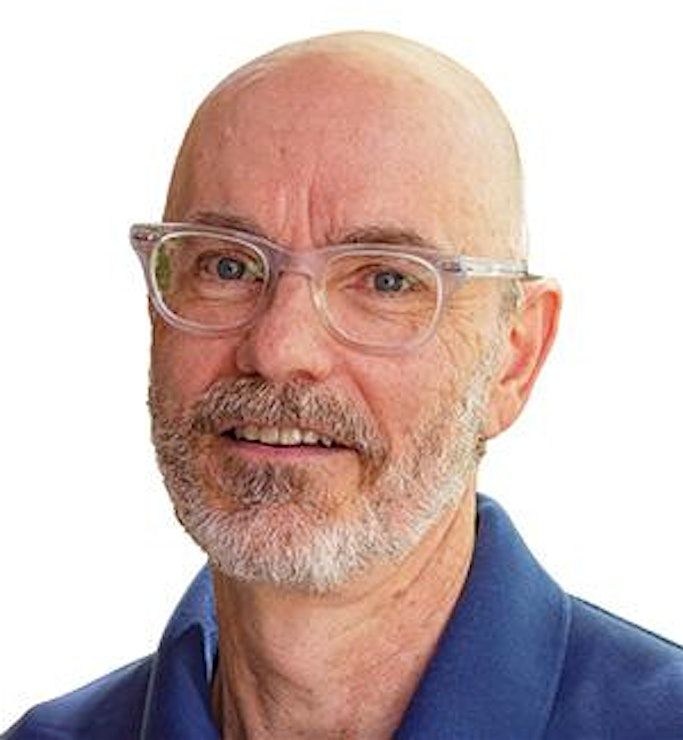
Bio: Rich Krauzlis is a Senior Investigator in the National Eye Institute where he also servesas Chief of the Laboratory of Sensorimotor Research, a group of independent labs within the intramural research program at NEI. Research in Rich’s lab is focused on the brain circuits that accomplish higher-order visual functions, including attention, perception, and object recognition.
Rich trained as an undergraduate in biology at Princeton, and as a graduate student in neuroscience at the University of California San Francisco where he first began studying eye movements and visual processing. After a post-doc at the National Eye Institute, Rich started his own lab at the Salk, where he launched a research programinvestigating eye movements, attention, and visual perception in humans and non-human animals. He moved his laboratory to the Laboratory of Sensorimotor Research in 2011. He has a joint appointment in the National Institute of Drug Abuse and retains an adjunct Professor position at the Salk Institute.
Rich’s science uses a range of techniques including psychophysics, electrophysiology, fMRI, pharmacologic manipulations, optogenetics and photometry. He is probably best known for his work on the brain circuits for smooth pursuit eye movements, saccades and microsaccades, and for the series of experiments revealing the crucial role of subcortical brain regions in the control of visual selective attention. His more recent work has shown how evolutionarily ancient brain structures play key roles in higher visual functions, including the processing of faces and visual objects.
Rich has served on the Editorial Boards for Journal of Vision, Vision Research and Annual Review of Vision Science, and has authored numerous review articles on eye movements and visual attention, including the chapter ‘Eye Movements’ in the graduate textbook Fundamental Neuroscience. He is an elected Fellow of the American Association for the Advancement of Science and is currently President-elect of the Vision Sciences Society.
For more information, visit The Neuro's website .
Stream online . No registration required.
Where is it happening?
The Neuro. Montreal Neurological Institute-Hospital, 3801 Rue University, Montréal, CanadaEvent Location & Nearby Stays:
USD 0.00