Interpreting the American Revolution from Native Country
Schedule
Thu May 21 2026 at 12:00 pm to 01:00 pm
UTC-05:00Location
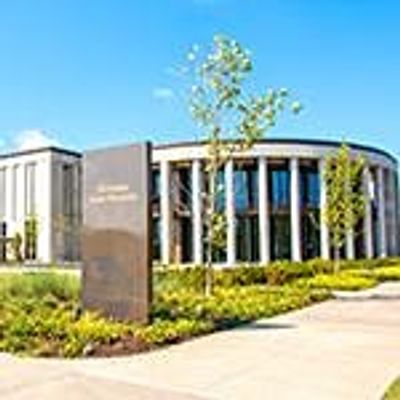
Tennessee State Museum | nashville, TN

About this Event
As the United States marks the 250th anniversary of the Revolution it is worth reflecting upon how strongly two intertwined narratives inform popular understandings of the event. The first was articulated by the Historian Frederick Jackson Turner. In a now famous 1893 lecture, Turner hypothesized that the country grew out of a laboratory he called “the frontier.” Said frontier first developed at Plymouth in 1620, when isolation and existential dangers forced colonists to shed their Europeanness and establish “American” ideas and institutions. Over the next three centuries this Americanness transformed into a ruggedly individualized parade of liberty as the frontier inexorably crossed the continent.
Turner’s thesis seamlessly integrates with a second storyline: that the Revolution was the inevitable outcome of a proto-independent people whose time had come to establish their own state. Although it focuses overwhelmingly upon the thirteen seaboard colonies, this inevitability narrative offers a point from which the new Republic could launch an empire of liberty via the relatively ‘vacant’ frontier of the trans-Appalachian west.
The problem: both narratives reduce Native peoples to collateral damage. Euro-Americans perhaps treated them unfairly, each suggest, but Native polities were politically disorganized, vanishing, and by 1776 incapable of playing more than minor roles in the Founding. Contingent trans-Appalachian realities explode these assumptions. Focusing on the period between 1763 and 1783, this paper offers Indigenous context for trans-Appalachian affairs leading up to the Revolution before applying that context to George Rogers Clark’s expeditions to Vincennes and Kaskaskia. Along the way it explores two critical questions: What impact did the Revolution have on Native Nations? Perhaps more fundamentally, What impact did Native Nations have on the Revolution?
Kristofer Ray is a Visiting Associate Professor of Indigenous American History at the College of the Holy Cross, where he teaches courses on the 16th-18th Century Native North American experience, Indigenous encounters with Europeans, and the Euro-American construction of Indigenous slave law. In addition to other book chapters and journal articles, he is the author of Cherokee Power: Imperial and Indigenous Geopolitics in the Trans-Appalachian West, 1670-1774 (2023) and Middle Tennessee, 1775-1825: Progress and Popular Democracy on the Southwestern Frontier (2007). He also is co-editor with Brady DeSanti (Lac Courte Oreilles Ojibwe) of Understanding and Teaching Native American History (2022). Since 2024 he has been a core participant in the “Pakachoag Project,” a partnership between the Quinsigamond Band of Nipmuc People and Holy Cross to restore the Tribe’s place in regional narratives, both historical and ongoing.
This Lunch and Learn event is in-person in the Museum’s Digital Learning Center at 12:00. The lunch and learn will be recorded and uploaded to TNMuseum.org/Videos. If you have any questions, please email [email protected]. Boxed lunches made by Apple Spice Nashville are available for purchase for $12.24 to enjoy during the event. The lunches will include a sandwich, chips, and a cookie. Lunch orders must be placed by noon on Tuesday May 19, 2026. Please order your boxed lunch on the ticket registration page.
Where is it happening?
Tennessee State Museum, 1000 Rosa Parks Blvd, nashville, United StatesEvent Location & Nearby Stays:
USD 0.00 to USD 13.58