IEEE ASC Companion Event - The Case for a US Degree in Fusion Engineering.

About this Event
Abstract
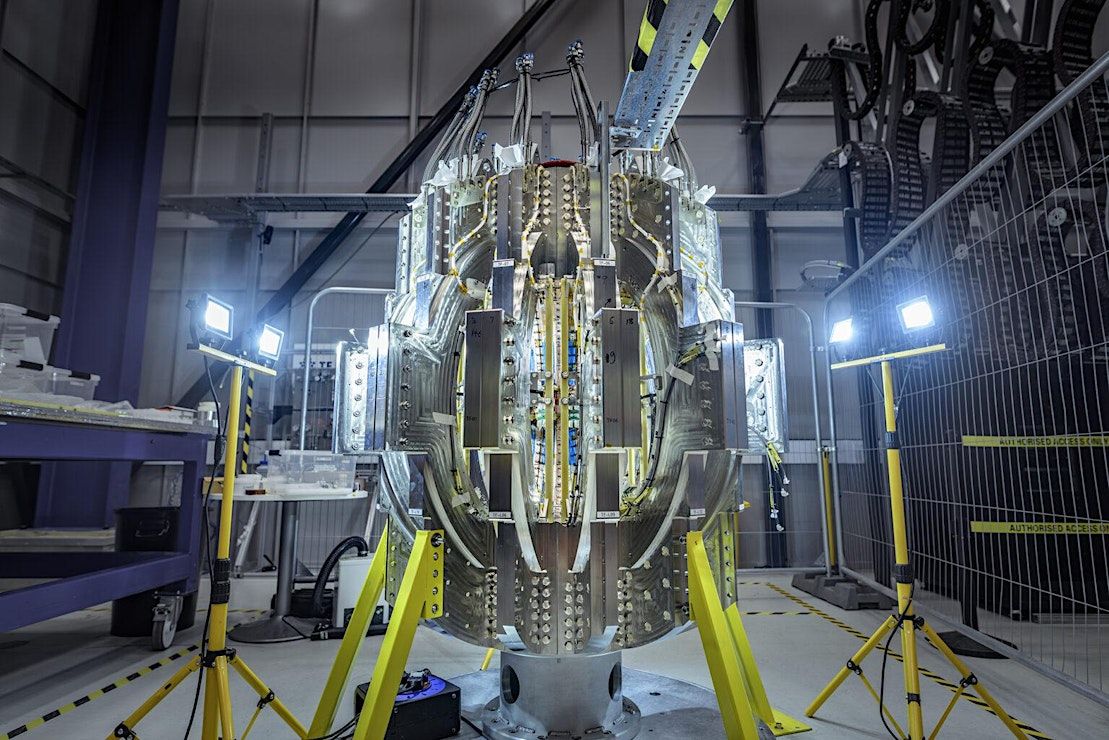
As of March 31, 2026, fusion startups had received or been promised $17.88 billion in funding, although $7.5 billion of this total was in China. Japan announced a national plan to invest $20.7 billion over 14 years on June 19, 2026. An additional $2.501 billion was announced by six fusion startups in Germany, Seattle, China, Massachusetts and New Jersey from May 27, 2026, to July 30, 2026. As of mid-November 2025, the Fusion Industry Association estimated that more than 56 firms and 4,000 people were working in the industry. In 2024, an MIT report estimated that the fusion industry could create at least $3.6 trillion in economic impact. In 2025, the San Diego Economic Development Authority predicted that fusion could create 40,000 jobs and $125 billion in economic impact for just the state of California. State governments have responded, with fusion-specific legislation signed by governors in Wisconsin, Washington, and California; fusion-specific legislation was also introduced in the Ohio legislature in spring 2026. The central argument advanced by roughly half of these firms is that the addition of superconducting magnets could enable fusion systems to produce net power. The SPARC reactor, currently under construction by Commonwealth Fusion Systems in Devens, Massachusetts, will test this premise when it begins operation next year. The BEST reactor, under construction in China, is aiming to test similar conditions. Now is a good time to consider how academia can train students to meet the needs of this emerging industry. Although University of Wisconsin–Madison launched a fusion concentration in May 2025 and Columbia University announced a fusion minor in January 2026, there is currently no four-year degree program focused on fusion engineering in the United States. Meanwhile, University of Science and Technology of China announced such a program on May 11, 2026.
A New 4-Year Undergraduate Degree in Fusion Engineering
This talk will present a proposed 139-credit-hour undergraduate curriculum that draws upon existing coursework in nuclear engineering, regulation and policy, techno-economic analysis, superconductivity, plasma physics, and physics. A traditional engineering mathematics sequence is outlined alongside a laboratory track that includes two hands-on laboratory courses, three software laboratories, and a 40-hour Radiation Safety Certification program. The curriculum also includes freshman-level physics and engineering laboratories. The largest capital expense for colleges would be the purchase of a fusor for a laboratory course during the sophomore year. Seven semesters include new fusion-specific courses: Introduction to Fusion Energy, Business of Fusion Energy, Regulating Fusion Power, Introduction to Inertial Fusion Energy, Introduction to Magnetic Confinement Fusion, Plant Systems Integration, and a capstone course Fusion Plant Design. The curriculum also proposes ten electives, including five technical electives and five focused on entrepreneurship. We are developing a handout with unified course descriptions for each of the new classes, suggested textbooks and instructors.
A New 2-Year Masters in Fusion Engineering
We converted the above material into a 2-year masters program for Fusion Engineering. We examined the material taught at the University of Wisconsin-Madison inside the Nuclear Engineering, Physics and Mechanical Engineering majors as a feeder programs. We formulated sample schedules for a 2-year program by filling in prerequisites gaps for these three majors. The schedule came out at between 74 and 77 credit hours over four semesters.
LinkedIn Series
This talks builds on a series of a dozen articles developed on LinkedIn, starting from May 5th 2026 - links to this series are below.
- America Needs a New Degree in Fusion Engineering — May 5, 2026
- How Do You Create a New Degree in Fusion Engineering? — May 11, 2026
- Freshman Year — May 18, 2026
- The Laboratory Track: Getting a Hands-On Education in Fusion Energy — May 25, 2026
- Sophomore Year: Traditional Engineering and Regulating Fusion Power — June 1, 2026
- Let’s Talk About Superconductivity — June 8, 2026
- Teaching Superconductivity to Fusion Engineering Majors — June 15, 2026
- Junior Year: Jumping Headlong into Laser and Magnetic Confinement Fusion — June 22, 2026
- Using Models to Determine Whether Your Machine Has Changed the World (or Not) - June 29, 2026
- Senior Year: Pulsed Power for Fusion - July 6, 2026
- Senior Year Electives: Entrepreneurship and Technical Courses - July 13, 2026
Additionally, there is an open letter to ABET and the Fusion Industry Association calling for the formation of a committee of academics to look at coursework. The letter has over 30 co-signers from across academia, active duty military, fusion startups, a Nobel Prize winner and a state-level elected official.
Speaker
Dr. Matthew Moynihan has been involved in the fusion research and startup community since 2006. He holds a Ph.D. from the University of Rochester Laboratory for Laser Energetics and is the author of Fusion's Promise (Nature-Springer, 2023). In 2018, he founded Fusion Consultants LLC a boutique consulting firm that helps investors conduct due diligence on fusion startup opportunities. His firm has been a member of the Fusion Industry Association since 2020. His clients have included Honda, Westinghouse Electric Company, IEEE US, Utah Retirement Systems, the Naval Research Laboratory, and other organizations. He was the principal U.S. consultant on the 2022 and 2023 European Commission reports on the fusion industry and a co-author of the 2022 Department of Energy Basic Research Needs report on Inertial Fusion Energy. He was a co-organizer of “Powering PA: Fusion Energy” a 2022 hearing inside the Democratic House of the Pennsylvania State Legislature. Dr. Moynihan also worked as a Senior Nuclear Engineer for the U.S. Nuclear Navy in Pittsburgh doing Probabilistic Risk Assessment on Submarines and later served as a deputy program manager at the Laboratory for Laser Energetics. He lives in Pittsford, New York, with his wife and two sons.
Where is it happening?
Event Location & Nearby Stays:
USD 28.52