CASS Public Lecture with Carrie Phillips, Nathan Keates & Sarah Lonbay
Schedule
Wed May 20 2026 at 01:00 pm to 02:30 pm
UTC+01:00Location
David Goldman 232 | Blackburn, EN

About this Event
This Eventbrite registration system is for those individuals wishing to attend who are external to the university.
Speaker: Carrie Phillips, Nathan Keates & Sarah Lonbay
Date and time: 29 April, 1-2.30pm
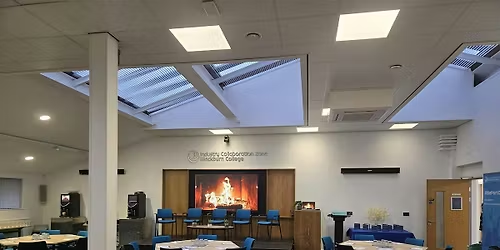
Location: David Goldman 232, St Peter's Campus and online (online link will be sent the day before the lecture)
Outdoor spaces can have positive impacts for people living with dementia, with suggestions that specially designed sensory gardens can reduce anxiety and agitation, and delay cognitive decline. Existing studies have tended to focus on quantitative measures of sensory gardens as a clinical intervention, or have gathered views mainly from paid staff members or unpaid carers supporting individuals living with dementia. In this CASS Public Lecture, we present findings from a small research project that employed novel methods to hear directly from people living with dementia, as well as gathering supporting information from staff members. 'Go-along interviews' meant that participants could direct both engagement with the garden and conversation with the researchers. 'Process consent', which positions consent as an ongoing process rather than a one-off discussion, reduced the cognitive load associated with understanding and consenting to research involvement, therefore widening participation.
We found that colourful, aromatic, and fruiting plants particularly attracted attention and prompted engagement with the garden. However, we also found engagement with the garden that went beyond the bodily senses. Participants took up roles and responsibilities in the garden, and valued it as both a social and an a-social space. The garden was also a conversation-starter, leading to talk about gardens, but also about family, and about past and current life experiences. Many participants viewed the garden as a venue to exercise agency, and as a space that they could nurture. The findings demonstrate the importance of the sensory garden for people with dementia across a number of domains. Future practice should prioritise creating accessible sensory gardens in dementia care settings to promote social interaction, purposeful activity, sensory stimulation, and reminiscence. Alongside this it is important to ensure staff facilitation, safety and weather adaptations to support year round use.
Where is it happening?
David Goldman 232, David Goldman 232, Blackburn, United KingdomEvent Location & Nearby Stays:
GBP 0.00