Big Three Bon Odori Workshops in Japanese (Free Public Program)

About this Event
注意事項 1 : 同じメールで沢山の予約をとるような妨害があります。Free Public Program により沢山の方にスポットがあたるように1人につき1つのメールアドレスで予約を入れて下さい。もし同じメールアドレスで2つ以上の予約を見つけた場合はこちら側でキャンセルをするようにEventbriteから言われました。ひとつのメールで2つ以上の予約をとらないようお願いします。
注意事項 2: 人数がルームの定員を越えた場合は、当日入場をお断りする可能性があります。参加したい方は早めにお越し下さい。
注意事項 3: 日本語でのワークショップと、英語でのワークショップのイベント場所が異なりますので、どうぞ気をつけて下さい。
注意事項 4: Workshopでの服装は、動きやすい軽装で着て下さい。 もし浴衣を持っていて着れる方は着ていただいて大丈夫です。
注意事項 5: Workshopでのビデオや写真撮影は禁じます。。
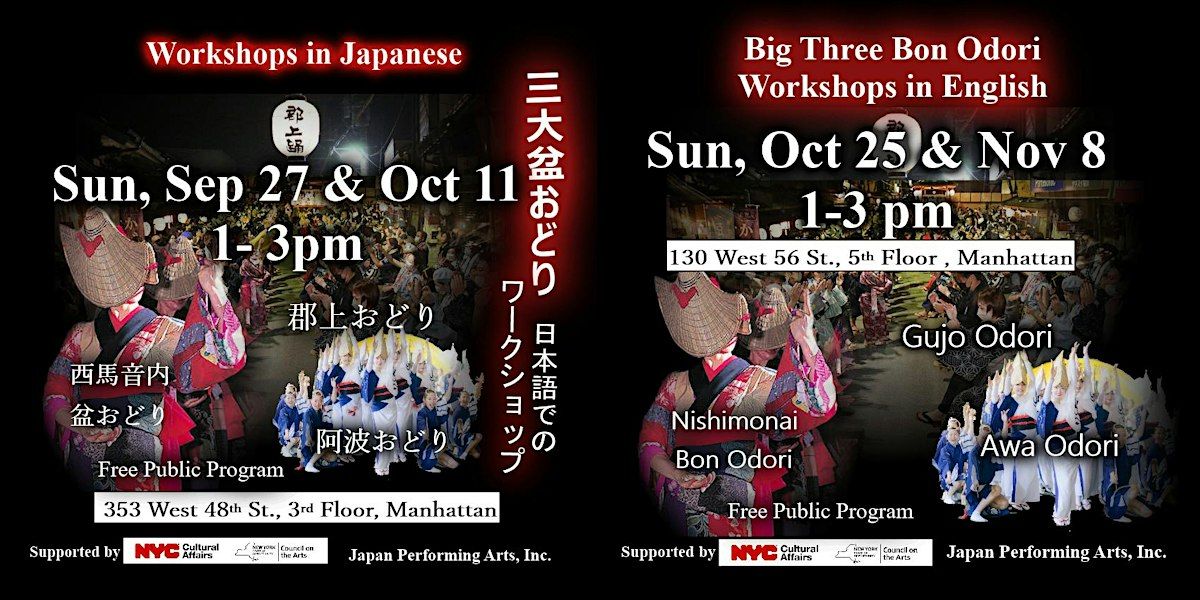
Japan Performing Arts, Inc. (JPA)は 日本三大盆踊り(Nishimonai Bon Odori from Akita Prefecture, Gujo Odori from Gifu Prefecture and Awa Odori from Tokushima Prefecture) のFree Public Programのワークショップを開催します。ワークショップは、日本語によるワークショップと英語によるワークショップの2つがあります。日本語によるWorkshopを9月27日(日曜日)と10月11日(日曜日)両日午後1時から3時の2時間(場所は Andy’s Studios / 353 West 48th Street 3rd Fl, Manhattan) 。英語によるWorkshopは10月25日(日曜日)と11月8日(日曜日)両日1時から3時の2時間 (場所は City Center / 36 West 56th Street 5th Floor, Manhattan) で開催します。言葉を気にされない方は日本語と英語のWorkshopの両方に参加いただいても大丈夫です。
Workshopに参加したい方はEventbriteから登録をお願いします。WorkshopはNew York City Cultural Affairs とNew York State Council on the Arts のサポートによるFree Public Program です。またこのWorkshopは11月21日に開催されるJPAの文化イベント(場所はいずれアナウンスします)で楽しく踊っていただけるプログラムでもあります。11月21日のイベントを頭において是非ご参加下さい。
ワークショップの参加はEventbrite で登録をした上で、当日120人までの方が参加できます。それ以上の人数はご参加いただけませんので、どうぞ早めにお越し下さい。
Big Three Bon Odoriを各盆踊りについて、日本の北の位置から南の位置の流れでひとつずつ説明します。
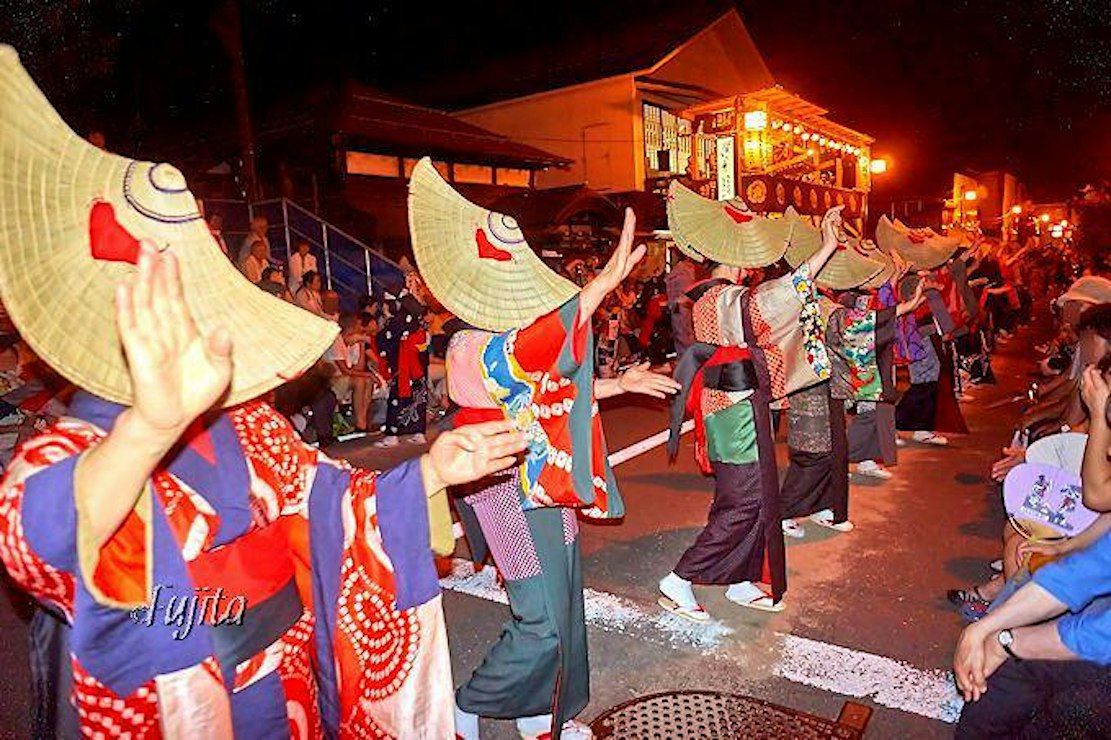
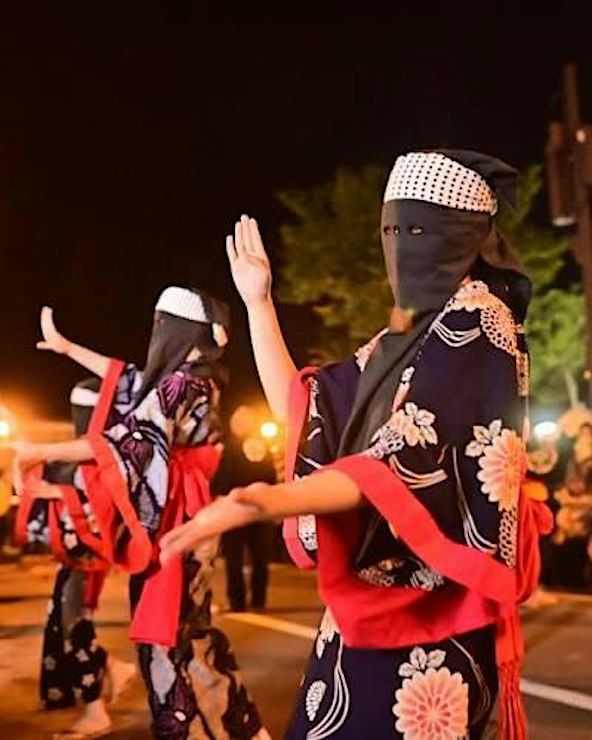
NISHIMONAI BON ODORI (Akita Prefecture)
Nishimonai Bon Odori is a traditional Bon dance with a history of approximately 700 years, and it was registered as a UNESCO Intangible Cultural Heritage in 2020.
Akita Prefecture, located in the northern part of Japan, is well known throughout the country for producing delicious rice and sake. Because Akita faces the Sea of Japan, it had historical connections with Kyoto through maritime trade and travel. For this reason, it is said that even in Akita, far from Kyoto, people were once able to hear the Kyoto dialect. The refined style and elegant movements of Nishimonai Bon Odori suggest that it may have been influenced by Kyoto culture.
Although the dance consists of only two songs, the choreography is considered somewhat more challenging compared with Bon Odori dances from other regions. The two songs of Nishimonai Bon Odori are highly unique pieces sung in the Akita dialect. They resemble what we might call rap music today, as the lyrics can reflect current events and allow singers the freedom to create their own verses.
The contrast between the graceful, delicate movements of the dance and the uniquely cheerful melodies of the songs makes Nishimonai Bon Odori a truly one-of-a-kind Bon dance.
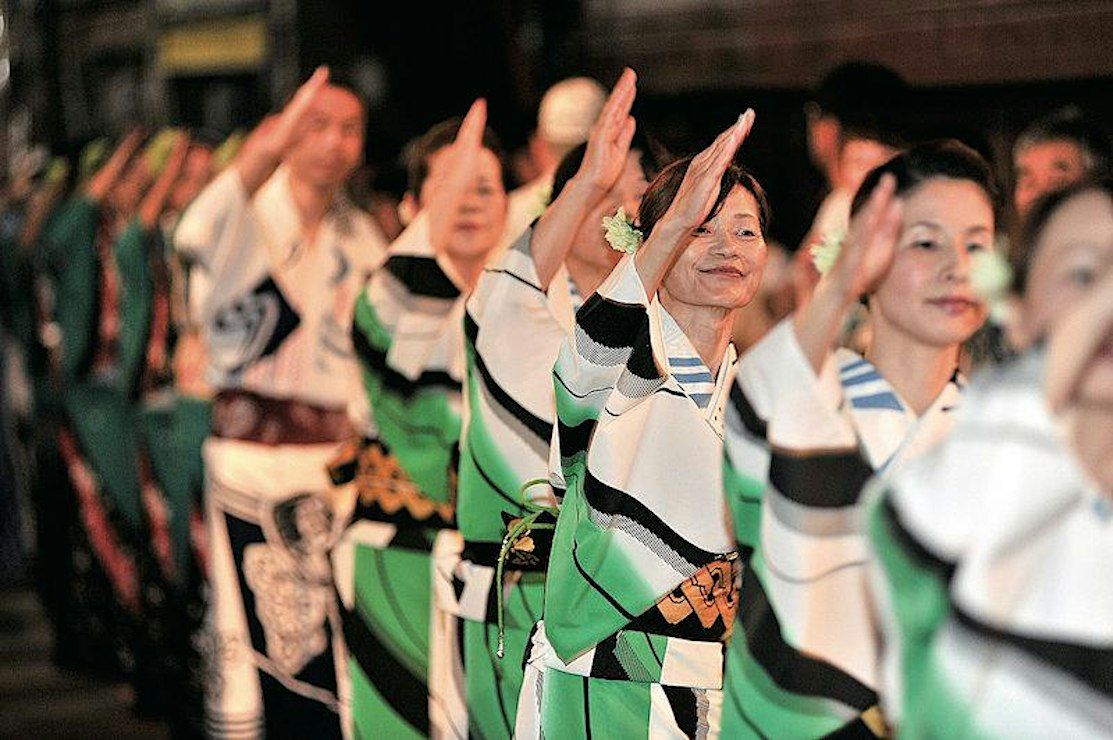
Many Japanese people have the image that Bon Odori is a dance that anyone can join. However, in some regions of Japan, there are traditional dances where participants are expected to know the movements correctly and wear appropriate attire before joining the dance circle. Nishimonai Bon Odori is one of these dances.
As a result, during the three days from August 16 to August 18, the small village of Nishimonai, with a population of approximately 1,500 people, becomes crowded with tens of thousands of visitors who come to experience this unique Bon Odori tradition.
GUJO ODORI (Gifu Prefecture)
Gujo Odori is a traditional Bon dance from Gifu Prefecture, located almost at the center of Japan. With a history of approximately 400 years, Gujo Odori was also registered as a UNESCO Intangible Cultural Heritage in 2020.
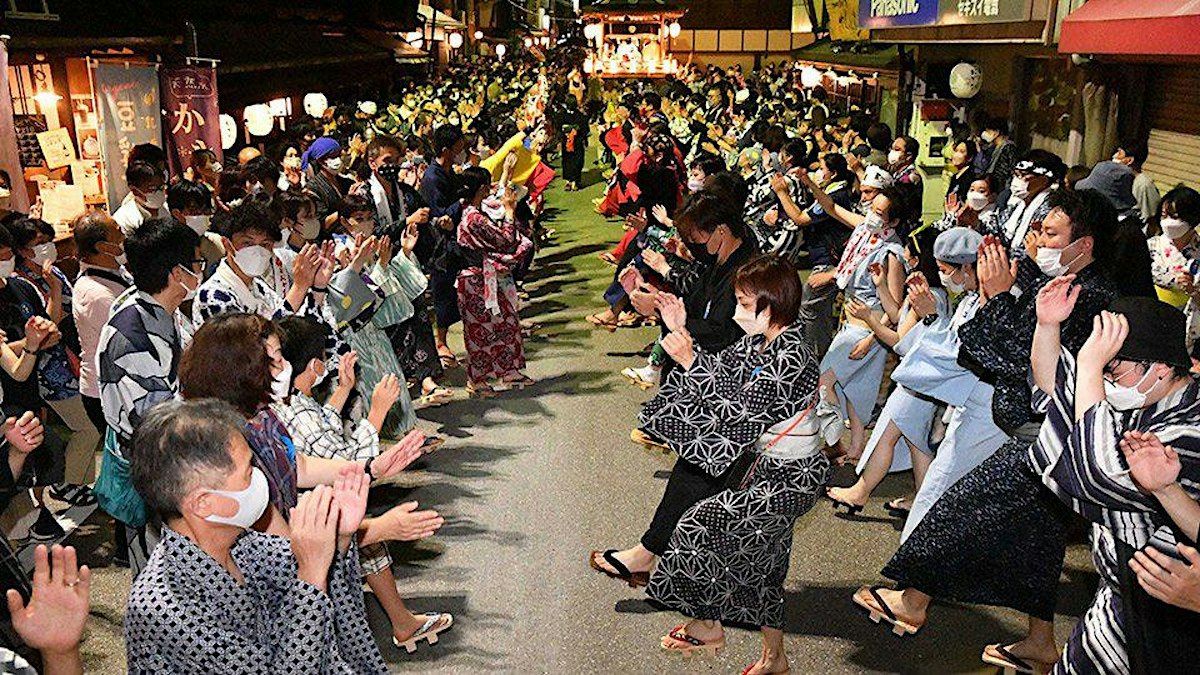
Among the three Bon Odori traditions introduced here, Gujo Odori is the most welcoming and accessible. Anyone can join the dance circle and participate. Although wearing a yukata is the traditional attire, there are no strict rules about what people must wear in order to dance.
Gujo Odori consists of 10 different dances. One of the greatest joys of Gujo Odori is learning and dancing all of these dances. The songs are based on the local landscape, customs, and stories passed down through generations, and some are even performed a cappella, creating a deeply atmospheric and beautiful musical experience.
Dancers wear wooden geta sandals while dancing, creating the distinctive “karan-koron” sound of the wooden soles. This sound is considered an essential part of the music of Gujo Odori itself.
In Gujo City, during the two summer months of the festival season, Bon Odori is held almost every day somewhere in the city, creating an atmosphere filled with energy and excitement. The dances take place continuously in locations such as the main streets of Gujo and the plaza in front of the former mayor’s residence. On weekends, there are special “Tetsuya Odori” (all-night dances), where people continue dancing until dawn.
Because Gujo Odori is a joyful and welcoming dance that anyone can enjoy, it has many fans throughout Japan. During these two summer months, visitors from across the country travel to Gujo City to experience and participate in this unique Bon Odori tradition.
AWA ODORI (Tokushima Prefecture)
Awa Odori is a traditional Bon dance from Tokushima Prefecture, located on the island of Shikoku in western Japan. It is considered one of the most popular summer Bon Odori festivals in Japan.
Awa Odori has a history of several hundred years, although the current style and form of the dance were established approximately 60 years ago. From August 12 to August 16, during the four-day festival period, it is said that around one million people gather in Tokushima Prefecture to experience this spectacular event.
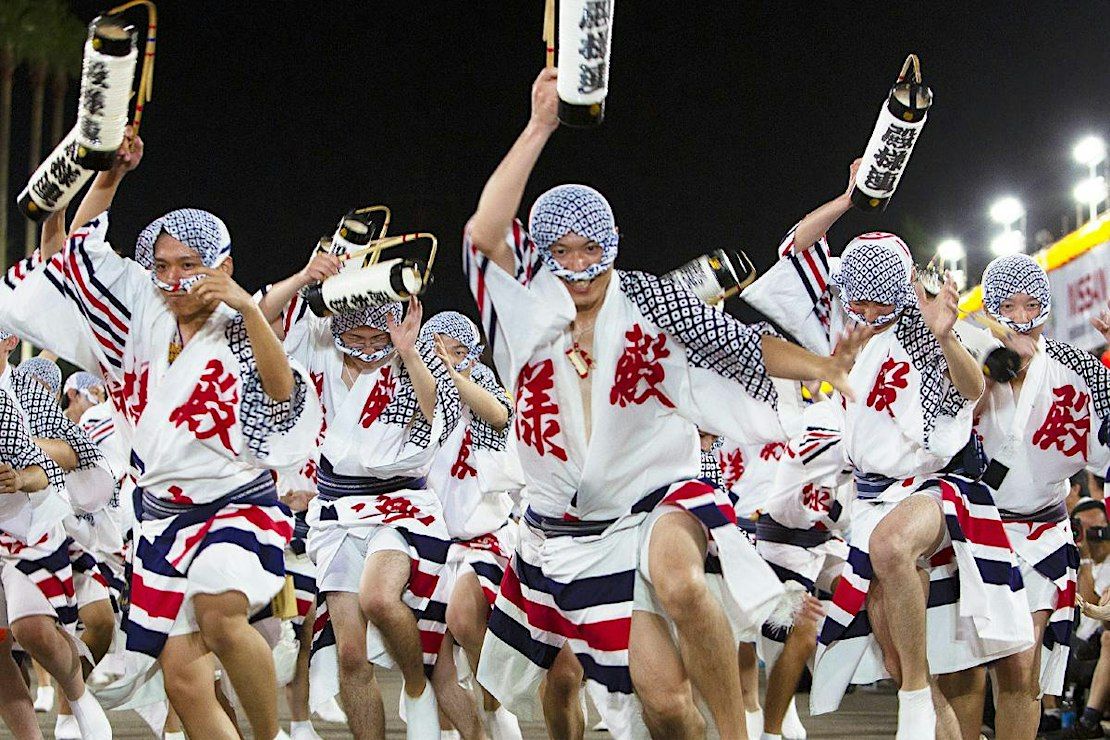
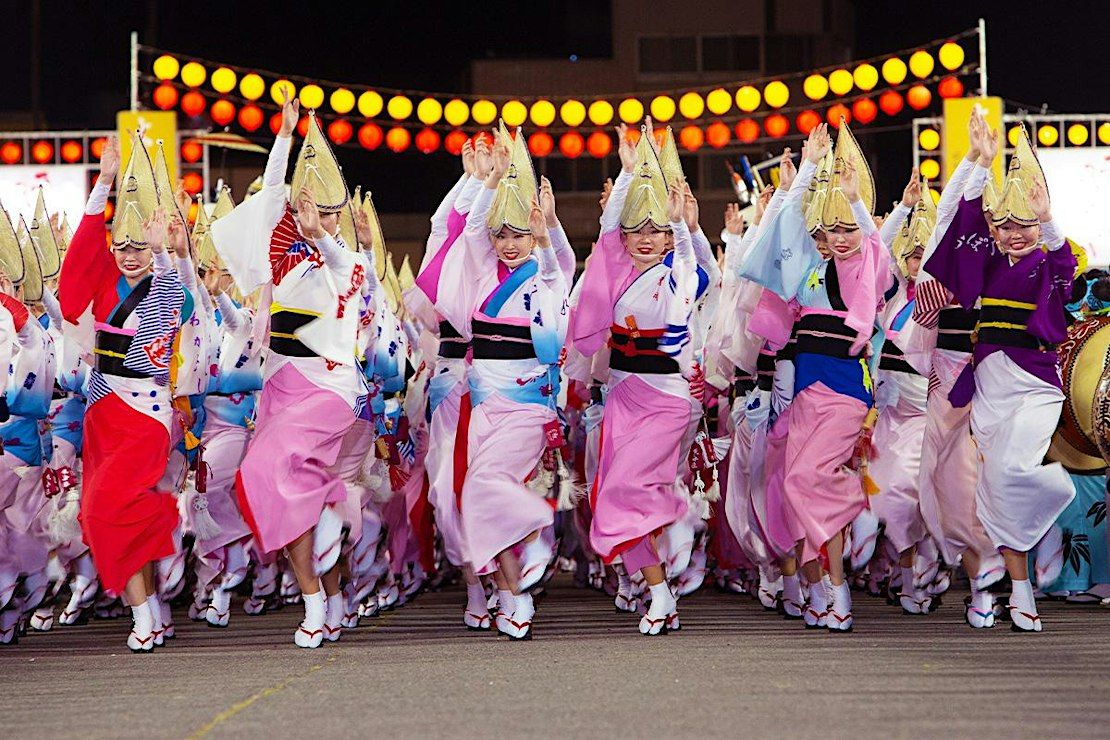
Unlike some Bon Odori traditions where individuals simply join the dance circle, Awa Odori is performed by organized groups called “Ren.” Dancers join a Ren and perform together as a group. Because the dancers must move in harmony, there are detailed rules and extensive practice required to master the choreography. It is said that there are more than 1,000 Ren groups throughout Japan.
Tokushima Prefecture is famous for its indigo dye production. Several hundred years ago, many wealthy merchants in the region made their fortunes through the indigo trade, and some were even ranked among the wealthiest people in Japan. Merchants traveled throughout the country for business and were influenced by the music they encountered in different regions. By incorporating the best elements of these musical traditions, they created new rhythms and songs that became a great success. The image of people dancing with their hands raised was even captured in ukiyo-e (traditional Japanese woodblock prints).
Originally, Tokushima Prefecture consisted of many small islands located close together, connected by bridges that allowed people to travel between communities. While Bon Odori is traditionally danced in a circle, these small islands did not have many open spaces for large dance circles. It is believed that people began dancing along the roads instead. This history is reflected in Awa Odori’s unique style as a one-directional dance, which is unusual among Bon Odori traditions and makes it especially suitable for parade-style festivals.
With both hands raised and dancers moving to its lively rhythm, Awa Odori is a joyful and energetic dance that brings people together through music and movement.

Where is it happening?
Event Location & Nearby Stays:
USD 0.00