#2 - Hardware + AI Boston: How Engineering Teams Are Actually Using AI

About this Event
While AI tools are advancing rapidly in software environments, teams building wearable and connected devices face different challenges.
Integrating AI across the full product ecosystem, from firmware up to mobile apps and cloud infrastructure, is genuinely hard. Most hardware-centric teams end up stuck with basic coding assistants rather than unlocking real system-wide efficiency.
I'm Cristin Iosif, Founder & CEO of Salt & Pepper. After 10+ years building full-stack engineering for connected devices, I know firsthand how difficult it is to align hardware and firmware cycles with fast-moving mobile and cloud development.
I'm hosting this private dinner to bring together 10 to 12 VPs of Engineering and CTOs from the connected device ecosystem. No vision slides, no vendor pitches. Just a candid, peer-to-peer conversation about how engineering leaders can build better physical-to-digital products, faster, with the help of AI.
Who Should Attend?
This invite-only gathering is explicitly curated for:
- VPs of Engineering, CTOs, and Heads of Product/Hardware/Software at connected device companies.
- Leaders across the consumer IoT, wearables, industrial IoT, medtech, and automotive sectors.
- Teams ranging from growth-stage (Series A through C) to established mid-size organizations (50–500 engineers).
Logistics & Format
- Date & Time: Tuesday, 20 October , 2026 | 6:30 PM to 9:30 PM
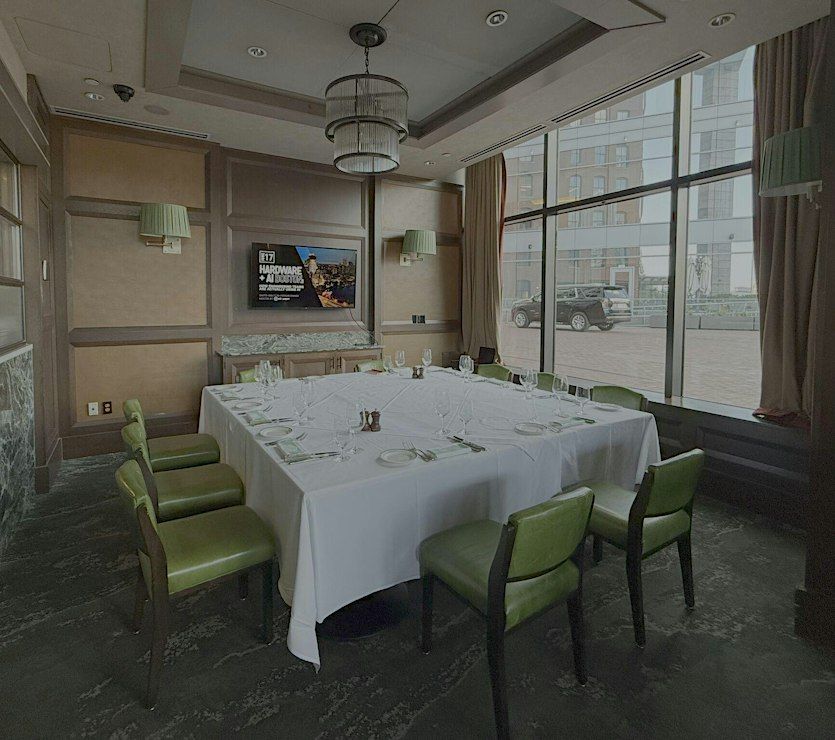
- Location: Boston (Venue will be disclosed after being selected)
- Format: Single-table guided conversation over dinner service
Please Note: Registration via Eventbrite acts as an application. Capacity is strictly limited to 12 attendees. Please wait for an official confirmation email before considering your seat secured.
FIRST EDITION INSIGHTS- june 2026
The speakers. Enrico Santagati walked the room through his work giving AI real access into hardware, building MCP servers for each hardware interface so an AI agent could drive BLE, read serial logs, and debug over JTAG. The result: a task that took three weeks dropped to three days. His core insight stayed with the room : "The AI model was not the bottleneck. Building the right interfaces is." Sam Shames, co-founder of Embr Labs and now at Flagship Pioneering, brought the investor and company-building lens: where AI in hardware is overhyped (consumer products) and where the real opportunity sits (closed-loop systems where AI senses, decides, and acts). The two perspectives sparked a roundtable conversation that ran strong for almost two hours.
The topics. Four gaps the room agreed are holding hardware back on AI: the data gap (LLMs trained on almost no embedded knowledge), the tooling gap (IDEs like IAR and Keil haven't moved on AI the way software tools have), the culture gap (embedded engineers' pride in precision doesn't sit easily with AI's "good enough" output), and the policy gap (the absence of a clear AI usage policy has become the policy by default).
Where is it happening?
Event Location & Nearby Stays:
USD 0.00